
BEWARE CNOOC expansion in Trinidad and Tobago
OilNOW
November 14, 2025
Executives from China National Offshore Oil Corporation, Liu Yongjie, Chairman of CNOOC International; Wang Jian, Vice President, Business Development Centre; Fan Hongyao, Project Director 2025 T&T Deep Water Bid Round; Yan Qinghua, Project Manager; and Jeff Smith, Senior Engineering Manager discussed boosting the company’s presence in the energy sector of Trinidad and Tobago at the Energy Ministry. On November 13.
Energy Minister Dr. Roodal Moonilal and Minister Ernesto Kesar met the team from CNOOC which holds a 12.5% stake in Block 2(c) through subsidiary, Chaoyang Petroleum Ltd.
CNOOC executives expressed strong interest in increasing investment and operational activity in Trinidad and Tobago.
Minister Moonilal welcomed the engagement, noting that it “comes at a time when the Government is committed to revitalising the energy sector”.
Both sides agreed the talks represented the start of a long-term working relationship aimed at advancing exploration and development opportunities in the country’s deep-water acreage.
The visit follows the return of American champion ExxonMobil to Trinidad through its participation in the Ultra-Deep Offshore Block awarded earlier this year, signaling renewed international interest in the petrostate’s upstream potential.
CNOOC is part of the ExxonMobil consortium developing Guyana’s Stabroek Block, with a 25% working interest in the deep-water field holding an estimated 11 billion barrels of recoverable resources.
CNOOC, China’s third-largest national oil company and the world’s second-largest liquefied natural gas trader, has operations across six continents and interests in multiple deep-water projects in Guyana, Nigeria and Brazil. CNOOC Q1 output was up 4.8% year-on-year to 188.8 million boe.
Caveat Emptor. https://www.bbc.co.uk/news/articles/cgr4xpyrkdqo
Britain’s security agency revealed PRC poses the “biggest state-based threat to the UK’s economic security” and conducts “large-scale espionage operations” against the UK on a daily basis.
The (UK) National Cyber Security Centre warned stolen data by academics and PRC companies can provide PRC intelligence services the capability to identify and track UK communications and movements worldwide.
Brazen pursuit of large scale data sets containing technology, intellectual property, process knowledge, financial, personal, health or other information to train artificial intelligence or understand the UK, influence opinion or exploit vulnerabilities alarms security chiefs. For decades PRC investment allowed theft of economic, political, military and diplomatic secrets and malicious cyber targeting of UK democratic institutions and parliamentarians. UK excluded Huawei technology from 5G.
Now in the sphere of USA, T&T must stymie broadening and more complex PRC threats.
BpTT completes Cypre gas project
November 20, 2025
Subsidiary of UK hydrocarbon supermajor BP, bp Trinidad and Tobago announced safe completion of the Cypre 7-well drilling programme following delivery of first gas 7 months ago.
The Cypre gas field lies in approximately 80 metres of water and is 100% owned by bpTT, which is owned 70% by BP and 30% by Repsol. bpTT’s core operations are located off Trinidad’s southeast coast, where the company operates 12 offshore platforms, 3 subsea installations and 2 onshore processing facilities.
The Cypre development, located 78 kilometres off the southeast coast of Trinidad within the East Mayaro Block, comprises seven wells tied back into bpTT’s existing Juniper platform.
Four wells were drilled and completed at the end of 2024 with the first gas delivered in April. The project team has now drilled, completed and commissioned the remaining three wells in bpTT’s third subsea development. At peak, Cypre is projected to deliver approximately 45,000 barrels of oil equivalent per day (approximately 250 million standard cubic feet of gas a day).
bpTT president David Campbell said the completion of the wells, along with the first gas now flowing, represents a safe and successful delivery for both the company and Trinidad and Tobago.
“This achievement underscores our commitment to maximising production from the Columbus Basin and reflects a significant investment and bpTT’s continued dedication to the country’s energy sector.
This is the latest achievement in a year of strong delivery for bpTT, including the bp-operated Frangipani gas discovery and working with our joint venture partner, EOG, to deliver first gas from the Mento major project.
We look forward to continuing our collaboration with the Government and other stakeholders to unlock T&T’s energy future.”
Energy Minister Dr Roodal Moonilal congratulated bpTT on this accomplishment, noting that, even though the wells were originally planned to come online in 2026, bpTT was able to accelerate first gas for Phase 2 into 2025 in collaboration with the ministry.
This development is particularly pleasing at this time since the Cypre project is the result of incentives provided by the Peoples Partnership (PP) Government in 2014.
“Today we’re glad to see the additional three wells for Phase 2 are now online, significantly ahead of schedule. In fact, ‘ahead of schedule’ is the new norm under this second administration of Prime Minister Kamla Persad-Bissessar.
This efficiency augers well for our natural gas supply. Cypre is based on natural gas discovered by the Macadamia-1 well, drilled in 2017, combined with the South East Queens Beach (SEQB) gas reservoirs.
Significant volumes of natural gas that will be produced from Cypre are from the Macadamia discovery. Drilling of Macadamia-1 commenced on 25th March 2017. BP’s investment in the Macadamia-1 exploration well arose because of the accelerated capital allowance for exploration which was passed into law in April 2014 by the passage of the Finance Bill, 2014.
This exploration incentive had a sunset clause meaning that it expired on December 31, 2017. It was for that reason BP drilled the Macadamia exploration well in March 2017 and the Savannah exploration well (started on 28th December 2016).
The Savannah exploration well resulted in the Matapal project which has been in production since September 2021. If the exploration incentive was not provided in 2014, these two projects would not have materialised and our natural gas production would be much worse than it currently is.”
Moonilal said the energy sector remains integral to the economy and resources from the Cypre project play an important role in strengthening natural gas supply.
“We look forward to continued investment as we advance our energy sector together. I have also taken note of the hastily posted statement of the former Minister of Energy. When we speak of establishing the legal framework for attracting and incentivising investment, his claim to fame to this project is that he went to visit the pipes.”
Moonilal’s comments followed former prime minister Stuart Young. posting five images.
“Congratulations to bpTT on the latest phase of Cypre being completed safely. This augurs well for gas production replacing some of the on-going natural gas decline…as can be seen from the independent timeline, this was negotiated and a final investment decision taken between 2017-2023.
We negotiated this project with BP and thankfully we were able to ensure it with first gas production on April 3, 2025. It was a proud day when we visited ships that came to lay the pipelines for Cypre in November 2024.”
Suriname offers 60% of offshore acreage to accelerate Guiana basin exploration
November 24, 2025
NOC Staatsolie launched a new Open-Door Offering of 60% of offshore acreage for exploration, marking one of the country’s most significant steps to attract new investment in the Guiana basin.
The initiative, announced Monday, allows qualified exploration and production companies to apply for acreage across shallow-water and deepwater zones, with the option to propose their own work programs.
Companies may choose between a Production Sharing Contract (PSC) or a Joint Study Agreement/Technical Evaluation Agreement (JSA/TEA). Staatsolie will publish acreage selections online, triggering a 90-day window for competing proposals.
The Guiana basin is one of the world’s most closely watched exploration regions following major discoveries in neighbouring Guyana. Suriname aims to maintain momentum by pairing flexible access with competitive fiscal terms and a stable regulatory environment.
To support prospective bidders, a new GeoPortal provides interactive access to available geological and geophysical data. Companies can lease datasets at discounted rates. In addition, Staatsolie released its updated GeoAtlas of Suriname, a free publication detailing the region’s petroleum geology based on decades of data acquisition and analysis.
The offering is designed to broaden participation in Suriname’s offshore, accelerate exploration activity, and reinforce the country’s role in the rapidly expanding Guiana basin.
Staatsolie launches Open-Door Offering
24 November 2025
Staatsolie has launched its Open-Door Offering, an initiative aimed at unlocking new exploration opportunities in the Guiana Basin, one of the world’s most prolific hydrocarbon basins.
Approximately 60 percent of Suriname’s offshore acreage is available, offering qualified Exploration and Production companies flexibility to access a diverse range of exploration opportunities, from shallow water to deep offshore.
Backed by competitive fiscal terms, the Open-Door Offering creates an attractive environment for investors. Suriname presents low above-ground risks, with stable contracts and a friendly business environment.
Companies can select their acreage of interest, propose a work program, and choose between a Production Sharing Contract (PSC) and a Joint Study Agreement (JSA)/Technical Evaluation Agreement (TEA). The acreage of interest in received proposals will be published on the Staatsolie Open-Door Offering webpage, allowing competing proposals to be submitted within 90 days.
This initiative includes a GeoPortal providing a graphical interactive view of all geological and geophysical data available for interested companies. Data sets may be leased at an attractive discount. Staatsolie also issued the free GeoAtlas of Suriname, a publication that describes the geology and petroleum potential of the Guiana Basin based on decades of data gathering and analyses. The GeoAtlas is available on Staatsolie’s website.

Photo – Source: Staatsolie
To learn more about and participate in this opportunity, please visit the Open-Door Offering webpage: https://www.staatsolie.com/en/open-door-offering.
Source: Staatsolie
PETRONAS clears key milestone for Suriname’s first offshore gas project
November 14, 2025, by Dragana Nikše
A subsidiary of Malaysian state-owned energy giant PETRONAS and NOC Staatsolie Maatschappij Suriname (Staatsolie) achieved a milestone allowing them to p[oceed with the development of a gas field offshore Suriname.
Petronas Declaration of commerciality (DoC) of the Sloanea field in Block 52 – confirms readiness to progress from discovery towards development, subject to the final investment decision (FID). According to PETRONAS, the DoC builds on the momentum from the Sloanea-1 exploration in 2020 while underscoring both parties’ confidence in the hydrocarbon potential of Suriname’s offshore basin and their shared commitment to unlock the country’s deepwater potential.
PETRONAS Vice President of International Assets of Upstream, Mohd Redhani Abdul Rahman, remarked: “The DoC of Sloanea-1 affirms the field’s economic feasibility towards its development and commercialisation.
This milestone underscores the robust collaboration and mutual trust between PETRONAS and Staatsolie, founded on technical proficiency, environmental stewardship, and a commitment to delivering shared benefits for the people of Suriname.”
PETRONAS Suriname will proceed with drafting and submitting the development plan for Staatsolie’s approval. After this, the FID is planned in the second half of 2026, with first gas to follow in 2030.
PETRONAS made three discoveries after signing the PCS for Block 52 in 2013. The company holds 80% participating interest in the field, with the remaining 20% held by Paradise Oil Company (POC), a subsidiary of Staatsolie.
The duo evaluated monetization options for the gas discovery, resulting in a gas addendum to the PSC. In 2024, the Sloanea-2 appraisal well was drilled to assess its lateral extent and conduct comprehensive well testing, confirming the field’s gas-in-place and recoverable volumes.
The selected development concept includes gas development wells, subsea infrastructure, and a floating LNG (FLNG) facility, the region’s first. PRC-based Wison New Energies will conduct a detailed feasibility study (DFS) for the field’s newbuild FLNG facility.
PETRONAS holds interests in eight offshore blocks in Suriname: Blocks 9, 10, 48, 52, 53, 63, 64, and 66. The PSC for Block 66 was signed in June 2025.
PETRONAS and Staatsolie declare commerciality for Sloanea field, marking Suriname’s first gas development milestone
16 November 2025
PETRONAS, through its wholly-owned subsidiary PETRONAS Suriname E&P B.V. (PSEPBV), together with Staatsolie Maatschappij Suriname N.V. (Staatsolie), has achieved a significant milestone with the Declaration of Commerciality (DoC) of the Sloanea field in Block 52, marking Suriname’s first gas development milestone in its expanding deepwater energy landscape.
The DoC confirms the project’s readiness to progress from discovery towards development, subject to the final investment decision. It builds on the positive momentum from the Sloanea-1 exploration success in 2020 while underscoring both parties’ confidence in the hydrocarbon potential of Suriname’s offshore basin and the shared commitment to unlock Suriname’s deepwater potentials.
PETRONAS Vice President of International Assets of Upstream, Mohd Redhani Abdul Rahman remarked, ‘The DoC of Sloanea-1 affirms the field’s economic feasibility towards its development and commercialisation. This milestone underscores the robust collaboration and mutual trust between PETRONAS and Staatsolie, founded on technical proficiency, environmental stewardship, and a commitment to delivering shared benefits for the people of Suriname.’
PETRONAS entered into the Production Sharing Contract for Block 52 in 2013, and has since achieved 3 significant discoveries within the block. PETRONAS is the operator of Block 52 with 80% participating interest, while the remaining 20% participating interest is held by Paradise Oil Company (POC), a Staatsolie subsidiary.
PETRONAS currently holds interests in 8 offshore blocks in Suriname — Blocks 9, 10, 48, 52, 53, 63, 64, and 66 — strengthening its position as a committed partner in Suriname’s energy growth agenda. This achievement highlights PETRONAS’ focus on high-value growth through partnership and expertise, while strengthening Suriname’s position as an emergent deepwater hub in the Suriname-Guyana Basin.
Source: PETRONAS
Staatsolie approves Commercial Field for Sloanea-1 discovery
13 November 2025
Staatsolie announced its approval on 11 November 2025 of the Commercial Field for the Sloanea-1 gas discovery, located in Block 52 offshore Suriname.
This achievement represents a significant step forward in developing Suriname’s offshore petroleum resources and underscores the continued collaboration between Staatsolie and PETRONAS Suriname.
Staatsolie and PETRONAS Suriname signed the Production Sharing Contract (PSC) for Block 52 in 2013. Since then, three discoveries have been made in this block. PETRONAS Suriname is the operator of Block 52, holding an 80% participating interest while the remaining 20% participating interest is held by Paradise Oil Company (POC), a Staatsolie subsidiary.
In late 2020, the Sloanea-1 exploration well was drilled, which encountered a gas-bearing reservoir. In accordance with the PSC, Staatsolie and PETRONAS Suriname evaluated monetization options for this gas discovery, resulting in a gas addendum to the PSC.
In 2024, PETRONAS Suriname advanced the appraisal of the Sloanea reservoir by drilling the Sloanea-2 appraisal well to assess its lateral extent and conduct comprehensive well testing. This confirmed the field’s gas-in-place and recoverable volumes.
On 11 November 2025, Staatsolie approved the delineation of the Commercial Field for the Sloanea-1 gas discovery, signifying its ‘declaration of commerciality’. The selected development concept includes gas development wells, subsea infrastructure, and a floating LNG facility, a first in the region.

Photo – Source: Staatsolie
PETRONAS Suriname will now proceed with drafting and submitting the Development Plan for Staatsolie’s approval. Following this, parties will declare the Final Investment Decision (FID) for the field, planned in the second half of 2026. Suriname may expect first gas in 2030, another major milestone, aligned with Staatsolie’s vision of Energizing a Bright Future for Suriname.
Suriname: Staatsolie PETRONAS and Chevron sign offshore contracts
05 November 2025
On November 5, 2025, Staatsolie Maatschappij Suriname N.V. signed Production Sharing Contracts (PSCs) for offshore Blocks 9 and 10. The contracts were signed with the operators PETRONAS Suriname E&P B.V. (Block 9) and Chevron Suriname Exploration Limited (Block 10).
For Block 9, PETRONAS Suriname will serve as the operator, alongside partners Chevron Suriname Exploration, QatarEnergy International E&P, and Paradise Oil Company (POC). The participation split for this block is as follows: PETRONAS Suriname (30%), Chevron (20%), QatarEnergy (20%), and POC (30%).
In Block 10, Chevron is the operator, with PETRONAS Suriname, QatarEnergy, and POC as partners. The participation split for Block 10 is: Chevron (30%), PETRONAS Suriname (30%), QatarEnergy (30%), and POC (10%).
By signing these PSCs, the parties involved obtain the exclusive rights for exploration, development, and production in the respective blocks. The initial phase of the exploration period will last three years, during which the focus will be on acquiring and processing 3D seismic data to map the subsurface structure. This is essential for identifying potential oil and gas reservoirs.
‘We will continue to attract investors to invest in our basin and use these revenues to make Suriname greener and more sustainable, which we call Suriname 3.0’, said minister Brunings.
The PSCs, which have a duration of 30 years, were signed by Annand Jagesar (Managing Director, Staatsolie), Danny Tan (Country Head, PETRONAS Suriname), Ali Al Mana (Manager Upstream International, QatarEnergy), Andrew Deighan (Americas Exploration Director, Chevron), and Rekha Bissumbhar (Director, POC), in the presence of the Minister of Oil, Gas & Environment, Patrick Brunings and the Minister of Natural Resources, David Abiamofo.
The blocks are located in shallow water of 50 meters water depth 50 km from the coast of Saramacca. Block 9 covers an area of 2,674 km², while Block 10 spans 2,972 km².
Minister Abiamofo thanked the negotiating team and emphasized the government’s support and the impact of this development on Suriname. ‘I reaffirm the government’s continued support. The success of Blocks 9 and 10 will not only bring economic development, but will also create opportunities for capacity building, employment, and community development.’
With the signing of these contracts, Staatsolie continues to advance its strategy to responsibly develop Suriname’s offshore oil and gas potential in collaboration with reputable international partners.
The company remains committed to securing agreements for the remaining open offshore acreage. These agreements mark an important step in further positioning Suriname within the international exploration and production sector.
Source: Staatsolie
QatarEnergy adds to interests with Suriname contracts
November 6, 2025
QatarEnergy signed two new 30-year production sharing contracts (PSC) with Staatsolie Maatschappij Suriname NV for Blocks 9 and 10 offshore Suriname, having been awarded the blocks as part of a consortium during the POST SHO2 bid round in June. The blocks lie in shallow water about 50 km from the coast of Saramacca.
Block 9 covers an area of 2,674 sq km, while Block 10 spans 2,972 sq km. Staatsolie said the initial phase of the exploration period will last 3 years, during which the focus will be on acquiring and processing 3D seismic data to map the subsurface structure.
QatarEnergy will hold a 20% working interest in Block 9, with partners Petronas Suriname E&P BV (operator, 30%), Chevron (20%), and Staatsolie affiliate Paradise Oil Co. (POC) (30%).
QatarEnergy will hold a 30% working interest in Block 10, with partners Chevron (operator, 30%), Petronas Suriname (30%), and POC (10%).
QatarEnergy now holds interests in seven blocks offshore Suriname.
Guyana gas-to-energy power plant 68 percent complete after 14-month delay
15 October 2025
LINDSAYCA Guyana Inc Chairman Nelson Drake said the 300-megawatt (MW) natural gas-fired electricity plant at Wales, West Bank Demerara is 68.3 percent complete overall, after experts spent over a year stabilizing the soil at a cost of US$100 million.
“It took us 14 months to stabilise and over US$100 million,” he told the International Business Conference (IBC). The Puerto Rico-based CH4 pulled out of the project over a dispute about the additional amount of money that had to be spent on site preparation. That dispute is the subject of arbitration proceedings before the Washington DC-based International Chamber of Commerce.
Mr Drake said electricity generation would commence during January- March 2026.
Now that the soil has been stabilised and consolidated, he said the four main foundations, consisting of 44,000 cubic metres of cement, for the turbines are finished. The multi-million dollar soil stabilisation included the use of “top of the line” technology.
“A lot of people don’t understand this. You can throw as much money as you want on a site but the land is going to react the way so you have to wait until it’s completely stable before you can start building this very expensive and very delicate equipment. That is why we’re behind.”
89 percent of the engineering for the “emblematic” US$759 million project has been completed, 90.46 percent of procurement and 23 percent of the construction has been completed. “A lot of people would look at this and say this is backwards. Usually, the civil works is done and they’re waiting to get equipment.”
Over 75 percent of the equipment, including the gas turbines, steam turbines, transformers and cooling towers are in Guyana. The natural gas liquids facility was still in Houston, USA because “we got no room to store it” but by year end “everything” would be on site except those that could not be preserved there or logistics for the “massive” and “beautiful” project.
The land at Wales has a “very rare mix of sand” which would be the subject of a presentation by world-renowned Fugro, which was hired to stabilise the soil, of a Guyana case study in Geneva.
The site was “not fit for construction” and so a lot of preparatory work was needed for the extremely heavy gas processing facility “which could easily become a bomb anytime it’s not done properly”. The Siemens turbine “has to be properly aligned. There is no tolerance here for that plant to move and, therefore, you had to stabilise and consolidate and dewater that land,.”
The Wales gas-to-energy project would use some of the 50 million cubic feet of gas that would be produced by ExxonMobil.
The natural gas liquids facility would strip the liquids at 99 percent, two percent more than the contracted amount, which would recoup about 3,800 barrels per day of condensate for marketing by the Guyana government “as they see fit”.
The clean gas would then be used to fuel the combined cycle power plant, automatically putting US$200 million per year into the Guyana treasury in liquids or in energy savings. The government has promised that Guyanese would pay 50 percent less for electricity and cooking gas would become cheaper.
Guyana advances Wales gas-to-shore project
The government is adamant in pursuing the Wales Gas-To-Energy (GTE) project while critical safeguards are not yet in place and questions remain about its financial viability.
In partnership with ExxonMobil the 300 megawatt project will cost taxpayers over US$1.3 billion for installment of pipelines to bring the gas to shore while the government aspect of the project; the Natural Gas fired power plant and the NGL plant carries another cost.
The Project will involve capturing associated gas produced from crude oil on the Liza Phase 1 (Destiny) and Liza Phase 2 (Unity) Floating, Production, Storage, and Offloading (FPSO) vessels, located offshore and transporting gas via a 12-inch subsea pipeline onshore passing Crane and the Canal Polders up to Wales.
While an Environmental Impact Assessment (EIA) for the project was submitted to the Environmental Protection Agency (EPA) – the document says that Guyana will not be immune to gas explosions at the site, listing the activity as a likely event.
Exxon has not yet submitted a Gas Leak Management Plan to the EPA for consideration to be made in the permitting process but it promised to have the document ready about a year before the plant starts operations at Wales.
GTE Project Manager, Friedrich Krispin indicated that Exxon and its partners will not walk away from any accidents but will help Guyana should an unfortunate event take place at the proposed facility. However, he did not reveal if a document would be signed specifically to secure insurance to cover any mishaps.
Significantly, ExxonMobil can reclaim all costs expended on this venture from Guyana’s oil revenue, in keeping with the 2016 Production Sharing Agreement (PSA). This means that Guyana will be paying for the project, even though the returns are not definitive.
Caricom is anchored significantly by offshore oil production from Guyana and Suriname
EnerMech expands presence in Guyana, LNG markets under new leadership
November 04, 2025
(WO)
EnerMech unveiled a multi-year, high-value investment program across its Americas operations, reinforcing its long-term commitment to regional energy markets spanning the U.S., Guyana, Trinidad & Tobago, Suriname and Mexico..
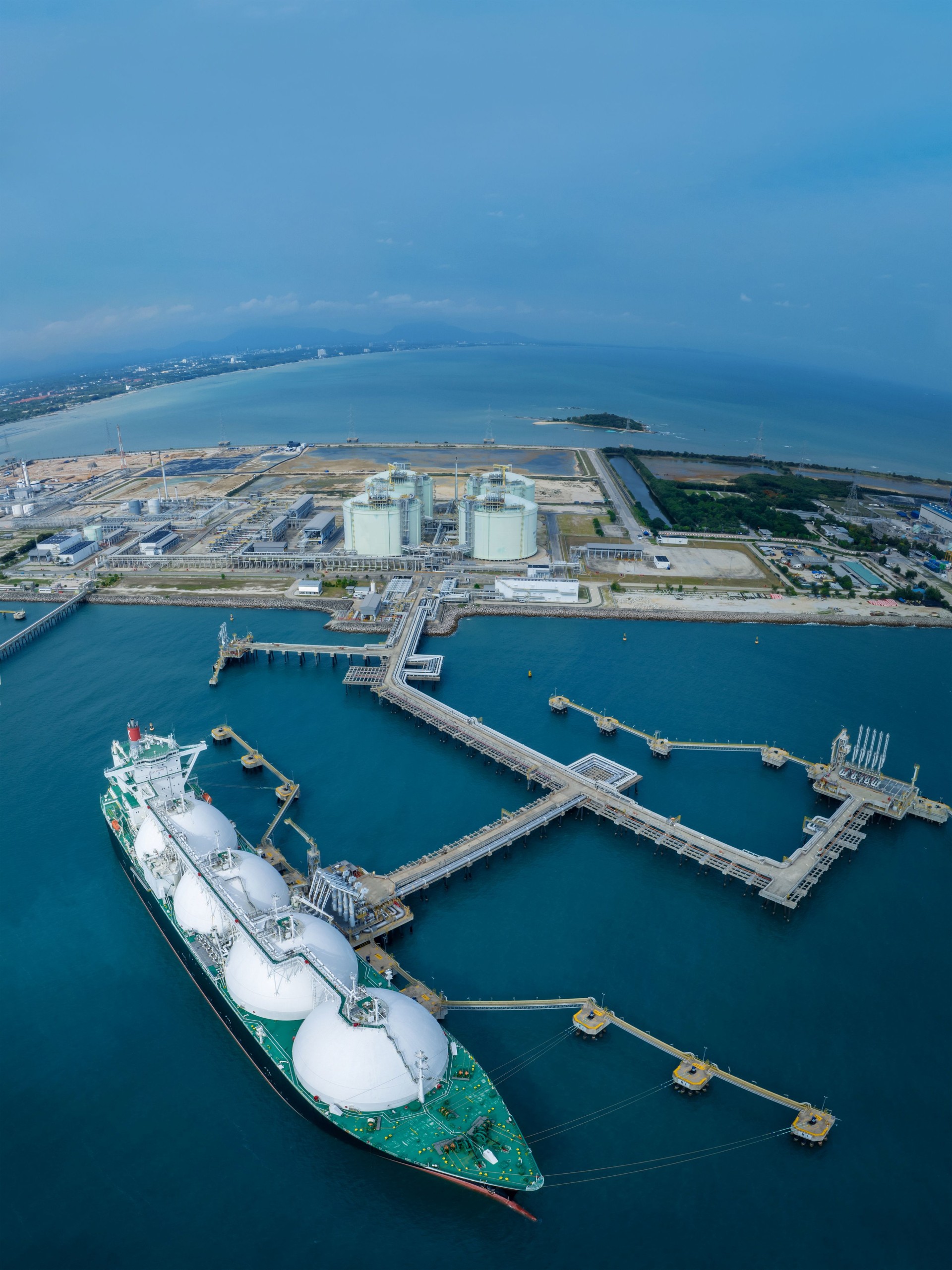
The initiative strengthens EnerMech’s position in offshore pre-commissioning, LNG infrastructure, and industrial maintenance services amid accelerating regional demand.
The investment will fund new facilities, workforce development, and equipment upgrades, including remote flooding consoles, subsea test pumps, GD-600 units, and N₂ generation systems to support offshore projects and long-term maintenance scopes.
In Guyana, EnerMech is establishing a new Georgetown facility that will serve as a base for expansion into Suriname and Trinidad, complementing its existing track record across four ExxonMobil FPSOs and the upcoming Uaru project.
EnerMech is also scaling its Houston LNG technical hub, adding planners, engineers, and project managers to meet growing demand as North American LNG export capacity is projected to double by 2028.
CEO Charles “Chuck” Davison Jr. said the investment “signals our confidence in the Americas and our determination to grow sustainably with our clients and partners.”
“This isn’t about short-term wins,” added Nosa Egharevba, SVP of Integrated Supply Chain & Asset Management. “It’s about building enduring capacity, empowering local teams, and ensuring EnerMech remains the trusted partner of choice across the Americas.”
Oil and gas demand is set to grow, but can T&T supply?
2025, 11/16
An IEA chart showed the growing demand for oil by 2050 based on current policies scenario in he International Energy Agency’s (IEA) World Energy Outlook report which will pique the interest of energy stakeholders in Trinidad and Tobago (T&T).
The release of the report coincided with the first week of COP30 (Conference of Parties), the most important climate change conference of the year organised by the United Nations. For climate activists and enthusiasts, the IEA report would have been less than encouraging in their bid to phase out fossil fuels.
Instead, the IEA forecast the demand for oil and gas could grow until 2050, a spectacular departure from previous predictions that the global energy transition will lead to cleaner forms of energy.
Its 2025 outlook also suggested the supply of Liquified Natural Gas (LNG) could grow to 50 per cent by 2030. The report appeared to thwart hopes of limiting temperature rise to 1.5 degrees Celsius saying “it is now out of reach.”
Based in Paris, the energy security watchdog has been forced to operate under differing agendas of the Biden and Trump administrations for clean energy and the use of fossil fuels.
Ajay Mathur, who served as the second director general of the International Solar Alliance and is a former climate negotiator for India, said, on the sidelines of COP30, “One of the things that the IEA gets right is the fact as far as long-term trends are concerned—short-term trends are anybody’s guess where they may go—but what they get right is where growth is expected and where declines are expected. They get that correct.”
T&T could have best of both worlds
The IEA predicted that under current policy scenarios oil demand will hit 113 million barrels per day by 2050, a 13 per cent increase from 2024 consumption.
Final investment decisions for new LNG projects have increased this year and operations for 300 billion cubic metres of new annual LNG export capacity will start by 2030. This is mainly due to rising power sector demand fueled by the building of data centres and an upsurge in artificial intelligence.
Acting vice president of research, academic and student affairs at the University of Trinidad and Tobago (UTT), Professor Donnie Boodlal, says this country can benefit from the bright outlook for fossil fuels over the next 25 years.
“We are a producer of hydrocarbons and if hydrocarbons are going to be around longer than previously expected, that spells some positivity for Trinidad so that’s a no-brainer.
On the other hand, our reserves have been declining. Many people say that our industry is mature so that’s why we must act quickly…we have not explored extensively yet.”
One of those underexplored provinces is deepwater.
“Even though our reserves are declining, there are many aspects that are untapped because it costs more . But the future pricing mechanism may be such that there may be a higher price for hydrocarbons, therefore enabling tapping into these reserves.
I’m talking about heavy oil and oil produced by enhanced oil recovery , which Trinidad is no stranger to.”
Boodlal would like this country to offer regional energy services such as an LNG power grid hub, leveraging skilled port infrastructure and even the regulatory framework developed over the last century.
“We can export energy services in a more meaningful way in addition to actually tapping the direct energy commodity opportunity itself.”
He admits for the country to exploit this increased demand for oil and gas, the aging infrastructure will be a key factor. However, Boodlal is adamant the country should not abandon its energy transition thrust amidst this latest outlook.
“I think we still need to do the right thing and we need to do that in as clean a way as possible.”
Boodlal has been an advocate for exploring carbon capture and storage (CCS). That is a process by which carbon dioxide ( CO2) from industrial installations is separated before it is released into the atmosphere, then transported to a long-term storage location. While the process is expensive, T&T may have a more enabling economic environment for it.
“I believe that we can co-mingle carbon capture and storage with hydrocarbon exploitation during this time and still get the best of both worlds in that we serve the increasing demand for fossil fuel, but it does not manifest intensively in our carbon footprint.”
There are a few things going for T&T in CCS. The country’s CO2 emissions from the ammonia sector are relatively pure. He said the distance to transport the captured CO2 to storage in Trinidad is also less than some of the other countries in the world where it’s being transported thousands of kilometers. The low cost of electricity will help the financial viability of the project.
The IEA report also pointed out that renewables will grow faster than any major energy source in the next decade. The world is expected to build more renewable energy projects in the next five years than those built in the last 40 years.
Philip Julien,of Kenesjay Green Limited—a local green energy engineering and project development company—was asked if the rising demand for oil and gas could distract this country from its energy transition.
“I think it would be a confidence booster for the Government and the country to know that its current bread-and-butter revenue is intact for the foreseeable future and that also allows it to focus energies on additional renewable energy investment and generation to help feed the clear and present demand of the captive market that is Pt Lisas.”
The IEA added to the continuing debate surrounding the 1.5-degree celsius target under the Paris Agreement.
Boodlal agrees that that threshold is effectively out of reach under the current policies globally that each country has submitted with their nationally determined contribution. So, in other words if nothing materially changes the world is on track to surpass 1.5 by 2050. In fact, the latest projection shows that
“if we continue along the current trajectory, we’re going to be closer to 2 degrees Celsius by 2050.”
However, lead negotiator for the Alliance of Small Island States at COP30, Anne Rasmussen, insisted that that is a narrative being spread, and one she does not subscribe to.
“For us, 1.5 is a legal benchmark. If we overshoot, we continue to advocate for accelerated efforts to bring us back down to that goal. We’re not throwing up our hands and giving up on the 1.5.
If you are saying you cannot meet this, this is still our goal. This is still a legal benchmark. This is still a moral obligation. We will continue to advocate to continue to accelerate efforts to bring it back down to the 1.5.”
CDB Vice President Calls for Action to Strengthen Resilience and Economic Stability
OCTOBER 29, 2025
The Caribbean Development Bank (CDB, the Bank) is urging regional governments and development partners to take decisive action to address persistently low growth and high debt.
At the 2nd Caribbean Debt Forum, Ian Durant, Vice-President Finance & Corporate Services (Ag.) of CDB, outlined a comprehensive set of recommendations to support inclusive sustainable development through improvements in competitiveness, while maintaining macroeconomic stability and building fiscal buffers by addressing debt overhang.
Drawing on recent macroeconomic data and regional assessments, he highlighted persistently low growth trajectory, shaped by deep-rooted structural challenges. These include limited declining productivity and heightened vulnerability to climate shocks.
He underscored the pressing issue of elevated debt levels across many of the Bank’s Borrowing Member Countries (BMCs), which continue to constrain fiscal space and threaten long-term economic stability and the capacity to engage in development spending.
“The Caribbean’s growth trajectory has been constrained by high export concentration, rooted in structural challenges, which has led to low and volatile growth. To unlock our full potential, we must invest in building competitive, diversified economies that can withstand external shocks and deliver inclusive growth.”
While regional debt ratios improved since the pandemic, eight BMCs remain above the 60% debt-to-GDP benchmark. Rising global interest rates and slower nominal GDP growth could reverse recent gains, making debt sustainability a critical development priority.
“Debt sustainability is not just a fiscal issue – it is a development imperative. CDB is committed to supporting our member countries through innovative financing solutions, technical assistance, and policy dialogue to help them build resilience and achieve long-term prosperity.”
He called attention to the Caribbean Single Market and Economy (CSME) as a platform for trade and growth. However, outdated port infrastructure, limited shipping connectivity and high logistics costs continue to constrain the full potential of regional integration to deliver development to the people of the region.
CDB’s logistics study revealed inefficiencies such as paper-based systems, outdated fee structures and industrial relations practices, limited operating hours. He advocated for the enhancement of entrepreneurial ecosystems in a comprehensive fashion, including increased investment in climate-resilient infrastructure, reform and modernisation of the regulatory and institutional frameworks with which the private sector interacts, and expanded access to concessional financing.
He urged coordinated regional action and strategic partnerships to support expansions in logistics infrastructure, innovation, digital transformation, and inclusive growth. CDB remains a steadfast partner to advance the region’s development agenda, and support its BMCs in navigating complex global challenges.
CDB Leads Push for Increased Concessional Climate Financing at COP30
November 10, 2025
Against the backdrop of a devastating hurricane season that again underscored the region’s extreme vulnerability, the Caribbean Development Bank (CDB) will take the climate agenda to the global stage at the 30th Conference of the Parties (COP30) to the United Nations Framework Convention on Climate Change, scheduled for November 10–21 in Belém, Brazil.
The Bank will lead and participate in a series of events, high-level discussions and bilateral engagements aimed at securing greater access to concessional climate finance and strengthening partnerships for sustainable development. CDB President Mr. Daniel Best said this intensified engagement reflects both the urgency and opportunity of the moment.
“The Caribbean’s climate reality has never been clearer or more urgent. The recent passage of Hurricane Melissa underscored what we’ve been warning for years: without predictable, concessional finance, small island states cannot keep pace with escalating climate impacts.
COP30 is one of the most consequential arenas for advancing our case for climate justice and fair financing, and the Caribbean Development Bank will ensure our region’s voice is heard.”
At COP30, the Bank will strategically engage governments, international partners, and private investors to deepen partnerships and advocate for increased concessional financing and innovative mechanisms to mobilise resources for the region.
On November 17, 2025, CDB will co-host three side events that reflect key priorities for climate action and resilience in the Caribbean.
The first session, “Leveraging Private Sector Financing for Transport and Energy Sector Transformation in the Caribbean,” will be held from 10:30 – 11:30 am (BRT) at the CARICOM Pavilion.
The event will explore strategies to unlock private capital through blended finance models, risk-sharing instruments, and innovative partnerships to accelerate investment in renewable energy and sustainable transport systems.
A discussion on “Agriculture and Food Security in the Caribbean: Scaling Innovative Solutions for Climate-Resilient Agriculture” is slated for 12:00 – 1:00 pm (BRT) at the Food and Agriculture Pavilion. The live streamed event will spotlight climate-smart agricultural practices and investment opportunities that can strengthen food security and reduce the region’s dependence on imports.
CDB will join forces with CAF – Development Bank of Latin America and the Caribbean, the Central American Bank for Economic Integration (CABEI) and the CREWS Secretariat to turn attention to disaster preparedness with a panel on “Climate Information and Early Warning Systems for Latin America and the Caribbean”. Scheduled for 3:45–4:45 pm (BRT) at the CARICOM Pavilion, the session will explore initiatives by the institutions to finance and implement early warning systems.
“CDB’s agenda at COP30 underscores our approach to climate action, which is practical, innovative, and built on partnerships.
The Caribbean is helping itself by developing our own solutions to protect lives, preserve livelihoods and transform our energy, transport and agriculture systems to secure our future, but we need the global community to stand with us.”
CDB targets 30-35% of its resources to climate finance demonstrating its commitment to helping Borrowing Member Countries adapt to climate issues. The Bank is also better positioned to deliver transformative regional interventions through a recent increase in its GCF financing threshold to USD 250 million and its new Climate Change Project Preparation Fund, which will help countries design and finance concrete, high-impact projects faster and more effectively.
Grenada: IMFStaff Concluding Statement of the 2025 Article IV Mission
October 29, 2025
A Concluding Statement describes the preliminary findings of IMF staff at the end of an official staff visit (or ‘mission’), in most cases to a member country. Missions are undertaken as part of regular (usually annual) consultations under Article IV of the IMF’s Articles of Agreement, in the context of a request to use IMF resources (borrow from the IMF), as part of discussions of staff monitored programs, or as part of other staff monitoring of economic developments.
The authorities have consented to the publication of this statement. The views expressed in this statement are those of the IMF staff and do not necessarily represent the views of the IMF’s Executive Board. Based on the preliminary findings of this mission, staff will prepare a report that, subject to management approval, will be presented to the IMF Executive Board for discussion and decision.
Washington, DC:
-
- Grenada’s economy continues to navigate elevated global uncertainties well in the aftermath of Hurricane Beryl.
- Economic activity remains robust, with strong construction and other domestic sectors helping to offset moderating growth in tourism.
- Grenada’s fiscal position remains comfortable, with the proven effectiveness of its post-disaster financing framework and prudent savings of recent citizenship-by-investment (CBI) revenues providing space for continued development priority investments.
- Against this backdrop, discussions focused on three key priorities: ensuring careful management of large public investments in alignment with Grenada’s public debt reduction objectives, containing vulnerabilities in the non-bank financial system, and strengthening the foundations for long-term growth and resilience.
- Grenada’s near-term economic outlook remains robust on the back of post-Beryl reconstruction and other development priority investments.
- GDP growth is projected to accelerate to 4.4 percent in 2025 (from an estimated 3.3 percent in 2024), with strong investment and construction activity more than offsetting moderating tourism inflows.
- Headline growth will gradually taper to a more modest estimated potential rate of 2.7 percent by 2029, even as large infrastructure projects, particularly a new teaching hospital under the government’s Project Polaris, sustain high construction activity over the medium-term.
- Moderating inflation, reflecting trends in global fuel and food prices, is expected to gradually normalize to around 2 percent by 2028.
- Current account deficits are projected to gradually narrow, but would remain elevated over the medium term on account of high construction imports.
- The financial system remains stable amid strong recovery from historically subdued bank credit growth.
Grenada’s fiscal position remains comfortable, supported by sizeable savings from recent years’ CBI revenue. However, increased public investment – largely reflecting Beryl-related spending – amid more moderate non-tax revenue is projected to result in a 2025 primary deficit of 2.8 percent of GDP.
The central government is committed to returning to the 1.5 percent of GDP primary balance floor from 2027, supporting the longer-term sustainability of public debt.
Sizeable central government concessional borrowing to fund planned infrastructure investments, including projects implemented through statutory entities, such as Project Polaris, would temporarily halt the decline in general government debt.
Even so, debt would remain on a sustainable path, with the 60 percent of GDP target projected to be achieved by 2033.
Risks to the outlook remain tilted to the downside amid heightened global economic and geopolitical uncertainty. The key risks stem from Grenada’s high natural disaster vulnerability as well as tourism and import dependency, although the impact of any moderate shocks to main tourism source market incomes or global commodity or shipping prices are assessed as modest.
The downside risks could be amplified by disruptions to CBI and FDI inflows, materialization of risks in the domestic non-bank financial system, or implementation delays and cost overruns from large investment projects. Faster-than-projected tourism capacity expansion represents the key upside risk. Maintaining Grenada’s strong fiscal position and its disaster resilience framework remain important buffers against shocks.
Strengthening Public Finances and Fiscal Institutions
The temporary suspension of the primary balance rule has allowed budget space for post-disaster reconstruction outlays without disrupting development priority investments. As the rule resumes, continued current expenditure prudence and revenue enhancing measures would help maintain this space.
Near-term options include broadening the domestic tax base, continued strengthening of tax administration, and exploring alternatives to costly tax reductions to incentivize low-emission vehicles. Introducing a more rules-based cost-price pass-through formula for gasoline, and improving the targeting and efficiency of social benefits over time, would also help strengthen spending prioritization.
The planned large public investment projects address important development needs, but also call for careful management of long-term fiscal risks. Post-completion operating and maintenance costs should be carefully assessed.
At the same time, to ensure the fiscal rules framework adequately controls for debt-creating investment by statutory entities, pursuing a more comprehensive primary balance rule would align the framework more closely with the general government debt anchor and reinforce policy credibility.
In the interim, such investments through statutory entities should be included in the central government’s budget planning and adhere to equivalent reporting and auditing requirements. The increasing importance of state-owned enterprises and statutory bodies in general government fiscal operations also warrants continued strengthening of their oversight and monitoring.
Improvements to public investment and financial management should proceed alongside the scaled-up public investment. This includes continuing the recent encouraging progress in project management and monitoring, which has improved investment execution.
Plans for greater catalyzation of private investment, including around Project Polaris, underscore the need to operationalize the public-private partnership framework.
Closer integration of government savings with the debt management strategy would help optimize government financing costs. Further strengthening of the medium-term fiscal framework projections would support a firmer shift to multi-year budget planning.
Addressing Non-Bank Vulnerabilities
Accelerating system-wide credit growth and non-bank vulnerabilities call for careful monitoring. The strong uptick in bank lending partially reflects normalization of historically subdued credit conditions and is backed by high system liquidity and strong asset quality compared to regional peers.
Credit union asset quality also shows encouraging signs of improvement, yet ensuring adequacy of loan loss provisioning with prudent treatment of collateral values remains a critical safeguard against risks. Stepped-up monitoring of loan forbearance practices, closer alignment of impaired asset treatment with banks, and further enhancement of risk-based supervision and stress testing capacity would strengthen assessment of potential risks stemming from the sector’s rapid expansion.
In the general insurance sector, enhancing monitoring of reinsurance conditions and local market premium developments remains important. Addressing pending action items from the CFTAF Mutual Evaluation remains key to strengthening the AML/CFT framework.
Supporting Long-term Growth Potential, Resilience and Institutional Capacity
Facilitating domestic investment and harnessing opportunities to deepen the tourism sector’s integration with the local economy can boost long-term growth. Grenada’s transition to a tourism-led growth model has so far had a muted impact on its GDP growth potential, owing to high foreign inputs and parallel drag from weak local investment.
While the more recent uptick in local private investment is encouraging, more coordinated efforts to strengthen small business development and access to finance would help broaden and sustain this positive momentum. These should also continue to leverage regional initiatives such as the partial credit guarantee scheme as well as measures to deepen digitalization of the economy.
Ongoing initiatives to enhance locally offered tourism services, interlinkages with other sectors, and the development of niche market offerings would boost the sector’s domestic growth contribution. Infrastructure investments, including the Project Polaris, could serve as an important catalyst for these efforts when well-calibrated to areas of Grenada’s comparative advantage.
Broader efforts to strengthen human capital, productivity, and resilience also remain important. Expanding youth-focused technical and vocational training, ongoing modernization of education infrastructure, and enhancing job-matching services can help address persistent skills shortages and better align Grenada’s workforce to its evolving economic needs. Ongoing progress in development partner-supported efforts to diversify the energy base and exploring cost-effective opportunities to diversify import source markets could increase resilience to external shocks and yield productivity dividends.
Continued efforts to support investment in disaster-resilient infrastructure remain important to complement the proven effectiveness of Grenada’s post-disaster financing framework in the aftermath of the 2024 Hurricane Beryl.
Finally, strengthening economic statistics and institutional capacity will be critical to support evidence-based policymaking. Data deficiencies somewhat hamper surveillance and contribute to uncertainty in economic projections.
These include gaps in balance of payments coverage and monitoring of large investment projects, outdated CPI weights, and the absence of GDP expenditure data, which increase reliance on partial high-frequency indicators.
Staffing shortages and high turnover in key areas supporting macroeconomic surveillance and analysis are major constraints and would benefit from prioritized attention in alignment with the objectives of the ongoing public sector functional review and regularization process. Progress in this area would help fully harness the benefits of technical capacity building support.
****
The IMF mission team thanks the Grenadian authorities and other counterparts for their warm hospitality and constructive discussion.
Jamaica: United Oil & Gas signs vessel contract for Survey
12 Nov 2025
AIM-listed United Oil & Gas, following on from its announcement on the 9th October about signing a MOU with TDI Brooks International, is pleased to confirm that it has signed a contract with TDI Brooks International to supply the R/V Gyre survey vessel for the planned piston coring and surface geochemical programme on the Walton Morant Licence, offshore Jamaica.
This milestone comes as Jamaica begins its recovery from the recent hurricane, which caused significant damage in parts of the island. United extends its thoughts to all those affected and reaffirms its long-term commitment to supporting Jamaica’s energy development and sustainable growth. United are continuing to work with local authorities to support the on-going relief efforts.
Highlights:
- Contract signed with TDI Brooks International for the R/V Gyre vessel expected to arrive mid to late December 2025 for piston coring and surface geochemical survey.
- The programme comprises the collection of 40 to 60 seabed cores from the Walton and Morant Basins, together with bathymetric, multibeam, and heat-flow surveys.
- Operations expected to last two to three weeks; initial results expected early Q1 2026
- Represents critical technical de-risking step supporting ongoing farm-out discussions and shareholder value creation.
- Port infrastructure remains operational, with inspection and readiness procedures being coordinated with the relevant Jamaican authorities.
Survey Scope and Strategic Context
- The piston coring and surface geochemical campaign, to be conducted by TDI Brooks International, represents a key component of United’s forward work programme under its extended licence, which runs until January 2028.
- The survey will acquire seabed core samples and supporting datasets designed to confirm the presence of thermogenic hydrocarbons, refine basin modelling, and enhance the definition of key prospects, including Colibri and Oriole.
- Collected data will be analysed for geochemical and thermal signatures to confirm the presence of a working petroleum system offshore Jamaica. The results are expected to significantly de-risk the basin and strengthen the technical basis for ongoing farm-out discussions.
- The survey operations are expected to take two to three weeks, with initial analytical results expected in early Q1 2026.
Commitment to Jamaica and Local Engagement
United continues to work closely with the Ministry of Energy, Telecommunications and Transport, the National Environment and Planning Agency, and local stakeholders as recovery efforts continue.
The Company recognises the challenges faced by coastal and fishing communities, particularly in the west, and will maintain engagement through its Country Manager in Kingston.
Brian Larkin, Chief Executive Officer of United Oil & Gas, commented:
‘While Jamaica focuses on recovery from the recent hurricane, United remains fully committed to supporting the country and advancing our planned operations responsibly and is working with local authorities to support relief efforts. Further updates will be provided in due course.
Signing the vessel contract with TDI Brooks is a major step forward and it sets a clear schedule for a December mobilisation, marking the transition from planning to execution.
The piston coring and geochemical survey will provide vital new data to confirm the presence of hydrocarbons and materially de-risk the Walton Morant Basin. We expect operations to last just a few weeks, with initial results in early Q1 2026.
This programme represents a key value catalyst for United, strengthening our technical position and supporting our drive toward a successful farm-out and future drilling activity.’
Source: United Oil & Gas
Excelerate’s Jamaica LNG business resumes full ops after Hurricane Melissa
US FSRU player Excelerate Energy said that its LNG assets in Jamaica are ready to resume full operations following the passage of Hurricane Melissa.
U.S. Support for Hurricane Melissa Recovery
Fact Sheet November 12, 2025
The United States continues to provide disaster assistance throughout the Caribbean to help recovery efforts in the wake of Hurricane Melissa. As of November 12, this includes:
- Travel by Senior Official for Foreign Assistance, Humanitarian Affairs, and Religious Freedom Jeremy Lewin to Jamaica to meet Prime Minister Andrew Holness, the State Department Disaster Assistance Response Team (DART), and the Fairfax County and Los Angeles County Urban Search and Rescue (USAR) teams;
- The announcement of nearly $12.6 million in additional disaster assistance on November 10, bringing the total U.S. assistance in the wake of Hurricane Melissa to nearly $37 million;
- The deployment of a DART, comprised of State Department disaster response experts, to The Bahamas, The Dominican Republic, Haiti, and Jamaica on October 29;
- The deployment of the Fairfax County and Los Angeles County Fire Departments’ USAR teams to Jamaica to support search and rescue operations and debris clearing efforts;
- 530,000 pounds of relief commodities, including food, safe drinking water, and shelter supplies, airlifted by the U.S. Southern Command’s Joint Task Force-Bravo to hard-hit communities in western Jamaica;
- The delivery of 12,000 tarps,12,000 shelter kits, and hygiene supplies for 12,000 families to Jamaica from a State Department warehouse in Miami, Florida;
- The distribution of nearly 3,000 plastic sheeting and shelter kits —prepositioned by the U.S. in Haiti— via the International Organization for Migration for Haitians displaced by the storm;
- The distribution of food commodities by the UN World Food Program to 12,700 people in Haiti;
- Support to The Bahamas Red Cross Society to provide shelter and water, sanitation, and hygiene support and,
- Funding for Caritas in Cuba to ensure Cuban people affected by Hurricane Melissa receive assistance without the interference of the Cuban regime.
The United States continues to stand by the people of Cuba, Haiti, Jamaica, and The Bahamas as they recover from the devastation caused by Hurricane Melissa.
Jamaica also received aid from UK, Guyana and Trinidad & Tobago.