Geopolitical significance of Venezuela oil sector
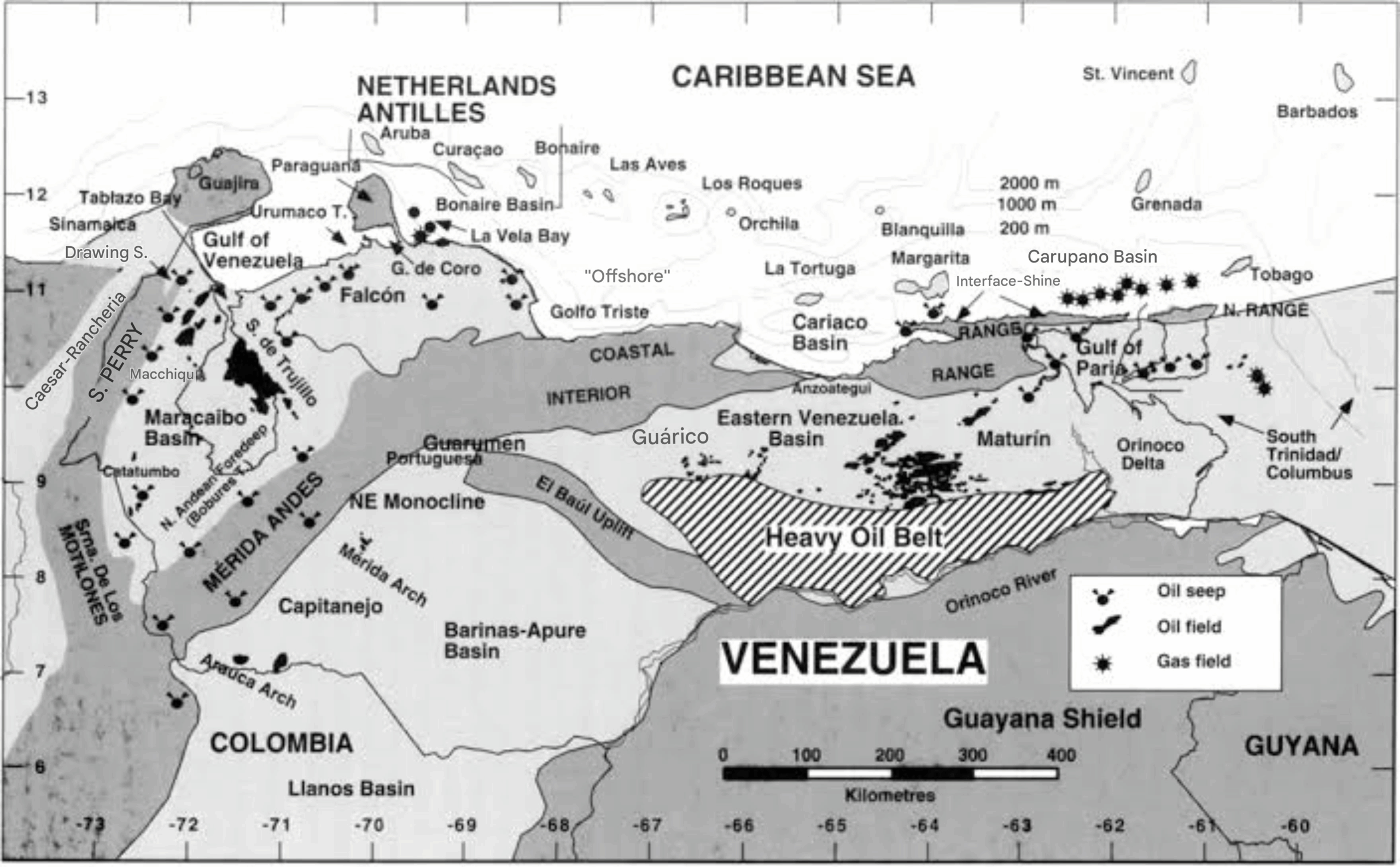
With 365 oil and gas fields , 270 in Eastern Venezuela Basin (including 45 of the Orinoco heavy oil belt [OHOB]) and 70 in the Maracaibo Basin, the OPEC founder offers high oil discounts, especially to PRC importers.
Thus it maintains exports following escalation of US sanctions on its oil sector, seizure of tankers and an embargo on oil exports, heightening geopolitical risk, energy insecurity and volatility in the international oil market.
These measures sparked mixed reactions amid US military presence in the region and the threat of further seizures causing market instability and rising oil prices. US – Venezuela tensions and the danger of military conflict could threaten oil production and constrain the structure of the heavy crude oil market.
Sanctions diverted the bulk of the petrostate’s exports to PRC and Russia. Disruption could hike prices of Brent, West Texas Intermediate and heavy grades on which the USA and Asia rely.
From 3.1 million barrels/day in 1998, oil production is declining in Venezuela, with the largest proven oil reserves, crippled by sanctions, seizures, technical problems, corruption, mismanagement, brain drain and lack of investment. PRC, largest buyer of Venezuelan crude, imports 778,000 barrels, 81.7 percent of oil exports.
Geopolitical risk is at an all-time high as the season of goodwill inspires leaders to preserve harmony and stability.
US-VENEZUELA ENERGY DEAL TO UNLEASH PROSPERITY AND PEACE
7 January 2026
The USA is marketing Venezuelan crude oil in the global marketplace through the leading commodity marketers and key banks to execute and provide financial support for these crude oil and crude products sales.
All proceeds will first settle in U.S. controlled accounts at globally recognized banks to guarantee the legitimacy and integrity of the ultimate distribution. These funds will be disbursed for the benefit of the Venezuelan people at the discretion of the U.S. government. Oil sales begin immediately with the anticipated sale of approximately 30 – 50 million barrels and will continue indefinitely.
The only oil transported in and out of Venezuela will be through legitimate and authorized channels consistent with U.S. law and national security.
The USA is selectively rolling back sanctions to enable the transport and sale of Venezuelan crude and oil products to global markets. U.S. diluent, light crude oil, will flow into Venezuela, as required, to mix, upgrade and optimize production and transport of Venezuela’s high viscosity crude oil.
As part of the significant modernization, expansion and upgrading required, the U.S. will authorize the import of select oil field equipment, parts and services to immediately offset decades of production decline and drive near-term growth. This will involve technology, expertise and investment from American and other international energy partners.
Venezuela’s electricity grid is dilapidated and fragile after years of mismanagement, corruption and poor maintenance. Electricity production declined by over 30 percent, due to substantial underinvestment and inadequate operations and maintenance practices.
The US will improve the electricity grid, essential to increasing oil production, economic opportunity and the daily quality of life for the Venezuelan people.
USA warns Cuba
January 12th 2026 –
US President Donald Trump issued a total oil embargo and a diplomatic ultimatum to Cuba, signaling a Venezuela-style transition. It was even rumored that US Secretary of State Marco Rubio could be Cuba’s next President.
Rubio was born in Miami, Florida, on May 28, 1971, to Cuban immigrants Mario Rubio and Oria García, who fled the island in 1956, two years before Fidel Castro’s accession to power. He has always remained attached to the developments in his ancestral land and Trump did not rule out the possibility.
Trump warned the Miguel Díaz-Canel Communist regime that, absent former Venezuelan ruler Nicolás Maduro, further shortages loom since the longstanding alliance between Havana and Caracas had been severed, even under caretaker President Delcy Rodríguez.
Specifically, Trump announced that the era of Venezuelan subsidies to the Cuban government was officially over. Cuba had “lived for many years” on Venezuelan resources in exchange for security, an arrangement the US military has now dismantled.
“THERE WILL BE NO MORE OIL OR MONEY GOING TO CUBA – ZERO! I strongly suggest they make a deal, BEFORE IT IS TOO LATE. Venezuela doesn’t need protection anymore from the thugs and extortionists who held them hostage for so many years.” Trump posted.
He insisted that the US military would now serve as the protector of Venezuela’s sovereignty: “Venezuela now has the United States of America… to protect them, and protect them we will.”
However, Díaz-Canel and Cuban Foreign Minister Bruno Rodríguez rejected the ultimatum, labeling the US actions as “criminal hegemony.” They insisted that Cuba would not be coerced into a “deal” under the threat of energy starvation.
“Cuba is a free, independent and sovereign nation. No one tells us what to do. [The US] has no moral authority to point the finger at Cuba… we are ready to defend the homeland to the last drop of blood,” Díaz-Canel said, while Foreign Minister Rodríguez denied that Cuba had ever received payment for “mercenary” security services. The Cuban revolutionary leaders noted,
“The US is behaving like a criminal and uncontrolled hegemon that threatens peace and security… Cuba has every right to import fuel from those markets willing to export it,” .
As the embargo on Cuba takes hold, US Energy Secretary Chris Wright announced a massive re-entry of Western oil majors into Venezuela. The US Department of Energy is “selectively rolling back” sanctions to allow Chevron, Shell, Repsol and ENI to rebuild Venezuela’s infrastructure. Wright confirmed the US claimed 50 million barrels of “blocked” crude and will manage all future sales. Proceeds from Venezuelan oil will be held in US-controlled bank accounts until the USA determines the country is “ready” for the funds.
“We’re going to market the crude coming out of Venezuela… first this backed-up store of oil and then indefinitely going forward. We will use the proceeds to benefit the Venezuelan people,” Wright explained.
US seizes tankers in Caribbean Sea to control Venezuelan oil exports
9 January 2026
US Coast Guard and Joint Task Force Southern Spear seized oil tanker Olina, falsely flying the flag of Timor Leste, in an operation conducted near Trinidad.
The fully loaded Olina left Venezuela last week in a flotilla after the U.S. arrested leader Nicolas Maduro on January 3 and it was returning following the U.S. blockade of Venezuelan oil exports.
The U.S. imposed sanctions on the tanker in January last year, then named the Minerva , for being part of the shadow fleet sailing with little regulation or known insurance. The Olina, sanctioned for transporting Russian oil, was seized after the U.S military and Coast Guard intercepted the tanker Marinera, formerly the Bella 1, which evaded a U.S. blockade of sanctioned tankers near Venezuela and was escorted by a Russian Navy submarine earlier this week.
The sanctioned tanker Sophia, was seized on Wednesday for “conducting illicit activities in the Caribbean Sea.” The U.S. Coast Guard boarded the M/T Sophia, a supertanker registered in Panama, listed as part of the dark fleet, which departed Venezuela with a cargo of crude oil and its tracking systems turned off. The Southern Command confirmed that the tanker is being escorted to the U.S. for legal proceedings in respect of sanctions.The “Ghost fleet” evades international sanctions by sailing without reporting their position and are difficult to track along their routes.
Precarious petroleum paradox of poverty amid plenty
2026, 01/08
As the Season of Goodwill buoyed hopes for the Dragon rebirth , Bolivarian bedlam stymied plans to secure long-term energy security from the gas field. The game-changing deal is thwarted by Venezuela’s political turmoil – overthrow of leader Nicolás Maduro in Caracas, collapsing infrastructure and unpredictable US sanctions. However, renaissance remains possible as the petroliferous behemoth pivots.
Experts differ on gas monetisation
Assessing the future of Dragon gas, former T & T energy minister Kevin Ramnarine warned that the project’s legal standing remains clouded by the short-lived US Office of Foreign Assets Control (OFAC) licence and Venezuela’s abrupt decision to rescind agreements.
UWI professor emeritus Patrick Watson is more blunt, insisting the project may never materialise during political upheaval and revolutionary resistance to foreign control of resources.
Economist Dr Marlene Attzs advised treating Dragon as a strategic option, exposed to geopolitical, financial and execution risks beyond T&T’s control.
Professor Anthony Bryan offers a more measured view that the deal is not in jeopardy. “It will be up to the new regime in Caracas to carry on . The agreement still stands unless somebody cancels it and eventually it will happen.”
These perspectives highlight obstacles plaguing a project that could boost natural gas security but remains hostage to Venezuela’s instability, shifting diplomacy and the unpredictable realities of global energy politics.
OFAC licence and fragile agreements
On legal stability, Ramnarine argued the Dragon project’s foundations are shaky. The OFAC licence, critical to trade energy with Venezuela, was reinstated after Prime Minister Kamla Persad-Bissessar met US Secretary of State Marco Rubio in October during the UN assembly.
“The OFAC licence was one of the outcomes of her meeting with Rubio. It was given for a 6-month period, which ends in April. Many asked, why give it for six months? Perhaps he had known the timeline and couldn’t say it.”
The licence was soon overshadowed by Venezuela’s vindictive declaration of then VP, now interim President Delcy Rodríguez, that all energy agreements were rescinded.
“So we don’t know the legal status of the Dragon deal.”
While Dragon leads headlines, other cross-border projects deserve equal attention. The Cocuina-Manakin field extends across the maritime boundary between T&T and Venezuela, approximately 68 miles off Trinidad’s southeast coast.
“People keep forgetting the Cocuina-Manakin deal. That’s an equally important arrangement because Cocuina-Manakin is realisable from an engineering and production point of view. It’s very close to BP’s assets on the southeastern coast.”
The Manatee project is a reservoir complex shared with Venezuela.
“We happen to be producing the gas which is on our side. Ultimately, if we could get gas from Venezuela into Trinidad, that’s good. But the timeline is anybody’s guess”.
Ramnarine highlighted Venezuela’s aging energy infrastructure, as oil production sank below one million barrels per day — as much as Guyana now produces. “They used to produce over 3 million barrels of oil per day 12 or 15 years ago. Production has largely collapsed and infrastructure is decaying. It’s going to require a tremendous amount of money to bring back their oil industry.”
Venezuela still holds the largest proven oil reserves, around 300 billion barrels and an estimated 200 trillion cubic feet of natural gas.
“Significant parts of that are within striking distance of Trinidad & Tobago, where we have a shortage. If it could all work out in our favour, then that’s great. But nobody at this time could really predict how this scenario will unfold.”
A pessimistic Watson warned that the Dragon field may never become operational.
“Dragon is not available for a long time to come. If it’s going to be available, it will be many years from now.”
He noted Venezuela’s political chaos, mass protests, rumours of officials fleeing abroad and conflicting accounts of who is in charge. While some celebrate the ouster of Maduro, much of his regime remains intact. Venezuelans, steeped in revolutionary traditions from Bolívar, reinforced by Hugo Chávez, would resist attempts by foreign powers to seize control of their oil and gas.
“They are not going to sit back and let the Americans take over.”
Watson criticised T&T reliance on short-term OFAC licences. However, 6 months for an energy agreement that takes decades to operationalize showed US goodwill, inspiring hope to keep the project alive.
Attzs viewed the reversal through a clear economic risk-management lens.
“If discussions resume in the near term, the project could, over the medium term, support domestic gas security and downstream activity.”
The Central Bank monetary report signalled other energy developments that could provide fiscal and foreign exchange relief if realised. She warned against basing revenue or foreign exchange expectations on uncertain outcomes.
“Repeated external shocks, whether geopolitical, energy-related, or financial, highlight economic vulnerability. Reducing structural vulnerabilities and advancing economic diversification should therefore remain high on the national agenda”.
In a different interpretation Bryan maintains that the underlying commercial logic of the deal remains intact despite political noise. His optimistic view suggests that the Dragon deal is not in jeopardy. The oil and gas business is subject to complex contractual agreements and lengthy negotiations but he sees no reason why Dragon should not eventually proceed, as the new leader pivots to cooperation.
Timeline of the Dragon gas deal:
* December 2016: Ex- PM Dr Keith Rowley and Venezuelan President Nicolás Maduro sign a government-to-government agreement to explore the Dragon field in Venezuelan waters near T&T’s Hibiscus platform.
* August 2018: A formal commercial term sheet is signed in Caracas. The plan is to build a 17 km pipeline to transport gas to T&T for processing and export as Liquefied Natural Gas (LNG).
* 2019: The US imposes sanctions on Venezuelan state oil company, PDVSA, effectively freezing the project. International banks and companies (including Shell) are unable to facilitate the deal without risking U.S. penalties.
* 2020–2022: The project remains in limbo as T&T struggles with declining domestic gas production, leading to the idling of Atlantic LNG Train 1.
* January 2023: The US Treasury OFAC (Office of Foreign Assets Control) grants T&T a 2-year waiver to develop Dragon, with a strict condition: No cash payments to Venezuela. Payments must be “in kind” (g., food or medicine).
* October 2023: Following an electoral deal between Maduro and the opposition, the US eases sanctions. The OFAC waiver is amended to allow cash payments in USD.
* December 2023: Venezuela officially grants a 30-year licence to Shell (as operator) and T&T National Gas Company (NGC) to develop the field.
* April 2024: Amidst a shift in US foreign policy and reimposition of sanctions by the Trump administration, the OFAC licence is revoked and the project ise again halted.
* October 2024: Despite suspension, preliminary geotechnical surveys begin using the vessel Dona Jose 2 to map the pipeline route.
* May 2025: T&T submits a new application to the U.S. for a renewed licence.
* October 2025: A breakthrough followed a meeting of T&T Prime Minister Kamla Persad-Bissessar and US Secretary of State Marco Rubio. US grants a 3-stage OFAC licence .
Stage 1: Permits negotiations through April 2026.
New Condition: Mandatory participation of US companies in the development.
* January 2026
January 3, 2026: US military forces arrests Nicolás Maduro.
Current Status: The deal is contingent on US success in persuading American oil companies to rebuild Venezuela’s energy sector while transition to a new regime in Caracas (currently led by Delcy Rodríguez) has frozen all pending energy deals
JANUARY HISTORY
1 JANUARY 1976
50 YEARS AGO Venezuela nationalised the oil industry built by American and Europeans.
3 JANUARY 1990.
Panama was a precedent when its leader General Noreiga was arrested on drug trafficking charges and surrendered to US special forces, as in Venezuela 2026.
JANUARY 2026 US Secretary of State Marco Rubio says Maduro, arrested on 3 January without conventional ground forces, will “stand trial on criminal charges” in the US and remains in US custody. US strikes were “deployed to protect and defend those executing the arrest warrant”.
Colombia is on the front line with over 2,000 km of land border with Venezuela and throughout history, economic and security crises in the neighbours have driven millions to seek refuge on either side.
US attorney general Pam Bondi says that Nicolas Maduro and his wife Cilia Flores have been indicted in the Southern District of New York. The Venezuelan leader faces charges of
- Narco-Terrorism Conspiracy,
- Cocaine Importation Conspiracy,
- Possession of
-
- Machine guns and
- Destructive Devices and
-
- Conspiracy to Possess Machine guns and Destructive Devices against the United States.
“They will soon face the full wrath of American justice on American soil in American courts. On behalf of the entire U.S. DOJ,
I would like to thank President Trump for having the courage to demand accountability on behalf of the American People, and a huge thank you to our brave military who conducted the incredible and highly successful mission to capture these two alleged international narco traffickers.”
U.S. supply anchors global markets amid hemisphere hurdles
World Oil January 12, 2026
Venezuela’s potential reentry into global oil markets highlights a central lesson for the energy industry: reserves alone do not guarantee supply and governance failures can sideline even the largest resource bases.
American Petroleum Institute CEO Mike Sommers said “Reserves alone don’t produce energy. Energy strength requires good governance, stability and policies that allow development and long-term investment to succeed.”
Previewing API’s 2026 State of American Energy event, the API President framed Venezuela as a cautionary tale and a long-term opportunity that needs time, capital and policy reform to meaningfully affect global balances.
“Venezuela sits on some of the largest oil reserves in the world but today it produces less oil than North Dakota. That demonstrates a simple truth: energy strength requires good governance, stability and policies that allow long-term investment.”
Years of corruption and contract seizures devastated the upstream sector, sharply reducing output and eroding investor confidence. While the US administration signaled interest in reopening the country to U.S. oil companies, Sommers emphasized that significant prerequisites remain before capital flows at scale.
- Those include
- contract sanctity,
- rule of law and
- security for US workers
- conditions essential for companies considering a return after nearly two decades away.
Limited near-term barrels, long-term implications
Sommers cautioned that Venezuela is unlikely to deliver large volumes quickly, particularly from the capital-intensive Orinoco Belt, even if sanctions are eased.
Some incremental production could emerge sooner from Lake Maracaibo, where Chevron already operates but rebuilding the sector will take years. Venezuela’s struggles underscore how dramatically global markets have shifted.
U.S. oil and gas production now exceeds that of Iran and Venezuela combined by a wide margin, helping push Middle East imports to generational lows and strengthening market resilience during geopolitical shocks.
Today’s markets are far more resilient because the USA is the world’s largest energy producer. “Energy strength doesn’t happen by chance. It’s the result of choices.”
Broader market context: demand still rising
Other API leaders said Venezuela’s situation is unfolding against a backdrop of record global demand growth, not oversupply. Dustin Meyer, senior vice president of policy and economics, said oil, natural gas, LNG and electricity consumption all reached new highs last year.
The idea that demand had peaked collapsed under the weight of reality. Venezuela’s oil-heavy resource base does little to alter the strong outlook for U.S. natural gas production, particularly for LNG exports and power generation.
Together, Venezuela and Middle East developments reinforce the same message for policymakers and investors: reliable supply depends on stable policy, infrastructure and market-driven investment—not political intervention.
API will expand on these themes at its 2026 State of American Energy event in Washington, where geopolitical risk, rising demand and upstream investment will be central topics.
Exxon may be sidelined in Venezuela revival
Tony Czuczka and Simon Casey (Bloomberg) January 12, 2026
“I’d probably be inclined to keep Exxon out. I didn’t like their response. They’re playing too cute.”
President Donald Trump signaled he is considering excluding ExxonMobil from his scheme for U.S. majors to rebuild Venezuela’s once-mighty petroleum industry, displeased with its response to his initiative without specifying how to exclude the champion operator.
At his White House meeting with almost 20 oil executives, ExxonMobil CEO Darren Woods maintained a harsh stance and expressed some of the strongest reservations on re-entering Venezuela, “uninvestable” in its current state, beset by corruption and insecurity.
The president’s comments highlight the challenge of persuading the U.S. oil industry to steer an ambitious reconstruction of Venezuela’s energy sector, announced hours after the ouster of its former leader. Reviving the industry and undoing years of underinvestment and mismanagement would require $100 billion over a decade.
Despite U.S. moves to acquire control of Venezuelan oil exports, questions remain over how major investment on the ground could be guaranteed over a protracted period. On backstops or guarantees he told oil companies he was willing to provide, Trump said:
“Guarantees that they’re going to be safe, that there’s going to be no problem. And there won’t be.”
Chevron Corp., Exxon’s biggest U.S. rival, is the only Western oil major to have continued operating in Venezuela under Maduro. Vice Chairman Mark Nelson told the White House meeting that Chevron was poised to significantly ramp up output from current levels of 240,000 bpd and could increase production by about 50% over the next 18-24 months.
In contrast, Woods struck a more skeptical tone, noting how Exxon assets were seized by the Venezuelan government on two separate occasions. The company departed for good after President Hugo Chávez nationalized its remaining operations in 2007, after the 1976 nationalization under President Carlos Andrés Pérez.
Woods said, “If we look at the legal and commercial constructs and frameworks in place today in Venezuela today, it’s uninvestable.” Despite those reservations, Exxon is ready “to put a team on the ground” if there is an invitation from the Venezuelan government and appropriate security guarantees.
We’re confident that with this administration and President Trump working hand-in-hand with the Venezuelan government that those changes can be put in place”.
Woods wasn’t alone in expressing caution at the meeting but other executives were more optimistic, including Repsol CEO Josu Jon Imaz San Miguel, who said the Spanish company was “ready to invest more in Venezuela today” once the necessary commercial and legal framework is in place.
Traps and trammels slow Venezuela Oil Renaissance
BloombergNEF January 6, 2026
Revival of Venezuela’s oil sector could materially reshape global oil markets over the long term, given its 300 billion barrels of proven reserves, the largest but with major constraints. High-sulfur and heavy crude is costly and technically challenging to transport and refine compared with light, sweet grades.
Years of mismanagement and chronic underinvestment hollowed out the industry. Any meaningful recovery would require time, large-scale infrastructure rebuilding and billions of dollars in capital, with sustained involvement from international oil companies.
Securing that level of commitment remains a tall order as oil majors prioritize more competitive, lower-risk projects elsewhere.
Discounted oil
The majority of proven oil reserves is in the Orinoco Oil Belt. The region produces viscous and more sulfur-intensive crude compared to international crude grade benchmarks, US West Texas Intermediate (WTI) and Europe’s Brent crude.
Orinoco crude has an American Petroleum Institute gravity which measures petroleum density, of 9.5–12 and sulfur content of 4%–5%, comparable to Canada’s oil sands bitumen.
Heavy grades need to be blended with diluent condensate or naphtha to facilitate transport and process. Refining requires specialized equipment, like cokers. As a result, heavy, sour crude trades at a material discount compared to international benchmarks.
Based on recent prices for crude grades and solving for specific gravity, Venezuela’s heavy crude ( without blending) should trade at a $7- to $10-a-barrel discount compared to WTI.

Safer alternative options to invest
Safer alternative options to invest
President Donald Trump said US oil majors will invest in rebuilding Venezuela’s oil industry. However, it is unclear how much capital US firms will commit or how quickly.
One estimate suggests an annual capital commitment of $10 billion over the next decade. From an investment perspective, Venezuelan projects will need to compete for capital and US oil majors have many other options.
Exxon Mobil holds major acreage positions in Guyana and the Permian Basin.
Guyana projects can break even near $35 a barrel and the Exxon-favored Permian Midland Basin has an average break-even oil price of $48 a barrel. Exxon’s breakeven in the Midland Basin is likely lower, as the company is deploying a new type of proppant that improves well recoveries.
WIth similar choices in Guyana through acquisition of Hess Corp and in the Permian Delaware Basin, where break-even prices range from $37 to $44 a barrel, Chevron has major positions in the Gulf of Mexico, where brownfield projects are competitive and can break even at oil prices of $30 per barrel. Greenfield projects break even at a higher level of $56.50 per barrel.
ConocoPhillips is a major player in Alaska where greenfield projects have a break-even price near $54 a barrel, while brownfield projects are economic at $37 a barrel and in Canada where in-situ oil sands projects require $42 a barrel to break even.
Venezuela’s oil production had an estimated break-even price between $42 and $56 a barrel in 2020, with the Orinoco region at $49.26 a barrel. While lower than greenfield projects in the Gulf of Mexico and Alaska, it is considerably higher than many other projects and acreage within these oil majors’ portfolios.
With abundant lower-cost projects in stable, predictable political environments, US oil majors may be reluctant to commit substantial capital in Venezuela without stronger incentives.
Planning for the long term
Restoring Venezuela’s oil industry would require companies to overcome several hurdles: crude output that trades at a considerable discount to global benchmarks, billions of dollars in capital commitment and intense competition for capital within global portfolios.
With some oilfields declining by 15% a year and demand expected to remain elevated for decades, long-cycle investments in Venezuela could make commercial sense over the long term.
As national oil companies such as Saudi Arabian Oil Co. historically benefited from asset longevity, US oil majors may yet find a path to similar long-life returns, if risks can be managed.
Venezuela Shuts Oil Wells
Rigzone 30 December Bloomberg
Venezuela shut oilwells as a US blockade financially squeezes a region with the world’s largest petroleum deposits.
PDVSA began shuttering wells in the Orinoco Belt on December 28 as the NOC ran out of storage space and inventory swelled. PDVSA aims to reduce Orinoco Belt production by at least 25% to 500,000 barrels a day, a 15% cut of overall output of 1.1 million barrels a day.
The decision signals a reality check for Venezuela’s regime, which attempted to maintain exports at the core of the OPEC founder’s economy. Disabling wells is a last resort because of the operational challenges and high costs to restart.
On December 23 PDVSA signed off on the plan to decrease production starting December 28 to shut wells in the most extra-heavy crude oil division of the Orinoco Belt, Junin, then move to Ayacucho and Carabobo, which hold less heavy oils.
PRC is Venezuela’s main oil buyer. The US imposed sanctions against Venezuela in 2019 and this month President Donald Trump ordered a military blockade to stop drug cartels.
White House orders focus on ‘quarantine’ of Venezuela oil
Steve Holland December 25, 2025
Unclear how US military will focus ‘almost exclusively‘ on interdicting Venezuelan oil
December 24 (Reuters) US military forces will focus almost exclusively on enforcing a “quarantine” of Venezuelan oil for at least the next 2 months.
The administration is interested in economic rather than military means to pressure Caracas. While military options exist, the focus is to first use economic pressure by enforcing sanctions to reach the outcome the government seeks.
President Donald Trump is publicly coy about his precise aims regarding Venezuela but privately pressured President Nicolas Maduro to flee. Trump said it would be smart for Maduro to leave power.
Efforts so far exerted tremendous pressure on Maduro and the belief is that by late January, Venezuela will confront an economic calamity unless it agrees significant concessions after the U.S. accused the petrostate of trafficking drugs and bombed boats originating in South America that it alleges were carrying drugs.
Trump threatened to bomb drug infrastructure on land and authorized covert CIA activity. The U.S. Coast Guard intercepted two tankers in the Caribbean Sea, carrying Venezuelan crude. The Coast Guard awaited additional forces to conduct a third seizure, first attempted against an empty sanctioned Bella-1.
HUGE U.S. MILITARY PRESENCE IN CARIBBEAN SEA
The Pentagon amassed a huge military presence with over 15,000 troops, an aircraft carrier, 11 other warships and over a dozen F-35 aircraft. While assets help enforce sanctions, many are fighter jets.
The USA told the UN it will impose and enforce sanctions “to the maximum extent” to deprive Maduro of resources. Earlier , Trump ordered a “blockade” of sanctioned oil tankers entering and leaving Venezuela but the use of the word “quarantine” echoes language used during the 1962 Cuban missile crisis, when the administration of President John F. Kennedy wanted to avoid an escalation. Robert McNamara, Kennedy’s defense secretary, said in 2002: “We called it a quarantine because blockade is a word of war.”
U.N. experts condemned the blockade, saying such force is recognized “as illegal armed aggression”.
US conducts first ground-target strike as Operation Southern Spear escalates
December 30th 2025
“Nothing comes of it,” said Trump about his talks with Maduro
President Donald Trump confirmed that the USA launched its first strike against a land-based target in Venezuela, marking a significant escalation in the “anti-narco-terrorism” campaign, destroying a “major facility” on the coast used for drug distribution
He declined to name the specific agency responsible, but sources indicated a CIA drone performed the operation targeting a remote dock facility allegedly utilized by the notorious gang Tren de Aragua to store and load narcotics onto vessels for international shipment.
“There was a major explosion in the dock area where they load the boats up with drugs. So we hit all the boats and now we hit the implementation area… and that is no longer around.” No casualties were reported since the facility was empty at the time.
The strike was the latest and most aggressive move in Operation Southern Spear, a massive military buildup in the Caribbean Sea that reached its highest troop levels since the 1962 Cuban Crisis. The operation, led by the USS Gerald R. Ford aircraft carrier strike group, includes 15,000 personnel, resulting in at least 30 vessels suspected of drug trafficking sunk or seized, with over 100 suspects killed.
The action includes blocking Venezuelan oil shipments to Iran and PRC. The regime denied any link to drug trafficking, dubbing the US actions as “extrajudicial executions” and “acts of piracy.”
Foreign Minister Yván Gil accused Washington of “flagrant violations of international law … committed in the Caribbean,” consisting of ”attacks against vessels and extrajudicial executions and the unlawful acts of piracy by the United States government” to seize oil reserves.
US Secretary of Homeland Security Kristi Noem said that targeting tankers sent “a message around the world that the illegal activity Maduro is participating in cannot stand, he needs to be gone, and that we will stand up for our people.”
Venezuela filed a formal complaint with the UN Security Council. Domestic observers noted that the strikes worsened the already strained living conditions and food prices near coastal refineries.
Venezuela moves to Floating Oil Storage as Onshore Tanks Fill
December 23, 2025 -Reuters
NOC PDVSA started filling tankers with crude and fuel oil and keeping them in Venezuelan waters, as inventories mounted due to the U.S. seizing Venezuela-linked ships at sea. This month, the U.S. Coast Guard intercepted the Skipper and Centuries tankers in the Caribbean Sea, fully loaded with Venezuelan crude.
The Coast Guard pursued a third empty vessel approaching the Venezuelan shore. The actions targeted vessels of a “shadow fleet” of ships carrying sanctioned oil.
U.S. President Donald Trump announced a blockade of all vessels subject to U.S. sanctions. These factors scared many ship owners and left over a dozen cargoes stuck in Venezuelan waters waiting to depart.
The emerging backlog, as PDVSA produces about 1.1 million barrels of crude per day, is filling the company’s onshore tanks, especially at the Jose terminal, which receives extra heavy oil from the main output region, the Orinoco Belt. PDVSA began draining part of those inventories to oil tankers, a strategy to avoid cutting oil production.
Since PDVSA’s main joint-venture partner Chevron has not suspended exports of the crude grades they jointly produce, most inventories in western Venezuela, where storage capacity is very limited, are close to normal levels. Chevron is responsible for only a quarter of the crude grades produced at blending stations and upgraders in the Orinoco Belt, or about 130,000 bpd. PDVSA typically exports the three other quarters to PRC, the destination of about 80% of Venezuela’s crude exports this year.
As oil exports stabilized and rose this year, PDVSA’s onshore oil stocks at Jose fell to between 9 million and 11 million barrels since September from a monthly peak of 14 million barrels. In December, they reached 12.6 million barrels, lifting total oil inventory level to 22 million barrels, the highest since August. PDVSA had been pushing customers to continue receiving oil cargoes bound for China at the Jose port through last week but convincing them is difficult after the U.S. targeted two more vessels. Building floating storage became necessary as PDVSA negotiates price discounts and contract changes with some customers, while others begin to push to return their cargoes to the terminals.
PDVSA declined to declare force majeure over some crude exports, in an attempt to negotiate individually with its customers. Under force majeure, a seller frees itself from its delivery commitments for reasons out of its control set in contracts.
On Monday, President Nicolas Maduro said oil cargo deliveries for Chevron to export would continue despite the dispute with USA, which is ratcheting up pressure on him to leave power. The National Assembly approved a law introducing prison sentences of up to 20 years for anyone who promotes or finances what it describes as piracy or blockades of oil cargoes.
“(Under) rain, thunder, or lightning, and regardless of any conflicts, the contract with Chevron will be fulfilled. We are serious, decent people.”
Chevron repeatedly said that its operations in Venezuela “continue without disruption and in full compliance with laws and regulations applicable to its business.”
Oil prices surge amid US-Venezuela standoff
December 24th 2025
International oil benchmarks posted modest gains as the market entered a holiday-shortened week. Investors remained focused on the escalating geopolitical friction between Washington and Caracas, which introduced a risk premium into an otherwise oversupplied market.
Trading volumes were thin ahead of the Christmas holiday but both major indices closed higher for February delivery. Brent crude rose 0.5% to settle at US$62.38 per barrel, while West Texas Intermediate (WTI) advanced 0.64% to close at US$58.38 per barrel under the so-called “Southern Spear” effect.
The primary driver for the day’s upward nudge was the ongoing US naval blockade offshore Venezuela. Under “Operation Southern Spear,” the US seized two tankers suspected of carrying Venezuelan crude, with a third pursuit reported. Venezuela currently exports 500,000 barrels per day (bpd) via “dark fleet” operations, primarily destined for Asian markets. Chevron , the only US firm authorized to operate there, continues to export 200,000 bpd to the USA.
Despite tensions and the conflict in Ukraine, crude prices struggled throughout 2025 due to persistent fears of a global glut, with WTI plummeting roughly 20% since January while Brent has fallen more than 17%. Prices have been pressured by OPEC+ production quota increases that began in April, alongside surging output from non-OPEC producers in North and South America.
“If we were to lose all Venezuelan exports, the price of oil would likely increase by $2 to $3 per barrel, which is not highly significant,” Andy Lipow, president of Lipow Oil Associates, told AFP. While he acknowledged the market’s focus on the Caribbean crisis, he suggested the actual impact of a total Venezuelan shutdown would be contained. He pointed to the “readiness of other supply sources,” specifically citing production growth elsewhere.The 500,000–700,000 bpd at stake is considered “manageable” by OPEC+, which has more than enough spare capacity (roughly 5.5 million bpd total) to cover a complete Venezuelan outage.
Panama to sanction tankers intercepted by US
December 27th 2025 –
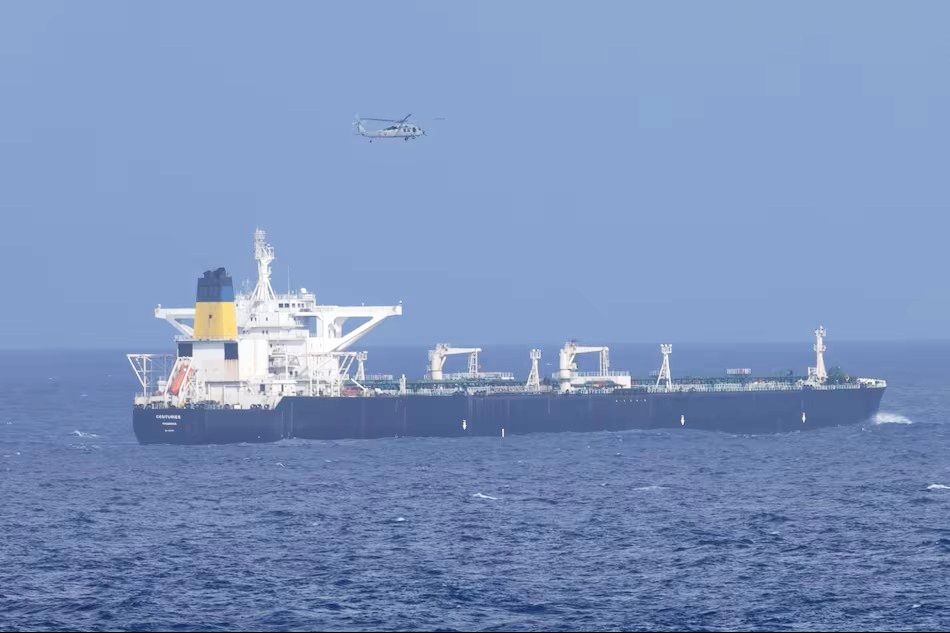
These vessels “failed to respect Panamanian maritime legislation,” Martínez-Acha explained
Panama will take disciplinary action against oil tankers registered under its flag targeted by the USA for alleged irregularities, Foreign Minister Javier Martínez-Acha announced.. These vessels “failed to respect Panamanian maritime legislation.”
The administration of President José Raúl Mulino launched the initiative following US interception of supertanker Centurias in the Caribbean Sea, suspected of transporting Venezuelan crude in violation of international sanctions. Investigations by Panamanian authorities revealed that the Centurias and other vessels utilized classic “shadow fleet” maneuvers to evade detection.
Detected irregularities include deliberate deactivation of satellite tracking systems known as transponders, recent and frequent name changes to the hull, inconsistencies in documentation and unusual behavioral patterns after leaving Venezuelan waters, including “dark” periods during transit. Martínez-Acha stated,
“Panama will act to ensure its registry, one of the largest in the world, maintains transparency standards.” It would not allow its flag to be linked to opaque energy trade networks.
As a direct consequence of these violations, the Panama Maritime Authority (AMP) is considering the cancellation of naval registration for the offending ships. De-flagging is the most severe administrative sanction Panama can impose, effectively stripping a vessel of its legal right to sail and making it a pariah in international ports.
The case of the Centurias, carrying 1.8 million barrels of crude bound for PRC. is part of a broader US offensive against clandestine oil shipments. The US Coast Guard intensified operations in the region, targeting a network of ships sustaining trade of sanctioned crude from Venezuela, Iran, and Russia.
Washington is tracking vessels, such as the Bella 1, reportedly involved in similar sanctions-evasion schemes involving flags of convenience and identity shifting. As the maritime blockade of Venezuela intensifies under Operation Southern Spear, the U.S. and Panama have taken drastic steps to dismantle the “shadow fleet.” Since the US Navy lacks the domestic legal authority to seize civilian merchant ships, boarding operations are led by the US Coast Guard (USCG), which acts as the lead law enforcement agency. Two major tankers, the Skipper and the Centurias have been placed under US custody.
Trump picks Special Ops Veteran for Southcom Chief
December 22nd 2025

, Donovan will oversee a massive regional deployment
If confirmed by the Senate, Donovan will oversee a massive regional deployment
US President Donald Trump nominated Marine Corps Lieutenant General Francis “Frank” L. Donovan to head the US Southern Command (Southcom), the Pentagon confirmed, at a critical juncture for US policy in Latin America, as the administration intensifies military pressure on Venezuela and regional drug cartels.
Donovan, who currently serves as the vice commander of US Special Operations Command (USSOCOM), will replace Admiral Alvin Holsey, whose departure marks an abrupt end to a tenure scheduled to last another two years.
While Holsey officially characterized his retirement as a personal decision, reports suggest friction with Secretary of War Pete Hegseth. Sources indicate that Hegseth sought a more “firm” and “operationally aggressive” leadership style at the helm of the command responsible for Central and South America.
Lieutenant General Donovan brings an extensive tactical and strategic background to the role, having served in key posts, holding a degree in geography and advanced degrees in Military and Strategic Studies, alongside executive training from Harvard Business School.
The nomination coincides with a significant escalation of US military activity. Under recent designation of several cartels as terrorist organizations, the US asserted it is in an “armed conflict” with these groups. If confirmed by the Senate, Donovan will oversee a massive regional deployment.
Since September 2025, the US military has conducted nearly 30 strikes on vessels suspected of drug smuggling, resulting in at least 104 deaths. President Trump heightened the rhetoric, stating he “does not rule out” the possibility of war with Venezuela. The administration further claims that congressional approval is unnecessary for a ground attack on Venezuelan territory, citing the need to act against “narcoterrorist” threats.
U.S. forces stop a second merchant vessel near Venezuela
December 21 2025 The Associated Press
U.S. forces stopped an oil tanker off the coast of Venezuela for the second time in less than two weeks as President Donald Trump ramps up pressure on Venezuela. The pre-dawn operation comes days after Trump announced a “blockade” of all sanctioned oil tankers coming in and out of the country and follows the Dec. 10 seizure by US forces of an oil tanker .
Homeland Security Secretary Kristi Noem confirmed that the U.S. Coast Guard with help from the Defense Department stopped oil tanker Centurias that was last docked in Venezuela in a video of a U.S helicopter landing personnel on board. A crude oil tanker under the flag of Panama operates under the name and was near the Venezuelan coast. It was not clear if the vessel was under U.S. sanctions.
“The United States will continue to pursue the illicit movement of sanctioned oil that is used to fund narco terrorism in the region. We will find you, and we will stop you.”
The action was a “consented boarding,” with the tanker stopping voluntarily and allowing U.S. forces to board. The reason for the seizure of the Centurias is less clear than it was with the first tanker, the Skipper, known to be part of a shadow fleet operating on the fringes of the law to move sanctioned cargo and was not flying a flag when seized by the U.S. Coast Guard.
Centurias was a similarly “falsely flagged vessel operating as part of the Venezuelan shadow fleet to traffic stolen oil” and the oil it was carrying was sanctioned.
Dr. Salvatore Mercogliano, a maritime historian and merchant shipping expert , said that according to shipping industry databases, the Centurias appeared to be operating legally.
“Everything indicates that she is a properly registered vessel,” Mercogliano said, though it’s almost certain that the Centurias had a load of sanctioned oil. Although the Centurias was carrying oil subject to sanctions, the seizure is “a big escalation.. meant to scare other tankers away.“
Venezuela characterized the U.S. actions as “criminal” and vowed to not let them “go unpunished” by pursuing various legal avenues, including by filing complaints with the UN Security Council.
US companies dominated Venezuela’s petroleum industry until its leaders nationalized the sector, first in 1976 and again in the 21st century under Maduro and his predecessor, Hugo Chávez in 2007. Compensation offered by Venezuela was deemed insufficient and in 2014, an international arbitration panel ordered the socialist government to pay $1.6 billion to ExxonMobil.
Targeting tankers follows Trump ordering the Defense Department to attack vessels the administration alleges are smuggling fentanyl and other illegal drugs into the USA and beyond. The strikes faced scrutiny from U.S. lawmakers and rights activists, who say the administration offered scant evidence that its targets are indeed drug smugglers and that the fatal strikes amount to extrajudicial killings.
The Coast Guard, sometimes with help from the Navy, typically interdicted boats suspected of smuggling drugs in the Caribbean Sea, searched for illicit cargo and arrested the people aboard for prosecution. The administration justified the strikes as necessary, asserting it is in “armed conflict” with drug cartels aimed at halting the flow of narcotics into the USA.
Maduro faces federal charges of narcoterrorism in the U.S which sent a fleet of warships to the region, the largest buildup of forces in generations and Trump repeatedly warned of land attacks. Maduro insisted the real purpose of the U.S. military operations is to force him from power.
“The Bolivarian Republic of Venezuela categorically denounces and rejects the theft and hijacking of another private vessel transporting Venezuelan oil, as well as the enforced disappearance of its crew, perpetrated by United States military personnel in international waters.”
Following the first tanker seizure of vessel Skipper, Trump vowed that the U.S. would blockade Venezuela, ratcheted up his rhetoric toward Maduro and warned that the longtime leader’s days in power are numbered. He demanded that Venezuela return assets seized from U.S. oil companies years ago, justifying his announcement of a “blockade” against oil tankers traveling to or from Venezuela that face American sanctions. Trump cited lost U.S. investments in Venezuela when asked about his newest tactic in a pressure campaign against Maduro, suggesting the administration’s moves are motivated by disputes over oil investments and drug trafficking. Some sanctioned tankers are diverting from Venezuela.
“We’re not letting anybody go through who shouldn’t be going through. You remember they took all our energy rights. They took all our oil not that long ago. And we want it back. They illegally took it.”
Chevron tanker departs Venezuela for Texas
December 22nd 2025
One tanker was seized and another was chased by US forces
The tanker Canopus Voyager, operated by US energy giant Chevron, departed Venezuela with 500,000 barrels of crude oil destined for Texas. The shipment proceeds despite an aggressive campaign by the US administration to intercept Venezuelan oil exports in international waters.
Venezuelan Vice President and Minister of Hydrocarbons, Delcy Rodríguez confirmed the departure, emphasizing that the operation was conducted “in strict accordance with international rules” and fulfills existing commercial commitments.
The shipment is part of a complex legal framework that allows Chevron to maintain limited operations in Venezuela.
Rodríguez framed the departure as a victory for Venezuelan sovereignty, stating, “Nothing and no one will stop our country on its path to progress.”
The Canopus Voyager’s journey occurs against a backdrop of severe maritime tension. The Venezuelan Foreign Ministry issued a formal denunciation of the “hijacking” of a separate private vessel and the “forced disappearance” of its crew by US military personnel, violating international law, specifically the 1988 Convention for the Suppression of Unlawful Acts against the Safety of Maritime Navigation and the Geneva Convention on the High Seas.
Claiming that US forces are illegally seizing cargo and personnel in international waters to choke the Venezuelan economy, Caracas spoke of “acts of piracy.” The Bolivarian regime contended that the US actions extended beyond state-owned vessels to include third-party private tankers. The US intensified its “maximum pressure” campaign, utilizing the US Southern Command (Southcom) to conduct strikes and interceptions in the Caribbean Sea. Washington maintains these actions aim dismantle “narcoterrorist” financing, while Caracas maintains they are a pretext for a colonialist blockade.
Despite threats, NOC PDVSA claimed to have exceeded production targets, reaching 1,200,000 barrels per day. The continued operation of Chevron serves as a rare, functional link between the two economies amidst the escalating military standoff.
Amid reports that the US Coast Guard was pursuing a third oil tanker in international waters near Venezuela, US officials confirmed that the Coast Guard was tracking a vessel identified as part of Venezuela’s “dark fleet,” a network of ships used to bypass international sanctions. The vessel was reportedly flying a false flag to circumvent a US judicial seizure warrant. This is the second such operation and the third in less than a week. Previous seizures include a tanker The Skipper and another identified as the Bella 1 (linked to Iran and Hezbollah).
Venezuela oil blockade

USS Gerald R. Ford operates in the western Atlantic Ocean on November 13, 2025. (US Navy)
Atlantic Council December 17, 2025
“Venezuela is completely surrounded. “ President Donald Trump announced that the US military would impose a “total and complete” blockade of sanctioned oil tankers going into or out of Venezuela. Targeted at the Venezuelan regime, it has wider effects.
1. What does this blockade mean for Venezuela? Jason Marczak
This blockade adds significant pressure to Maduro’s regime, as shadow tankers act as a financial lifeline that Maduro relies on to sustain his corrupt patronage system.
Sanctioned vessels operate in a global black market, transporting US-sanctioned oil that has been critical over the years to the ability for Maduro to stay in power. Since the initial US seizure of the Skipper, Venezuelan crude exports have fallen sharply, effectively targeting Maduro’s main source of income.
Venezuela relies entirely on tankers to export oil and disrupting the illegal trade on sanctioned tankers weakens Maduro’s grip on power. Over 30 of 80 ships in Venezuelan waters were under US sanctions.
With the size of the US fleet , it was only a matter of time before this blockade began. It will be important to see which of these shadow vessels continue to try to reach Venezuela and which vessels the US determines it has the authority to seize. These ships are part of a large shadow shipping network designed to evade US sanctions and mask the destination of Venezuelan crude.
This illegal trade network delivers oil primarily to PRC and to a lesser extent Cuba, employing several tactics to disguise the origin, name, and shipping routes to evade US regulations.
The blockade of sanctioned vessels provides an additional source of leverage for the USA. By cutting off a significant part of the regime’s income, the US gains an additional chip to put on the table in discussions on ending Maduro’s dictatorship in Venezuela. This move elevates the Caribbean campaign from a counter-drug operation to one that is also cutting off the financial lifelines to Maduro, whom the US designated as the leader of the Cartel de los Soles.
2. What is the likely impact on oil markets in the region and globally? David Goldwyn
Venezuela exported a little over 780,000 barrels a day in October of this year, 100,000 of which came to the US and the rest directly or indirectly going to PRC. It is highly uncertain whether all or only a portion of those exports will be impacted by the blockade.
The president referred to a blockade of “sanctioned vessels,” which could potentially exclude Chevron’s 100,000 barrels per day. A tanker tracking outfit suggested that only 40 percent of vessels transporting Venezuelan crude are sanctioned.
The president made reference to Maduro and his regime being labeled a foreign terrorist organization. It is possible that any person or entity doing business with the Venezuelan government or its NOC, Petróleos de Venezuela, S.A. (PDVSA), could be exposed to liability. In this case, nearly all of Venezuela’s exports (oil or otherwise) could be impacted.
So far, the oil market has shrugged its shoulders at the blockade. Brent crude was up 2.5 percent overnight, to 60 dollars a barrel. That is a pretty modest impact. This could be the result of the market having already priced in the impact of higher levels of naval interdiction of Venezuelan oil exports, high levels of spare capacity, or weak winter oil demand.
Ordinarily, 1 million barrels a day of displaced oil translates into about ten dollars on the oil price, so a complete blockade of all of Venezuela’s exports, if not replaced by increased by OPEC spare capacity or commercial reserves, would be in the range of five dollars to eight dollars a barrel. Everything will depend on how the blockade is enforced.
3. What else could the United States do to put pressure on Maduro? Kimberly Donovan
Venezuela relies on revenue from sanctioned oil exports to prop up the regime and the economy. Venezuela continues to sell its sanctioned oil, predominantly to PRC, while accepting payment in digital assets, stablecoins, to circumvent US sanctions.
To increase economic pressure on Venezuela, the administration should consider enforcing existing sanctions on Venezuela’s oil sector, including PDVSA. Sanctions enforcement would include seizing crypto wallets and working with stablecoin issuers to seize or burn digital assets held by sanctioned Venezuelan entities.
This would have an immediate impact on Maduro by taking out significant financial assets and it would be much more cost-effective for the US and its naval forces. Separately, as the United States increases pressure on Venezuela with a blockade, the administration should consider where the vessels will go next.
Sanctioned tankers carrying Venezuelan oil also carried Iranian oil. If ships cannot dock in Venezuelan ports, then the US should anticipate where they will go instead and whose cargo they will carry, which could be Iran or Russia. The shadow fleet used by Venezuela, Iran and Russia is a network, and to affect Venezuela, the USA needs to address the entirety of the fleet and its operators.
4. What does the blockade mean for Russia’s shadow fleet? Agnia Grigas,
US action against Venezuelan oil exports may matter less for Venezuela itself than for Russia’s shadow fleet, because it signals a shift from symbolic sanctions toward more assertive enforcement against maritime sanctions evasion. Russia relies on a sprawling shadow fleet—aging tankers, opaque ownership structures, flag-hopping, ship-to-ship transfers and weak or fictitious insurance—to keep oil flowing despite Western restrictions.
Venezuela demonstrates that Washington is increasingly willing to treat sanctions evasion not just as a financial violation but as a maritime security problem. This matters because Russia’s shadow fleet is not isolated. Many of the same vessels, intermediaries, insurers and ship-management networks service Russian, Iranian, and Venezuelan crude interchangeably.
Pressure applied in one region exposes vulnerabilities across the entire system. Even limited interdictions force tankers to go dark longer, take riskier routes, rely on fewer ports and accept higher freight and insurance costs, raising the overall cost of Russian oil exports.
For Moscow, the immediate risk is not a sudden collapse in exports but growing friction and uncertainty. Each escalation increases the probability of seizures, port refusals, or secondary sanctions on service providers, factors that reduce the efficiency and scalability of Russia’s energy revenues over time.
There is also a deterrent effect. By demonstrating that shadow fleets are visible, traceable, and vulnerable, the US raises the strategic risk premium for Russia’s oil trade, even if enforcement remains selective. This dynamic is being reinforced in Washington on the policy front.
A bipartisan group of US senators introduced the Decreasing Russian Oil Profits (DROP) Act of 2025, which would authorize financial sanctions on foreign buyers of Russian petroleum products and seek to choke off a key source of Kremlin revenue. The proposal includes targeted measures to penalize entities anywhere in the world that continue to purchase Russian oil, with narrow exemptions tied to support for Ukraine, underscoring Congress’s intent to close loopholes in the sanctions regime and further isolate Moscow’s energy exports.
Russia’s shadow fleet survives on the assumption of tolerance and ambiguity. The Venezuela action suggests that assumption is weakening. For a war economy dependent on energy revenues, that shift matters.
GUYANA WARNS UN OF GRAVE THREAT FROM VENEZUELA
This scenario presents an ideal opportunity for shareholders Exxonmobil Guyana (45%) and Chevron Guyana (30%) to acquire the CNOOC 25% stake in Stabroek Block Consortium, solidifying its 100% interest in this prolific petroliferous basin.
26/12/2025
Tensions arose at the UN Security Council as Guyana issued a stark warning about escalating threats to its sovereignty, while the USA outlined its determination to confront drug trafficking in the region and Venezuela rejected accusations, blaming Washington for regional instability.
The Council met to address Venezuela’s concerns over US actions in the region. Guyana’s Deputy Permanent Representative to the UN, Ambassador Tashala Prasad, told council members that Guyana’s peace and security are being “gravely threatened,” warranting urgent international attention.
Prasad said Guyana is among the states most affected by these threats, pointing to Venezuela’s continued defiance of international law, including binding orders of the International Court of Justice. She noted that through presidential decrees and legislative actions, Venezuela sought to unlawfully annex over two-thirds of Guyana’s sovereign territory.
Venezuela increased its military presence along Guyana’s borders in an attempt to intimidate the country without resorting to outright territorial seizure. These actions disregard the internationally recognised boundary between the two states.
The diplomat further accused Venezuela of facilitating transport of illicit drugs into Guyana, engaging in illegal gold mining and smuggling gold out of the country. Drug trafficking destabilised the region, fuelling crime and violence, weakening state institutions, promoting corruption and financing conflict and terrorism. Closer collaboration with international partners across the Americas is essential and urgent. She urged collective action to preserve regional stability and to protect the long-standing status as a zone of peace.
US Ambassador to the UN, Mike Walls, told the Council that Washington will use its full capacity to confront and dismantle drug cartels operating across the hemisphere. The USA does not recognise Maduro or his associates as the legitimate government of Venezuela, describing Maduro as a fugitive from American justice and alleging links to transnational criminal networks. He claimed that Venezuela’s most recent elections were illegitimate, asserting that the international community has evidence to support that position.
Venezuela’s Ambassador to the UN, Samuel Makada, rejected the accusations and told the Council that Venezuela is the first target of a broader US strategy to divide and dominate the region. Makada accused Washington of aggressive actions in the Caribbean Sea and the Pacific Ocean, which violate international law and human rights.
The exchange underscored deepening divisions, as Guyana seeks international support to defend its territorial integrity amid rising geopolitical tensions.
Guyana unaware of US plans for Venezuela
December 19, 2025
As Venezuela complains of the build up of US military assets in the region, Guyana’s Vice President, Bharrat Jagdeo, said that the Guyana Government is unaware of any action by the United States against Venezuela but he will back any action in the Region that fights drug trafficking. Guyana will continue to collaborate with the US in the drug fight.
“We support any fight against drug traffickers and we will work with the United States collaboratively to support their activities at blocking drugs from going to the USA or from coming to Guyana, that was our stated objectives long before their presence in the region.”
Discussions between the two countries and security partnerships have been well documented. In recent months, Guyana and the USA signed security partnerships aimed at curtailing transnational crime and stemming the drug flow in the region, while also protecting Guyana’s territorial integrity.
“As far as we are concerned we have engaged with the USA, they have assured us that they would support us in protecting our territorial integrity and sovereignty , they have said this openly.”
The USA assured that assets in Guyana waters are secured and continues to build its military presence as it puts pressure on Venezuela.
Guyana signs US military cooperation agreement
December 10, 2025
Guyana signed an agreement with the USA expanding military cooperation. Following talks with US officials, including US Senior Advisor to the Secretary of War, Patrick Weaver and the Acting Assistant Secretary of War for Western Hemisphere Affairs, Joseph Humire, President Irfaan Ali said,
“The two countries also signed a Statement of Intent to expand joint military cooperation with full respect for the sovereignty and laws of both countries.”
The agreement is part of an evolving process between Washington and its allies in South America and the Caribbean Community (Caricom) to work on defence and security.
“The US government is launching the ‘Southern Spear’ of security .. with a strategy for the Western Hemisphere and the US government is to invest more and pay attention more to the Caricom and Western Hemisphere,so basically the countries and allies in the region signalling their intention for more collaboration and cooperation.”
The agreement provides for “reinforcement” of long-term training and collaboration under existing regimes like the Shiprider Agreement that allows for US security personnel to chase, intercept and board drug trafficking vessels in Guyana waters.
Asked whether the Statement of Intent would lead to signing of a defence treaty between the US and Guyana, President Ali replied, “this is evolving so in the coming months there will be greater discussions on more levels of cooperation and the integration of our work.”
Signing of the agreement follows Guyana’s commitment to work with international allies to promote peace, democracy and elimination of malign actors involved in transnational crime in the region.
Ali had told visiting Grenada Prime Minister Dickon Mitchell that Guyana consistently spoke about “the abuse of our airspace and our waterways by all kinds of criminal elements, all kinds of illegitimate trade and we stand strong and steadfast in every action that will allow those illegitimate actors to continue to tarnish the reputation of our region, in partnership if we are to have a region that is safe for our children 30, 40, 50 years from now”.
US assures Guyana of security if attacked
4 December 2025
Guyana’s security is guaranteed should Venezuela attack the oil-rich province. US Ambassador to Guyana Nicole Theriot was sure that the White House and the Department of War were considering whether Venezuela might attack Guyana should the US military launch operations on Venezuelan soil. However, she emphasised that Guyana is strategically important to the US.
“You’re very, very important to us strategically and you’re very important to us as a partner. In the event that something untoward happens, we’re committed to standing shoulder to shoulder with Guyana in defence of your country. We remain committed to standing beside Guyana to protect your sovereignty.”
With Venezuela reviving rhetoric about its claim to Guyana’s 160,000 square kilometre Essequibo Region in the midst of US-Venezuela tensions, Theriot reiterated Washington’s support to stave off military action by Venezuela.
US Secretary of State Marco Rubio issued a stark warning to the Venezuelan regime in repeating military aggression against ExxonMobil’s interest in Guyana or invading Guyana. The ExxonMobil consortium that includes Chevron and CNOOC catapulted Guyana to produce over 1 million barrels of crude by the end of the decade and it is a close US ally in countering narcotics and other transnational crimes.
TotalEnergies, along with Petronas and Qatar Energy, is also preparing to explore for oil in shallow waters.
Evan Ellis, Latin America Research Professor at the US Army War College believes that substantial US missile and anti-air defence systems will deter Venezuela from launching military strikes against Guyana.
“Any serious attack is both highly unlikely and would be met with a crushing response given that you have a substantial US force in the region, it’s difficult to imagine any Venezuelan naval capability or any air capability that would not just be quickly eliminated.”
Describing the risk of an attack on Guyana as “moderate”, he says Venezuela will be mindful of losing international credibility and sympathy. Ellis virtually ruled out Maduro “signing his regime’s death warrant” by seriously provoking a neighbouring State as that would shift perceptions of his cries about victimisation and resisting the US.
“If he once again reminds the world that Venezuela is the aggressor on the Essequibo, that would actually shift the political narrative in a direction completely from where he wants to go.”
Oil industry operations offshore Guyana may be disrupted for a short period until the tension subsides. Substantial US military firepower will deter Venezuela from deploying swarms of Iranian drones or Iranian-supplied fast boats fitted with Chinese missiles from attacking operations or engaging in underwater sabotage of oil platforms.
President Irfaan Ali says his administration’s priority is the preservation of sovereignty and safety and security of his country, when asked whether he was worried that Venezuela might opportunistically use conflict with the US to take military action against Guyana. “We are examining every possibility.”
Guyana is relying on partnerships with allies US, UK and France. “As it relates to the safety and security of Guyana, of course I can’t go into details but there is continuous assessment, internal assessment, risk assessment and looking at the evolving situation and the method of approach.”
Guyana was monitoring the likely mass movement of Venezuelan migrants across the land border into Guyana should there be land strikes in Venezuela.
“After a take down of the Cartel Del Los Soles, if there was an increase in violence due to acts of sabotage against refineries , I think you could see an outflow of migrants that could impact Guyana,” Ellis said.
The US Treasury Department’s Office of Foreign Assets Control sanctioned Maduro, alleging he is a key figure in the Cartel Del Los Soles (Cartel of the Suns). A US$50 million reward was subsequently offered by the US for information leading to his arrest. Former UK High Commissioner to Guyana, Greg Quinn does not believe that Venezuela will attack Guyana, but agrees t there can be a new wave of migrants entering Guyana.
“There are likely consequences of possible US attack on Venezuela, not least possible refugees across the border.” 100,000 Venezuelans and Venezuelans of Guyanese descent have fled the worsening conditions in their homeland and are living and working in Guyana. Quinn said oil companies should not be worried but cautious. “If I were an oil company I wouldn’t be worried. But I’d make sure my contingency plans were in good order.”
Trump blockades Venezuela with ‘largest Armada ever’& seeks return of US assets
The US president will use naval power to target sanctioned tankers
Gary Dixon Singapore/London 17 December 2025
US President Donald Trump ordered a “total and complete” blockade of US-sanctioned oil tankers trading with Venezuela.
Trump orders total blockade of Venezuela’s tankers
December 17th 2025

Tankers currently in Venezuela risk seizure if departing, potentially causing a total paralysis of the country’s oil industry
US President Donald Trump ordered a “total and complete” naval blockade of all sanctioned oil tankers traveling to and from Venezuela, marking the most aggressive move against its energy sector to date. The announcement followed the seizure of a sanctioned vessel and targets the “ghost fleet” of tankers Venezuela uses to circumvent existing financial sanctions and could have devastating effects on the regime.
Citing the need to protect US interests, the President stated that the US fleet, led by the world’s largest aircraft carrier, the USS Gerald Ford, will continue to expand its presence.
“America will not allow Criminals, Terrorists or other Countries, to rob, threaten or harm our Nation.” He urged return of “oil, land and other assets” he alleges were stolen from the USA, asserting that the blockade would remain until these demands are met. With limited storage capacity, a total halt in exports could force Venezuela to shut oil fields. Sanctioned crude, sold at a discount, faces further devaluation as risks for shipping companies soar. Most of Venezuela’s 930,000 barrels per day are exported to PRC; a blockade would sever this vital revenue stream, amid increased US military activity in the region.
“Maduro’s illegitimate regime is using oil from these stolen oil fields to finance itself, narco-terrorism, human trafficking, murder and kidnapping.”
US officials linked a seized tanker to Iran and Hezbollah. Inclusion of specific shipping firms on sanctions lists is a “significant escalation.” Vessels in Venezuelan ports may be unable to leave without risk of seizure, potentially causing a total paralysis of the primary industry.
PDVSA vows to continue global oil exports
December 17th 2025
Venezuela’s NOC PDVSA declared that its export operations remain fully functional, signaling a defiant stance against a newly announced naval blockade by US President Donald Trump. The announcement, echoed by Executive Vice President and Minister of Hydrocarbons Delcy Rodríguez, follows a week of spiraling tensions.
The US administration designated the Venezuelan government a “foreign terrorist organization” and ordered a maritime blockade, days after US forces seized an oil tanker off the Venezuelan coast.
PDVSA asserted that its fleet would continue to sail in “full exercise of the right to free navigation and trade.” The company emphasized that its tankers maintain all necessary insurance, technical support and operational guarantees required to meet international commitments.
“Crude oil and derivative export operations are proceeding normally,” the statement read, framing the continued shipments as an act of “energy sovereignty” protected by the UN Charter and international maritime law. The Venezuelan regime characterized U.S. actions, particularly seizure of a private tanker, as “acts of international piracy” and “theft.” PDVSA dismissed Trump’s accusations of “narco-terrorism” as unsubstantiated, noting that international bodies like the UN have not supported such claims.
Despite years of unilateral coercive measures, cyberattacks and sabotage, PDVSA leadership maintains that the industry’s operational capacity remains “intact.” Venezuela intends to challenge the legality of the blockade before international forums, while PDVSA credited its “determined workforce” for maintaining production despite the increase in hostile military presence, which marks one of the most significant escalations in relations between the United States and Venezuela in recent years.Caracas insists that its oil will continue to reach global markets regardless of the “imperial threats.”
On Tuesday, the Bolivarian regime formally denounced the USA before the UN Security Council, accusing Washington of “state piracy” and the kidnapping of a ship’s crew, regarding the incident involving a tanker carrying Venezuelan crude, in alleged violation of international standards.
US military aircraft land at Piarco and Crown Point
2025, 12/17
Screen grab from Flightradar24 show the US Air Force Lockheed Martin 100J Hercules aircraft at Piarco International Airport. Courtesy Flightradar24
Two US military transport aircraft arrived in Trinidad and Tobago, the first recorded movements since the Foreign Ministry granted formal transit permission for US assets, as US President Donald Trump ordered a blockade of “sanctioned oil tankers” into Venezuela.
“Venezuela is completely surrounded by the largest Armada ever assembled in the history of South America. It will only get bigger and the shock to them will be like nothing they have ever seen before . Until such time as they return to the United States of America all of the oil, land, and other assets that they previously stole from us.”
The Foreign Ministry said that the Government authorised the use of national airports for US military logistics, described as “routine.” The first aircraft, a Lockheed Martin C-130J Super Hercules, touched down at the ANR Robinson International Airport in Crown Point, Tobago after 5 pm yesterday.
The aircraft remained on the tarmac before departing at 6:20 pm. Less than an hour later, a second C-130J, originating from Fort Lauderdale-Hollywood International Airport in Florida, landed at Piarco at 7.02 pm and departed Piarco at 8.05 pm. The specific cargo or personnel manifests for these stops were not immediately available.
The flights are part of a broader bilateral security framework aimed at regional stability, citing existing joint initiatives such as the US-installed radar system on Tobago. In a sharp rebuke, the Maduro administration accused T&T of facilitating US military “encirclement.”
The C-130J Super Hercules serves as the cornerstone of US tactical air mobility, designed for high-capacity transport and versatile deployment. With a payload capacity of up to 42,000 pounds and a cargo volume exceeding 4,500 cubic feet, the aircraft is capable of transporting everything from light armoured vehicles and utility helicopters to medical evacuation units and standard cargo pallets.
TT leader directs queries to US embassy
2025, 12/30 Raphael John-Lall
Prime Minister Kamla Persad-Bissessar made it clear that Trinidad and Tobago is not part of military operations against Venezuela.
“Any questions regarding this are best directed to the US Embassy. Trinidad and Tobago is NOT a participant in any military operations within Venezuelan territory.”
International reports quoted US President Donald Trump as saying the US had “hit” a dock facility in Venezuela, as he continued to wage his pressure campaign against the Maduro regime. It was the first strike on Venezuelan soil after months of strikes in the Caribbean Sea , where boats allegedly carrying drugs were hit. The US military conducted another strike against a boat accused of smuggling drugs in the eastern Pacific Ocean. The attacks killed at least 107 people in 30 strikes since September. Venezuelan daily El Nacional reported President Trump said his conversation with President Maduro was not fruitful.
Venezuela claims TT complicit in piracy, cancels gas deals
16 December

The crude oil tanker Skipper recently seized by the US off the coast of Venezuela. – AP
On December 15, Venezuela terminated all energy ties with Trinidad and Tobago, after accusing the government of knowing about the US military interception of an oil tanker reportedly headed to Cuba from Venezuela on December 10.
“Today, in light of this extremely serious act that seeks to brazenly steal Venezuela’s oil, the Venezuelan government has decided to immediately terminate any contract, agreement, or negotiation for the supply of natural gas to that country. In view of this escalation of hostilities and serious aggressions, President Nicolás Maduro previously proceeded to denounce the Framework Agreement on Energy Cooperation signed with TT.”
This happened on October 27. Venezuela condemned the US seizure of the tanker which was transporting “this strategic product (oil) of Venezuela. This act of piracy constitutes a serious violation of international law and a blatant transgression of the principles of free navigation and trade.”
Caracas repeated its claim that Prime Minister Kamla Persad-Bissessar revealed a hostile agenda towards Venezuela since the UNC won the April 28 general election. That agenda includes “the installation of US military radars to besiege vessels transporting Venezuelan oil. This official has turned the territory of TT into a US aircraft carrier to attack Venezuela, in an unequivocal act of vassalage. Venezuela demands respect! And it will not allow any colonial entity and its vassals to attack the sacred sovereignty of the country and its right to development. Venezuela will always prevail.”
Prime Minister Kamla Persad-Bissessar and Energy Minister Dr Roodal Moonilal dismissed the statement, reiterating that TT has nothing to fear with respect to its energy security. Persad-Bissessar dismissed the statement as false propaganda.
“They should direct their complaints to President Trump as it is the US military that has seized the sanctioned oil tanker. In the meantime we continue to have peaceful relations with the Venezuelan people. We have never depended on Venezuela for natural gas supplies.
We have adequate reserves within our territory. We are aggressively working to reduce bureaucratic barriers to speed up approvals for energy companies. The real issue is bureaucracy is hindering our exploration and production.”
She also claimed Opposition Leader Pennelope Beckles and former foreign minister Dr Amery Browne’s “hatred of the American government and American people is shameful. “
Persad-Bissessar repeated her allegations of the PNM connection to drug cartels which Beckles denied .
“However, if the PNM wants to protect drug traffickers and human traffickers, that’s on them. I welcome US assistance to protect our citizens.”
Moonilal supported Persad-Bissessar’s statement that Venezuela should direct its complaints to Trump “as it is the US military that has seized the sanctioned oil tanker.”
Moonilal repeated her previous statements that TT maintains peaceful and fraternal relations with the Venezuelan people, is not dependent on Venezuela for natural gas and has adequate supplies within its jurisdiction.
Moonilal agreed bureaucracy hindered energy exploration and production.
He described the Venezuelan government’s statement as “an act of hypocrisy since the government of Venezuela continues to engage with the USA.
Today, it is Chevron who is exporting heavy crude oil in the US Gulf Coast. We will continue to work with our partners in the region and elsewhere, so that we will collaborate and build and rebuild our energy industry after the collapse of the last ten years under the PNM administration.”
When the PNM ruled in 2019, the governments of TT and Venezuela reached agreement allowing each country to independently develop its share of the Loran-Manatee field. Manatee is expected to start production in 2027 and deliver 104,000 barrels of oil equivalent per day at peak.
In October, Moonilal said, notwithstanding pronouncements by Venezuelan officials, the Manatee gas project is “safe and will proceed. There are some infrastructure developments related to that project that are ongoing. Those projects continue and we will continue to speak with Shell and other stakeholders concerning an expansion in gas production from Manatee.”
He reiterated statements by Persad-Bissessar.
“We are not dependent on Venezuelan gas. We have a robust plan for oil and gas exploration, production and development onshore with Heritage in particular and offshore projects with several multinationals.”
In a debate on a private motion about TT-Venezuela relations and the ongoing US-Venezuela tensions, Moonilal previously said, “In place now we have absolutely no commercial relations with Venezuela as it relates to gas. We do not produce anything at this point. We have plans, projects and cross-border fields but we are not losing a dollar at this moment “
In October, the Venezuelan National Assembly declared Persad-Bissessar persona non grata because of her support for the US military deployment in the Southern Caribbean Sea. She said she is unfazed by this and reasserted her support for the US in the fight against drug trafficking. Venezuela has insisted that regime change is the USA’s real motive.
US seized oil tanker offshore Venezuela
Adam Cancryn & Kevin Liptak, 10 December
The US seized a large oil tanker in international waters near Venezuela in a high-stakes maritime operation, marking a significant escalation in the pressure campaign against the Bolivarian regime.
President Donald Trump confirmed the seizure of “a big tanker, a very big tanker, the biggest ever seized, actually.”
Sharing video footage showing US forces fast-roping from a Black Hawk helicopter, in a standard commando-style tactic onto the vessel’s deck, Attorney General Pam Bondi verified the operation, stating that the FBI, Homeland Security Investigations and US Coast Guard, supported by the Department of War, executed a seizure warrant for the crude oil tanker, identified as the Skipper, formerly known as the Adisa.
“For multiple years, the oil tanker has been sanctioned by the United States due to its involvement in an illicit oil shipping network supporting foreign terrorist organizations. This seizure was conducted safely and securely and our investigation alongside the Department of Homeland Security to prevent the transport of sanctioned oil continues,”
Satellite imagery suggests the tanker may have been attempting to conceal its whereabouts by transmitting fake location data. The ship’s transponder reportedly showed it anchored near Guyana and Suriname. However, satellite monitoring detected it off the coast of Venezuela for weeks after being spotted on November 18 at Venezuela’s José oil terminal, contradicting the reported position.
Laden with 1.9 million barrels of oil, reportedly Venezuelan crude intended for Cuba, the Skipper had a history of carrying sanctioned oil from Venezuela and Iran, according to TankerTrackers.com.
Due to the Skipper’s past links to Iranian oil smuggling, a federal judge ordered the seizure, conducted under US law enforcement authority. Venezuela immediately condemned the seizure. Its Foreign Ministry accused the US of “blatant theft and an act of international piracy.” Venezuela “has always been about our natural resources, our oil, our energy,” insisted Caracas amid a significant US military deployment in the region.
President Trump said it was seized “for very good reason.” About oil aboard the tanker, he said: “Well, we keep it, I guess.”

This screengrab taken from a video posted by Attorney General Pam Bondi on December 10 shows US forces seizing an oil tanker off the coast of Venezuela.
In response to questions Trump said he had not spoken to Maduro recently and declined to say who owns the seized tanker. Maduro did not address the seizure in a speech as the news circulated.
The Venezuelan regime said it “strongly denounces” the seizure and described the move as an “act of international piracy. In these circumstances, the true reasons for the prolonged aggression against Venezuela have finally been revealed. It is not migration.. not drug trafficking… not democracy… not human rights. It has always been about our natural wealth, our oil, our energy, the resources that belong exclusively to the Venezuelan people.”
Venezuela said it would appeal the seizure to “all existing international bodies.”
Communist-run Cuba has been grappling with some of the worst power outages in decades with blackouts lasting hours, sometimes days. The aging energy infrastructure is dependent on oil imports, often as donations from allies Venezuela, Russia and Mexico.
The US pressure campaign on Venezuela included moving thousands of troops and a carrier strike group into the Caribbean Sea, strikes on suspected drug boats and repeated threats against Maduro.

US authorities hope shippers will be more cautious when loading Venezuelan crude,
US seizes first sanctioned oil tanker off Venezuela
December 11, 2025
Idrees Ali, Phil Stewart, Steve Holland and Marianna Parraga- Reuters
The U.S seized a sanctioned oil tanker off the coast of Venezuela, lifting oil prices and sharply escalating tensions between Washington and Caracas.
“We’ve just seized a tanker on the coast of Venezuela, very large, largest one ever, actually and other things are happening,” said President Donald Trump , pressuring President Nicolas Maduro to step down.
The first known tanker seizure since the US build-up began signals new efforts to pursue Venezuela’s main revenue source. Its Impact on global oil supply is unclear.
US Forces Seize Sanctioned Oil Tanker Off Venezuelan Coast
Eric Martin, Patricia Garip and Ben Bartenstein, Bloomberg
December 11, 2025
Bloomberg News was first to report that US forces intercepted and seized a sanctioned oil tanker near Venezuela, marking a serious escalation of tensions between the countries.“We’ve just seized a tanker on the coast of Venezuela — large tanker, very large, largest one ever seized, actually,” President Donald Trump said at the White House. “And other things are happening.”
A senior official referred to “a stateless vessel” that was last docked in Venezuela. Oil futures rose , with Brent crude settling up 0.4% .
Attorney General Pam Bondi posted a video showing armed forces descending to the ship’s deck from a Black Hawk helicopter, in a standard commando-style tactic, “fast roping.” It was unclear whether they were from the Coast Guard or US special operations forces.
“For multiple years, the oil tanker has been sanctioned by the United States due to its involvement in an illicit oil shipping network supporting foreign terrorist organizations.”
Venezuela labeled the seizure a “blatant theft” and an “act of piracy” and vowed to defend its sovereignty and natural resources “with absolute determination.The true reasons for the aggression against Venezuela have finally been revealed. It was always about our natural resources, our oil.”
US action may impede export of Venezuelan oil, as other shippers are likely to be reluctant to load its cargoes. PRC buys most Venezuelan oil, usually through intermediaries, at steep discounts owing to sanctions risk.
Rystad Energy said, “The US seizing a Venezuelan tanker is a clear escalation from financial sanctions to physical interdiction — it raises the stakes for Caracas and anyone facilitating its exports. This kind of action adds a geopolitical floor to prices: Even modest volumes can move sentiment when the risk is about sea lanes and state-to-state escalation.”
The US administration escalated pressure on Venezuelan ruler Nicolás Maduro, accused of presiding over a narcotrafficking operation. The Pentagon conducted strikes against purported drug-trafficking vessels near Venezuela and Colombia. President Trump suggested a strike on land and that Maduro’s “days are numbered.”
The massive tanker is a very large crude carrier, or VLCC, among the biggest in the industry with capacity to carry 2 million barrels of oil. The US concluded the vessel was bound for Cuba, though it would be unusual for a boat of that size to sail from Venezuela to Cuba, based on historical shipping patterns. US officials long suspected Caracas of selling sanctioned crude via Cuba illegally to benefit from the profits while making the sales harder to trace.
The operation is likely to deter others from shipping Venezuelan crude. Matthew Thomas, specialist in international trade and maritime law, said “Most mainstream tanker trade has been steering clear of Venezuela because of sanctions and increasing tensions. But even for marginal shippers and dark fleets the potential for asset seizure builds an extra layer of deterrence.”
The Maduro regime characterized US actions as a grab for Venezuela’s oil reserves, the largest in the world. The tanker seizure occurred on the day María Corina Machado, the Venezuela opposition leader received the Nobel Peace Prize.
In recent months, Maduro urged Venezuelans to unite against US threats and to enlist in the citizen militia. He deployed troops, ships, aircraft and drones to the border with Colombia, coastal states and an island.
NOC Petroleos de Venezuela SA works with a few international partners including Houston-based Chevron Corp, which receives a percentage of the oil produced by its joint ventures with PDVSA and is exempt from sanctions by a US Treasury licence. Chevron operations were not disrupted by the tanker seizure. CEO Mike Wirth said Chevron is in discussions with the US administration about remaining in compliance with sanctions in Venezuela.
Chevron and US team discuss Venezuela operations & sanctions
December 10, 2025 (Bloomberg)
Chevron Corp. is in talks with the US administration about compliance with sanctions in Venezuela, emphasizing the benefits of its continued presence there.. CEO Mike Wirth does not know President Donald Trump’s intentions in the region where a US military build-up prompted speculation the administration may oust Venezuelan leader Nicolas Maduro, – but Chevron takes a “long view” on operating in Venezuela.
“We operate there in full compliance with all U.S. law and sanctions. We’re in discussions with the administration to ensure that we stay in compliance, that they understand the value that our presence brings to America.”
Chevron is the only remaining U.S. oil major in Venezuela, operating under different sanctions waivers since the first Trump administration, resulting in stop-start operations. Its continued presence has been a thorny issue for both the Biden and Trump administrations, with some officials arguing it provides a financial lifeline to Maduro and others saying a U.S. operator is essential to maintain stability there and global oil markets. Venezuela’s reserves exceed those of Saudi Arabia.
“Our presence there, we believe, is important for the local economy, the regional economy, the people of Venezuela. It’s right here in our hemisphere, very close to the Gulf Coast refining complex. We’ve been there through ups and downs and like many places in the world, we have to take a long view on our presence in countries like this.”
IMF to rescue Venezuela
January 13th 2026 –
Unfolding political events in Caracas will play a key role in determining whether that option is available
US Secretary of the Treasury Scott Bessent announced a plan to stabilize Venezuela’s collapsing currency by re-engaging with global financial institutions. The strategy consists of unfreezing approximately US$4.9 billion in International Monetary Fund (IMF) Special Drawing Rights (SDRs) to provide much-needed liquidity to Caracas’ Central Bank. A central pillar of the strategy involves an unprecedented level of US oversight over Venezuela’s oil industry to bypass previous black-market “shadow fleets.”
US Energy Secretary Chris Wright said, “We need to leverage and control those oil sales to drive the changes that simply must happen in Venezuela.” He clarified that the US will maintain control “indefinitely” over sales, ensuring funds are deposited into US-controlled accounts to later “benefit the Venezuelan people.”
President Donald Trump confirmed that caretaker President Delcy Rodríguez agreed to turn over between 30 and 50 million barrels of high-quality oil.
“This Oil will be sold at its Market Price, and that money will be controlled by me, as President of the United States… to ensure it is used to benefit the people of Venezuela and the United States!”
The intervention follows a dire exchange rate crisis in Venezuela. The official dollar rate hit 330.37 bolivars as of January 13, 2026 —a staggering 504% interannual depreciation, as economists fear the country was spiraling toward hyperinflation. The “exchange rate gap” has become a primary obstacle for local commerce. While the official rate is 330, parallel markets using cryptocurrencies or “PayPal dollars” report rates of 781 bolivars.
The US Treasury move to convert the US$4.9 billion in SDRs —frozen since 2021— is intended to triple the Central Bank’s ability to intervene in the market. Additional sanctions could be lifted “as early as next week” to facilitate these sales and the repatriation of stored crude oil revenues. However, experts remain cautious.
Preliminary reports from Washington indicate that the “re-engagement” process will be conditional on several key economic and political pillars, all hinging on upcoming political developments in Caracas under the residual Bolivarian administration.
The IMF requires a “clear majority of the membership” to recognize a specific government. With the US now backing Interim President Delcy Rodríguez, a critical step will be for the IMF Executive Board to formally vote on recognizing this new authority to allow them to represent the country’s interests at the Fund.