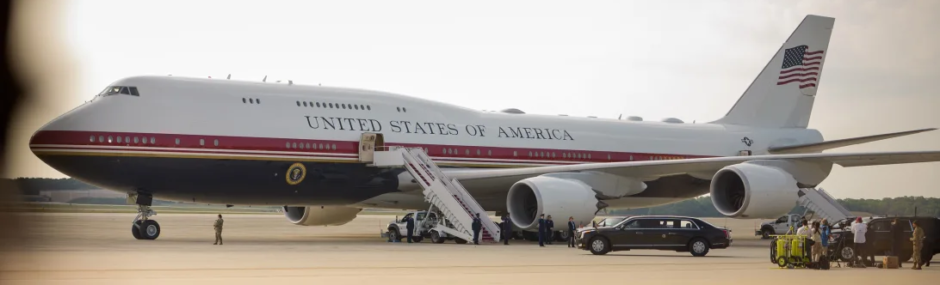
Caricom achieved strategic stability under US security, a sovereign choice valued by all member states, which characterized the Summit, with all leaders present for the first time in 10 years, lured by the U.S. Secretary of State.
High Drama as Trinidad & Tobago leader presents scathing speech to Caricom
-
-
- * Strongly defends T&T’s support of US action against Venezuela
- * Admonishes leaders for interfering in regional elections
- * Warns against supporting dictatorship in Cuba
- * Sharply criticises secretariat over Brent Thomas kidnapping
-
February 24, 2026
In a hard-hitting address
to Caricom leaders, Prime Minister Kamla Persad-Bissessar delivered a forceful defence of her unwavering support for US President Donald Trump, while sharply rebuking the regional bloc for political interference across the region and failure to confront Venezuela in defence of Guyana.
Addressing the 50th Regular Meeting of the Conference of Heads of Government of Caricom in St Kitts and Nevis yesterday, the Prime Minister began by pledging Trinidad and Tobago’s support for Caricom, now feasting on benefits of a USA Empire of Peace. However camaraderie yielded to criticism and allyship shifted into admonishment.
The T&T TIGRESS doubled down on her support for the US administration in a room where presence of the US military in the Subcontinent sharply split opinion at the start of 2026.
“Thanks again to President Trump and thanks again to Secretary Marco Rubio. I thank them and the US military for the cooperation and what they shared with us for national security matters. Maybe in your islands, you don’t have the kind of crime we have. I know (Jamaica) Prime Minister Holness, we tried to pass the ZOSO Bill in Trinidad, we were not as fortunate as you in the Parliament.”
Due to meet Rubio today, Persad-Bissessar said she will welcome the US military intervention again, as it had led to a 42 per cent decline in murders in Trinidad and Tobago.
“… crime is so bad, I cannot depend on just my military, my protective services and certainly from you in the Caricom, many of you do not have military or large police services to help us there. So again, I repeat, in Trinidad, we gained from that military help and I will welcome them again.”
Persad-Bissessar asked regional leaders why they did not stand up for Trinidad and Tobago and Guyana when they were being “threatened” by Venezuela.
“So, how can it be when that regime was threatening violence to two Caricom member states, there was no voice from the Caricom.”
Interference in regional elections
She claimed Caricom governments and political parties actively participated in the domestic and political affairs of member states to assist “sister or brother” parties.
“When, in the last election, you sent your missives, you sent your people from your party to openly campaign against another political party. I’m sorry I have to share this, but it hurt when I saw it transpired within the last set of elections in the Caricom.
“So if we hug and cooperate, it cannot be that you sent your political persons, not technocrats, to St Vincent or to Jamaica or Guyana to campaign. I don’t think that is right because today I will have to face you.”
The front row shifted in their chairs, folding their arms or staring at cell phones in discomfort as EPIC FURY raged from the stage.
No support for Cuba dictatorship
Persad-Bissessar turned her attention to Cuba, urging Caricom to allow Cuba to conduct its own political affairs. The US government explicitly stated that “regime change” in Cuba is a goal it hopes will be realised by the end of this year.
Reports suggest US officials are actively trying to identify “insiders” and forces willing to escape from the Cuban regime in exchange for a deal. Former Caricom heads claim that USA is using the island’s 11 million civilians as pawns in a political vendetta through tariffs and fuel blockades.
“There is global focus today on Cuba. Every leader here participated in democratic elections in our respective countries. Therefore, I ask, why do some Caricom governments and political parties believe that they and their political parties’ supporters should have the right to contest democratic elections to choose their leaders, but Cuban citizens should not have the right to do the same? You cannot advocate for others to live under communism and dictatorship but want to live under democracy and capitalism yourself.”
Persad-Bissessar blamed the Caricom Secretariat for an “unsettling” matter in 2022.
“In October 2022, the T&T government coordinated the kidnapping of a Trinidad citizen from another Caricom state he was visiting . Our Supreme Court ruled that he was kidnapped. He was placed in handcuffs, transported to the airport and then back to Trinidad. I think an RSS plane was used to transport him. ”
Persad-Bissessar was referring to businessman Brent Thomas who was arrested in a Barbados hotel and returned to Trinidad via a military aircraft without formal extradition proceedings being initiated. A High Court judge later ruled this act an “unlawful abduction,” leading the Trinidad & Tobago government to apologise and both nations to accept liability for constitutional breaches.
Persad-Bissessar said when she wrote to the Caricom secretariat as Opposition Leader she received no response.
In the presence of Caricom Secretary General Dr Carla Barnett, she said, “I wrote to the secretariat of the Caricom asking what happened? How could you have facilitated the kidnapping of a T&T citizen? Please let us know what was happening and how it happened. To date, that was 2022, I have not had a response from the secretariat.
“So,, that non-response may be the result of poor management, lax accountability, or most concerning, that one ceases to be recognised by the secretariat as a citizen of Caricom when not in government.”
The Prime Minister concluded by again reaffirming commitment to Caricom and invited its citizens to enroll in the UWI Trinidad South Campus on the commencement of its academic year.
Kamla bilateral talks with Rubio
2026, 02/24
Following her arrival in St Kitts and Nevis for the 50th Caricom Summit, her first since assuming office in April 2025, Prime Minister Kamla Persad-Bissessar revealed that the US government requested a private meeting with Secretary of State Marco Rubio tomorrow afternoon. Rubio announced his attendance earlier yesterday,
“Yes, the US requested a bilateral meeting with Secretary Rubio and me on Wednesday. So, he will come to the plenary, which is Wednesday afternoon, but he asked for the meeting on Wednesday. So, I think that’s an important piece of news. To continue collaboration and cooperation with respect to security issues in T&T and in the region. And other economic interests with relation to Venezuela, which may arise, the OFAC licence and so on. We may have some discussions about Cuba as well.”
During Caricom biannual summits, known as Meetings of the Conference of Heads of Government, the primary large-scale gathering is the Plenary Session which deals with the formal business of the meeting.
This will be their second high-level meeting, following the Prime Minister’s visit to Washington on September 29 where she was promised an Office of Foreign Assets Control (OFAC) licence to resume the Dragon Gas deal with Venezuela.
Rubio had publicly hailed her then as a “strong leader” who shares US priorities on security and immigration. Asked if the meeting with Rubio will result in a stronger US military presence in T&T and establishment of a US base, she said
“No, there’s nothing about a base being established. We have had some of their military here for some time. And very important to note that our murder rate went down by 42 per cent. People don’t understand that’s over 253 less murders since we’ve partnered together.”
Persad-Bissessar notably supported US military operations to combat narco-terrorism and permitted the deployment of US military sensors (G/ATOR) at the ANR Robinson International Airport in Tobago.
Responding to speculation that her presence in St Kitts had more to do with talks with Rubio than with Caricom, she said,
“When T&T took the decision to attend here, there was no meeting with Rubio in the making then. That happened thereafter. I can send you my text messages. You can take my word, but I have evidence. This thing about Rubio coming down here, that invitation only transpired after we had taken the decision to attend Caricom.”
She decided to attend the Caricom meeting as far back as January 30, when Caricom chair and St Kitts and Nevis Prime Minister visited her at the Parliament.
“In fact, there’s a cabinet note several weeks ago, where we took that decision at the Cabinet, that I would attend,”
Asked what mindset she was in today, following severe criticism of the regional bloc in 2025, the Prime Minister said,
“Caricom is important. We are very invested in Caricom, and it is important for us to work. Together, we can do more. So, it is very important for us to have that cooperation and partnership in this new world, in the new geopolitics, as we move on. That’s how I see it. It’s very important for us to continue working with each other.”
The Prime Minister will deliver a keynote address at the opening ceremony for the Caricom plenary this afternoon. The meeting runs until February 27.
Secretary Rubio Meets Trinidad and Tobago Prime Minister Persad-Bissessar
Readout February 25, 2026
The below is attributable to Principal Deputy Spokesperson Tommy Pigott:
Secretary of State Marco Rubio met with Prime Minister Kamla Persad-Bissessar on the margins of the 50th Regular Meeting of the Conference of Heads of Government of the Caribbean Community (CARICOM) in Basseterre, Saint Kitts and Nevis.
Secretary Rubio commended Trinidad and Tobago as a strong U.S. partner in the Caribbean and acknowledged Prime Minister Persad-Bissessar’s public support for U.S. military operations in the South Caribbean Sea.
Secretary Rubio and Prime Minister Persad-Bissessar reiterated both our governments’ commitment to energy security in our region, curbing illegal narcotics and firearms trafficking, and deepening U.S.-Trinidad and Tobago security cooperation.
Rubio help for T&T refinery revival
2026, 02/26
As T&T seeks to deepen energy and security cooperation with Washington, restarting the former Petrotrin refinery was a central focus of the bilateral meeting Prime Minister Kamla Persad-Bissessar had with US Secretary of State Marco Rubio on the sidelines of the 50th Caricom Summit in St Kitts, where leaders gathered amid geopolitical tensions and shifting alliances across the Americas.
She said the discussions built on previous engagements with US officials.
“We followed up on some of those discussions for further cooperation in energy and in security. We discussed the reopening of the Trinidad refinery. As you know, we have been very serious about getting that refinery reopened.”
The refinery, once a pillar of the economy, has been shuttered since 2018, with the last government engaging in talks to lease the facility before leaving office. Persad-Bissessar said Rubio committed to assisting in advancing plans for the refinery.
“He agreed that he would put us on to their Department of Energy to assist us in seeking to find the best partner to open that refinery.”
Several entities have expressed interest. Energy Minister Dr Roodal Moonial met one prospective partner, while she held discussions with another in St Kitts. Additional bilateral talks were scheduled with the African Export-Import Bank and others.
“Of course, at the end of the day, we’ll choose the best that we think we can get,” she said. Beyond energy, talks reviewed regional flashpoints, including Haiti, Cuba and engagement with Venezuela. Rubio was “very familiar with the issues in the region” and she said that more details will be shared when she meets President Donald Trump on March 7.
Foreign Affairs Minister Sean Sobers was optimistic about the trajectory of bilateral ties.
“We are very hopeful that our continued close relationship with the US will help T&T’s fortunes continue to grow,” he said.
Sobers defended the Prime Minister’s remarks on Cuba during the opening of the Caricom session, where she took a firm position on democratic governance.
“We are all here as elected members of parliament, democratically elected, and it is really hypocritical to call ourselves so elected and then support a system that proffers dictatorship. And so we stand with the people of Cuba, but we call for free and fair elections.”
Rubio also met St Vincent and the Grenadines Prime Minister Godwin Friday, who won elections in November last year after the long tenure of former leader Dr Ralph Gonsalves. Friday described his talks with Rubio as a “very constructive meeting” and dismissed suggestions that the US engagement was intended to divide Caricom.
“No, I don’t (think so). I think that this is an opportunity for us to engage in meaningful and very direct conversation with the US Secretary of State. Very, very important relationship.”
Persad-Bissessar returned to Trinidad last night following participation in the Caricom summit which ends on Friday.
PM Persad-Bissessar Regrets CARICOM Silence Over Venezuela
February 24, 2026 Sunil Lalla
At the Opening Ceremony of the 50th CARICOM Summit in St Kitts on Tuesday evening, Prime Minister Kamla Persad-Bissessar SC accused CARICOM of failing to defend its members, after Venezuela threatened Guyana and Trinidad & Tobago in 2025 and there was
“no voice from the Caribbean. Despite repeated threats from Venezuela, against two fellow CARICOM members most of the CARICOM stood against the two, only two were threatened.
One was Guyana, still under threat. I openly said that if they touch Guyana, Trinidad and Tobago will be there with you and stand with you. And the other was Trinidad and Tobago and we are still threatened by Venezuela.”
Persad-Bissessar publicly accused CARICOM of going silent, at a moment she said demanded a clear, united regional response.
“So how can it be when that regime was threatening violence to two CARICOM member states, there was no voice from the CARICOM?
We were talking about a zone of peace and in my respectful view, my country is not a zone of peace. We recorded 623 murders in one year, in 2024, and 40% of those murders were gang related, driven by narcotics, by firearms from smuggling from Venezuela and gangs coming out of Venezuela and mingling and mixing with gangs in Trinidad.”
Mrs. Persad-Bissessar defended her stance with the USA in confronting narco-terrorism and transnational crime.
“Thanks to President Trump. Thanks to Secretary Rubio and the US military. I say thank you today for standing firm against narco-trafficking, human and arms smuggling originating from Venezuela. That is what we were facing in Trinidad and Tobago. Maybe some of you other islands in the Caribbean, your nations do not have that level of illegal migration and, of course, the crime.”
The threats were severe enough for T&T to act, partnering with the USA to disrupt Venezuelan-linked networks, which yielded positive results.
“The military action by American forces in the Caribbean caused, you know what happened in our country? Caused our murders rate to decrease by 42%. You know what that meant? There were 257 less murders in T&T.”
The Prime Minister affirmed that the country will not subordinate its security to regional politics.
“We respect the sovereign right of CARICOM members with respect to your choice for national security for your nation and respect your choice for foreign policy. Respect that sovereignty. And we expect no less from others.”
T&T’ security, sovereignty and national interest will come first, whether or not CARICOM voices support.
HoGS BANISH FEAR OF SUBCONTINENTAL SPLIT
2026, 02/25
Caricom leaders challenged the perception of a growing “fracture” within the Bloc during yesterday’s opening ceremony of the 50th Summit at the St Kitts Marriott Resort.
The most significant recent strain involves the region’s response to US foreign policy under President Donald Trump. In late 2025 and early 2026, the USA increased military pressure on Venezuela, resulting in the ouster of Nicolas Maduro.
While Trinidad and Tobago supported the military campaign, other member states maintained the traditional ethos of non-interference and the stance as a zone of peace. Many believe this public split over how to withstand a neighbour as influential as Venezuela signals the “collective voice” is cracking.
However, in addressing leaders yesterday, outgoing chair and Prime Minister Andrew Holness of Jamaica, a founding member of Caricom, wisely insisted that the Bloc remains strong and underscored that unity does not require uniformity.
“Our treaty does not mandate a singular foreign policy or a supranational authority. And because we are sovereign states, each accountable to our own electorates, we will at times assess risks differently, sequence priorities differently, or interpret geopolitical opportunities differently. That is not evidence of the weakness of our association.
This is the natural expression of sovereign democracies navigating an increasingly turbulent global environment. Too often, differences in national perspectives are portrayed as fractures threatening the regional project. I submit that they are nothing of the sort. While there are undoubtedly circumstances where one voice has and will work for us to great effect globally, variations in national perspectives is not a liability to be feared.”
Newly elected Prime Minister of St Vincent and the Grenadines, Dr Godwin Friday, addressed the differing views shared by leaders.
“Over the years, we have come to near breaking points. Words have been exchanged amongst leaders. Meetings have failed or even failed to take place because of an inability to agree on critical matters or a lack of will. And for that, we have been mocked at times as being more Cari-gone than Cari-Com, yet here we are. Caricom survives and the spirit of regional integration persists and indeed grows.
But now more than ever we are being tested. We are challenged from inside and out. The world around us grows more perilous daily. International rules and practices that we have become used to over the years have changed in troubling ways that call upon us to look to one another for support. Where we thought we could safely rely on familiar routes of the road, we must now tread cautiously and manoeuvre as best we can to advance our individual and collective interests.”
This may be impossible due to ideological rigidity of totalitarian regimes north and south of the region.
Current Caricom chair and St Kitts and Nevis PM Dr Terrance Drew conceded not all is well at this point in time. “So the Caribbean at this time and Caricom may be going through challenges and difficulties, but I want to say one thing. At a time when it seems toughest, when the seas seem rough, when those who are the critics do their best in criticising and suggesting that Caricom has lost its way, today in St Kitts and Nevis, in our presence, are all the leaders of Caricom, and the last time we had all leaders in the same room was 10 years ago. So, there is opportunity in adversity.”
T&T Ministers Laud Fearless Address At CARICOM Summit
February 25, 2026 TTT News
Members of the Government commended Prime Minister Kamla Persad-Bissessar for her scorching speech at the 50th Summit of the Heads of Government in Basseterre on Tuesday. Acting Prime Minister Jearlean John declared her full support and endorsement of the positions articulated in the address, saying that rather than burying her head in the sand, Mrs. Persad-Bissessar chose to confront issues that are too often left unspoken in regional forums.
“The Prime Minister’s address was notable for its clarity and forthright engagement with matters affecting the region. Her remarks did not shy away from difficult observations regarding the current functioning of regional mechanisms, while at the same time emphasising the shared responsibility of member states to strengthen cooperation, responsiveness, and accountability within CARICOM.
Public Utilities Minister Barry Padarath, praised the Prime Minister for “her frank, constructive and unapologetically honest address” on crime, illegal migration and regional leadership, affirming that she spoke the “truth, the whole truth and nothing but the truth.”
The Prime Minister made it clear that Trinidad and Tobago will no longer bind its foreign and security policies to external political ideologies where such alignment compromises our sovereignty or national interest.
“That statement was neither reckless nor isolationist. It was responsible. It was necessary. And it was long overdue. Sovereignty is not symbolic. It is practical. It means protecting our borders, defending our citizens and crafting policies that reflect the lived realities of our people. Our Prime Minister courageously addressed the issue that many prefer to soften, the regional crime crisis fuelled by narco trafficking, illegal firearms and gang networks.”
Minister of Defence Wayne Sturge said the Prime Minister was right to pursue decisive measures to protect both our citizens and our sovereignty. He noted CARICOM silence while Trinidad and Tobago and Guyana, founders of Caricom, faced threats from Venezuela, and supported her stance to work with the United States to advance national security interests.
“The Prime Minister is correct in her stance to pursue initiatives which serve to protect our citizens and our sovereignty from those narco terror entities which have brought nearly three decades of violence and decay to our country, as to do otherwise would result in the Government being rivalled by narco terrorists as in Mexico .
The Ministry of Defence stands committed to work with the Government of the USA as we pursue such initiatives, which are necessary to protect our shared interests and values, and as we work in partnership to ensure that democracy and the rule of law prevails in our hemisphere.”
Finance Minister Davendranath Tancoo declared that he “firmly and unequivocally” supported “the powerful and principled statement” delivered by Prime Minister Persad-Bissessar at the CARICOM Summit, adding that he was proud to serve in her Government and to work under her leadership in advancing the best interests of the nation.
“It sent a clear message that her administration will always place national interest, democracy and the rule of law first. In challenging regional and global circumstances, she has once again shown that Trinidad and Tobago is guided by principled leadership, sound judgment and a deep respect for democratic values and the rule of law. Her voice at CARICOM was not only firm, but fearless and visionary.”
Minister of Justice Devesh Maharaj offered strong praise for the Prime Minister, stating that she spoke with clarity and unwavering resolve on issues that directly impact the safety and future of Trinidad and Tobago.
“At a time when our nation faces serious challenges – including gang violence, illegal firearms, narcotics trafficking, and illegal migration – she made it clear that protecting our citizens remains the Government’s highest priority.
The 42% reduction in murders this year, representing 257 fewer lives lost, is clear evidence that decisive leadership and strong policy direction are producing meaningful results.
These are not just statistics; they represent lives saved and communities given renewed hope. Through firm action and strategic cooperation, the Government has demonstrated that when national security is treated with urgency and seriousness, progress is possible.”
Minister of Land and Legal Affairs Saddam Hosein described the PM’s address as “courageous and deeply human”, noting that she spoke candidly about the real-world struggles confronting Trinidad and Tobago, from the scourge of gang violence to the complexities of illegal migration.
“What we saw today wasn’t just a politician at a podium; it was a leader speaking from the heart about the safety of her people. The Prime Minister was firm: while we are a proud part of the Caribbean family, our first duty is to the citizens of Trinidad and Tobago. Her honesty about the 42% drop in murders, saving 257 lives through decisive action, shows that she prioritises results over rhetoric.”
Minister Hosein said the Prime Minister delivered a masterstroke with her announcement to open the UWI South Campus and the Couva Hospital to CARICOM nationals, describing the move as a bold step towards deeper regional integration and shared progress.
“She has effectively ended the era of ‘No Action, Talk Only’. By offering our world-class healthcare and education to our neighbours, she is building a stronger Caribbean through deeds, not just speeches.”
Spotlight on Kamla amid Caricom strain
2026, 02/25
As Prime Minister Kamla Persad-Bissessar attends the 50th Caricom Summit in St Kitts this week, her presence comes under the shadow of a complex and controversial chapter in Trinidad and Tobago foreign policy.
What would ordinarily be a routine reaffirmation of regional cooperation instead prompts uncomfortable questions about the future of Caribbean unity, and whether one nation’s posture can alter Caricom’s course.
In recent months, Persad-Bissessar’s foreign policy has placed her at odds with the prevailing regional consensus. At the centre of the controversy is her unequivocal support for the expanded American military presence in the Caribbean Sea, particularly its operations against alleged drug trafficking offshore Venezuela, which led to the ouster of Nicolás Maduro on January 3.
Her sharp criticism of the bloc as an “unreliable partner, dysfunctional and self-destructive” marked a low point in regional relations. By accusing Caricom of choosing a “narco-government” in Caracas over its own democratic allies, she effectively upended the united stance that once characterised regional diplomacy. This divergence has not been merely rhetorical.
In September, at a CELAC emergency meeting, Trinidad and Tobago stood alone among Caricom members in supporting the US military presence, rejecting broader regional concerns about sovereignty and security.
Against the backdrop of this week’s Jubilee summit, the pressing question is whether T&T’s independent path strengthens or weakens the Caribbean voice on the global stage.
At home, Persad-Bissessar maintains that her approach reflects Trinidad and Tobago First position, pointing to the threats posed by drug and gun trafficking and arguing that these challenges demand firm international cooperation.
Caricom, however, has long maintained that collective diplomacy, not solitary alignment with external powers, offers the region its greatest leverage and shields it from geopolitical crossfire.
Complicating matters further is the fact that Caricom members are affected by Washington’s pause on US immigrant visas and the imposition of $15,000 travel bonds, while Trinidad and Tobago remains exempt.
Whether this is a coincidence, a consequence, or a matter of quiet diplomacy is a matter of debate at home.
11 CARICOM countries impacted are Antigua and Barbuda, Bahamas, Barbados, Belize, Dominica, Grenada, Haiti, Jamaica, Saint Kitts and Nevis, Saint Lucia, and Saint Vincent and the Grenadines.
As Persad-Bissessar meets US Secretary of State Marco Rubio on the margins of the summit today, the optics suggest that T&T may be charting a bilateral course removed from its regional partners. The risk for the region is that if major powers adopt a “carrot and stick” approach, rewarding some while penalising others, Caricom’s hard-won unity could fray.
This summit, therefore, is more than ceremonial.
If the collective voice of the Bloc fractures into competing positions, the very idea of a unified Community will be weakened at a time when global geopolitics demands coordination, not division.
In this light, in Basseterre this week, the focus will undoubtedly rest squarely on Persad-Bissessar and on whether her stance, reinforced in her opening statement to her colleagues at the summit’s opening yesterday, narrows the regional divide or widens it.
Proman promotes methanol fuel to Caricom
2026, 02/27
As Caricom leaders met in St Kitts for the 50th Summit with regional energy security high on the agenda, Proman and Power32 urged policymakers to consider Trinidad- produced methanol as a practical solution to the region’s power generation challenges.
The companies highlighted the continued reliance across the region on imported diesel and heavy fuel oil to power aging electricity infrastructure. That dependence exposes small economies to volatile global oil prices while maintaining higher emissions levels.
According to Proman and its subsidiary Power32, governments face a trilemma, securing a reliable supply, keeping electricity affordable and reducing emissions at the same time.
The company stated that methanol offers a lower-emission alternative that can be deployed without major new infrastructure investment. Unlike LNG, methanol is a liquid at room temperature and does not require specialised cryogenic storage or regasification terminals. Existing liquid fuel infrastructure can often be adapted, lowering upfront capital costs for island states.
On combustion, methanol produces significantly fewer pollutants than diesel and heavy fuel oil. The companies state that it emits about 80 per cent less nitrogen oxides (NOx) and almost no sulphur oxides (SOx) or particulate matter. Conventional methanol produced from natural gas, therefore, delivers immediate air quality improvements.
Anand Ragbir, executive director of Proman Trinidad, said regional leaders should leverage existing production capacity. “We are asking Caricom leaders to look close to home for a power solution. Methanol produced locally in Trinidad can be easily and safely shipped to our neighbours to provide cleaner outcomes with fewer fuel miles and greater energy security. This really is a Caribbean power solution, made in the Caribbean, for the Caribbean.”
The methanol molecule remains the same regardless of feedstock, allowing conventional product to be blended over time with lower-carbon alternatives produced using carbon capture, utilisation and storage (CCUS) as well as green methanol. This transition can occur without additional on-island infrastructure investment.
David Knipe, Managing Director of Power32, said the company was established to deliver methanol-powered solutions at scale. “Proman established Power32 to deliver methanol-powered solutions at scale, and we see a specific benefit for the island nations near our production hub in Trinidad. Breaking the connection with volatile oil and diesel pricing would have an immediate, positive impact on local economies.”
Lower annual fuel import bills would allow governments to redirect savings into growth and development initiatives rather than absorb fluctuating energy costs.
Proman and Power32 maintain that methanol can complement renewable energy expansion by providing stable generation as grids transition, positioning Caribbean-produced fuel as a near-term bridge toward a lower-emission regional electricity market.
Caricom, US agree to “21st century Cooperation Framework”
2026, 02/27
The 50th CARICOM Summit continued at the picturesque island of Nevis for a leaders retreat yesterday.
Heads of Government and US Secretary of State Marco Rubio have agreed to a “Cooperation Framework appropriate to the 21st century to support the needs and interests of the Caribbean Community and the USA.”
This was the conclusion in a joint statement released on Friday morning.
The meeting, which took place on Wednesday in St Kitts and Nevis where the Caricom Summit is based, addressed issues of interest to the Caribbean Community and the United States.
Discussions focused on security, migration, trade, investment, disaster recovery, human development and technical assistance. The parties agreed to pursue a Cooperation Framework suited to current needs.
The framework would include a structured Migration Programme and mechanisms for security cooperation. It would address trade and investment, disaster recovery, human development and technical assistance.
The parties noted the ties between Caricom and the United States, including diplomatic and economic relations and cooperation on security matters. They agreed to continue engagement aimed at strengthening coordination between the region and the United States.
The parties acknowledged the humanitarian issues in Cuba and the potential impact on the Region. Caricom indicated its willingness to participate in efforts easing the humanitarian crisis in Cuba, while maintaining regional stability.
The last formal undertaking of this scale between the Caricom and the United States was almost 50 years ago during the administration of President Ronald Reagan.
The meeting forms part of ongoing engagement between the Caricom and the United States on matters affecting the region. According to the joint statement, both sides agreed that structured dialogue would support coordination on shared interests and policy priorities. Details were lacking on timelines for the proposed Cooperation Framework or the next round of discussions.
PM hailed for backing NAG campaign
23 February
T&T Prime Minister Kamla Persad-Bissessar has been hailed for standing out as a Caribbean leader who voiced support for Donald Trump and his actions to combat the transnational drug trade.
In a report on February 18, 2026, titled “How Trinidad and Tobago Took the Lead in Caribbean Security” the National Interest, an award-winning online publication focused on defence , security, military affairs, foreign policy,and US politics, described Trinidad and Tobago as providing a “model” for US counter-narcotics cooperation in the Caribbean.
“In the wake of Operation Absolute Resolve, one Caribbean leader has stood out in her support of President Donald Trump. Trinidad and Tobago’s Prime Minister Kamla Persad-Bissessar declared that ‘I made no apology for standing side by side with…the leader of the free world in this hemisphere’.”
Persad-Bissessar’s stance reflects the law-and-order policy she pursues since taking office to combat narcotics, arms and gangs (NAG).
“Her alignment with President Trump’s campaign against narco-terrorism and narco-states positions Trinidad and Tobago as a model for the Caribbean in confronting insecurity in the Americas through partnership with the United States.”
Since the late 2010s, violent crime has surged across Latin America and the Caribbean. Sky-rocketing cocaine production in the Andes strengthened drug traffickers, enabling them to expand operations and intensifying competition between gangs for control of distribution routes.
The result has been destabilisation of the region and rising crime rates even in once relatively safe countries such as Ecuador, Costa Rica and Peru. Trinidad and Tobago has not been spared. In 2024, it experienced its deadliest year on record, with a homicide rate of 45.7 per 100,000 residents. As elsewhere, much of this violence stems from gang rivalries, often linked to drug trafficking and fuelled by the flow of illegal firearms.
“Much of the responsibility lies with the Venezuelan government. Trinidad and Tobago sits barely seven miles from Venezuela and its porous maritime borders made it an attractive transit point for cocaine, heroin and other narcotics bound for North America, as well as for illegal gold smuggled out of Venezuela.
In addition, the Chavista regime has long provided resources and autonomy to various drug trafficking networks, helping fuel the broader surge in cocaine production and trafficking across the region, with direct spillover effects on Trinidad and Tobago.”
Caribbean Basin Security Initiative
Fact Sheet February 25, 2026
Launched in 2010, the Caribbean Basin Security Initiative (CBSI) is a U.S. security cooperation program with thirteen Caribbean countries: Antigua and Barbuda, The Bahamas, Barbados, Dominica, the Dominican Republic, Grenada, Guyana, Jamaica, Saint Lucia, Saint Kitts and Nevis, Saint Vincent and the Grenadines, Suriname and Trinidad and Tobago.
Through CBSI, the United States works to develop Caribbean countries’ capabilities to disrupt illicit trafficking and transnational crime, advancing Caribbean and U.S. national security.
Disrupting Transnational Organized Crime and Illicit Trafficking
The United States works with Caribbean law enforcement agencies to dismantle Transnational Criminal Organizations (TCOs), including TCOs involved in trafficking narcotics and firearms, and TCOs with linkages to South American and Mexican trafficking groups.
CBSI works with U.S. law enforcement to provide training and technical assistance, including through the
- Drug Enforcement Agency (DEA),
- Bureau of Alcohol, Tobacco, Firearms and Explosives (ATF),
- Customs and Border Security (CBP), and
- Homeland Security Investigations (HSI).
Across the Caribbean, CBSI supports specialized, vetted law enforcement units that work directly with U.S. law enforcement to conduct complex narcotics trafficking and transnational organized crime investigations.
CBSI supports the CARICOM Crime Gun Intelligence Unit (CGIU) based in Trinidad and Tobago. The CGIU works with U.S. law enforcement and uses intelligence to investigate firearms trafficking and gun crime in the region.
CBSI also provides specialized training and case mentoring for Caribbean countries to investigate and prosecute money laundering and financial crimes and seize and reinvest criminal assets – targeting the sources of funding that enable TCO operations.
Maritime Security
The United States collaborates with the Regional Security System (RSS) to detect and disrupt illicit maritime trafficking in the Eastern Caribbean, including through the use of two U.S.-donated C-26 maritime patrol aircraft. The RSS serves eight member states (Antigua and Barbuda, Barbados, Dominica, Grenada, Guyana, Saint Kitts and Nevis, Saint Lucia, and Saint Vincent and the Grenadines) and plays a leading role in addressing operational security threats including drug trafficking, arms trafficking, and internal security challenges.
The CBSI Technical Assistance Field Team (TAFT) is a small team comprised of U.S. Coast Guard and U.S. Army engineers and logisticians who help select Caribbean coast guards and maritime-patrol units improve maintenance and operational readiness through technical assistance visits. The TAFT operations support U.S. efforts to strengthen regional security by bolstering the maritime security and counter-trafficking capabilities of Caribbean nations.
In May 2025, Trinidad & Tobago hosted the 40th iteration of Exercise Tradewinds. The USSOUTHCOM-convened training exercise brought together over 1,000 participants from 31 countries for multinational staff training, maritime interdiction, ground security and humanitarian assistance/disaster relief operations, with the exercise scenario specifically focusing on countering a Regional Malign Actor (RMA) and Violent Extremist Organization (VEO) threat.
Enhancing Public Safety
The USA supported development and deployment of the 911 emergency response system, expanding access to emergency services to nearly 90% of the Dominican Republic.
U.S. support transformed the St Lucia Forensics Lab into a Regional Center of Excellence, a regional training hub on cutting-edge forensic analysis and synthetic drug detection to support more effective prosecutions of transnational organized crime.
U.S. specialized training and equipment support for the RSS Digital Forensics Lab (DFL) in Barbados transformed the DFL into the region’s premier hub for court-admissible digital evidence.
Foreign investors eye refinery reopening
CRO bid to operate refinery…
Calypso Refinery Operations Ltd (CRO)—a consortium of foreign investors— is ready to restart the former Petrotrin refinery with its own financing. Chris Knowles, European Business director, confirmed that CRO was among the companies that submitted bids to operate the Guaracara refinery, shut down in 2018.
Prime Minister Kamla Persad-Bissessar said on Wednesday that restarting the refinery formed part of her discussions with US Secretary of State Marco Rubio who pledged support through the United States Department of Energy.
The refinery was mothballed at the end of November 2018 under the last government. On February 27, 2025, the then-PNM administration announced that Nigerian energy company Oando PLC, specifically its subsidiary Oando Trading, had been selected as the preferred bidder to lease and restart the Guaracara Refining Company Ltd refinery in Pointe-a-Pierre. Following the April 2025 general election, the Persad-Bissessar-led Government established a committee, headed by former energy minister Kevin Ramnarine, to compile a report on the refinery’s restart.
CRO Consortium—registered in Trinidad as Calypso Refinery Operations Ltd—comprises foreign investors and refinery operators. Collectively, the partner companies say they manage approximately US$3.5 billion in assets under management. One of the lead financing partners is a publicly traded company on the UK AIM stock market, whose principal shareholders independently manage over US$40 billion in assets.
Knowles acknowledged that the refinery has been shuttered for eight years but said CRO was prepared to use its own equity financing to initiate the restart. Its UK- and US-based investors collectively manage significant multimillion-dollar assets, investing in a portfolio of medium- to large-scale projects. They have structured a phased plan that reduces initial capital exposure while ensuring a safe and efficient restart, moving towards a longer-term full restart, including greening the refinery’s infrastructure.
Knowles said the plan targets a restart within nine months, including approximately three months of phased inspections and turnaround planning, followed by recommissioning.
Additional units would be reintroduced gradually based on planning, technical readiness, and inspection outcomes. CRO partners have experience constructing, commissioning, restarting, operating and maintaining refinery assets and will complement local recruitment and upskilling.
“While the margins in the initial phases are not as investor friendly, CRO will have to manage the risk versus reward for advancing from one phase to another, noting there are many options and plant configurations that can support a full restart over a three-to-four, possibly five-year period.”
Knowles said the restart would generate 500 full-time jobs initially, and 1,500 at full ramp-up, along with additional opportunities for local contractors, service companies and support industries.
How the restart plan would work
CRO’s phased strategy allows for a right-sized initial capital injection, reducing exposure while enabling safe and timely recommissioning.
US$10 million is readily available to begin inspections. CRO is not seeking Government financing
“The partners have already committed to providing the initial US$150 million in financing for the earlier phases and financing the estimated US$1 billion for the full restart.”
.“Our proposal is for a long-term right-of-use agreement for the refinery through a lease structure. No liens on State assets are required, and alternative structuring models can be accommodated.”
He noted that standard industrial incentives, such as import duty concessions and tax allowances for capital investment, may be discussed within existing policy frameworks, but CRO is focused primarily on operational rights rather than fiscal concessions.
CRO has conducted site visits since 2023 as part of its technical and commercial due diligence, which informed its detailed phased restart proposals submitted in October and December 2023.
He said the restart plan is designed to deliver an early, de-risked start-up that generates broad national benefits, including employment.
The restart would revitalise the South Trinidad economy through increased contractor engagement for industrial and general services.
“The restart positions Trinidad and Tobago to re-establish itself as a regional refining hub with strong export potential, supported by significant foreign direct investment without the need for Government funding or encumbrances on State assets.”
“It will also generate new revenue streams through lease payments, port activity and broader economic growth. Importantly, the plan strengthens the national energy sector by putting a major State asset back into productive use and integrating newer green infrastructure that complements refinery operations. Although not a requirement, CRO’s investors remain open to local private-sector ownership and participation as part of the refinery restart plan.”Knowles said the phased start-up proposal also accounts for the country’s limited natural gas availability.
Initial operations will require minimal volumes of gas from the national grid, and alternatives will be designed to reduce consumption during full refinery operations, depending on local supply.
“As CRO and many experts have outlined, time is not on the side of the refinery. Prolonged delays further jeopardise the viability of returning the asset to operable condition.”
Knowles said ongoing gas shortages, limited crude availability, workforce and contractor constraints, and the strengthening competitive positions of regional producers will make it increasingly difficult to secure investment and financing the longer the asset remains dormant.
Venezuela
2026, 02/26
Caracas rejected description of Venezuela and Cuba as “dictatorships” by Prime Minister Kamla Persad-Bissessar at the Caricom Summit in St Kitts, saying her rhetoric did not reflect consensus in T&T, risked harming bilateral relations and mutual economic projects and ran counter to the “integrationist spirit” of the Caribbean Community and its founding principles, reaffirmed by regional leaders at the summit.
Venezuela reaffirmed its commitment to regional cooperation, peace and adherence to international law and remained willing to deepen ties with Caribbean nations.
Venezuelan media reported on her harsh tone. El Nacional reported that she maintained a “tense” relationship with Maduro until his capture in January. Persad-Bissessar, a staunch supporter of US President Donald Trump, thanked him for ordering an anti-narcotics operation that led to the bombing of more than 40 vessels , resulting in over 150 deaths.
UWI Professor endorses Kamla’s stance
Political scientist Prof Hamid Ghany defended Prime Minister Persad-Bissessar version of Venezuela, describing her position as bold and appropriate.
Her warning about what he characterised as Venezuela’s “imperialist” posture and her support for measures to protect T&T territorial integrity, reflected decisive leadership. Ghany argued that previous threats from the Maduro regime were neutralised earlier this year and her willingness to stand firm, despite diplomatic tension, placed her on the “right side of history.”
He supported her contrast between multi-party Caricom democracies and Cuba’s one-party system, as it was “highly appropriate” to praise democratic structures enjoyed in the region.
“It was indeed surprising to discover that so many persons are so supportive of left-wing ideology in the region when the track record of left-wing ideology in Guyana, Jamaica and Grenada has been so abysmally poor and caused great suffering to the populations of those Caricom states. History will absolve her.”
Secretary of State Marco Rubio Remarks to Press
02/25/2026 09:55 PM EST
Marco Rubio, Secretary of State, Frigate Bay, Marriott Beach Resort
SECRETARY RUBIO: So this morning we were made aware by Cuban authorities of an incident off the coast of Cuba. We immediately began to look into it. As it stands now, the Department of Homeland Security, the Coast Guard, others are involved.
The majority of the information we still possess is what Cuban authorities are providing both the public and the U.S. Government. We have our embassy on the ground in Havana working this as we speak, asking for access to the people that were on those vessels, if they were American citizens or permanent residents.
According to the Cuban regime, the boat was registered in Florida. We’re tracking that down. We will know shortly. We will know quickly many more facts about this incident than we know right now.
The majority of the facts being publicly reported are those by the information provided by the Cubans. We will verify that independently. We will – as we gather more information, then we’ll be prepared to respond accordingly. I’m not going to speculate.
I’m not going to opine on what I don’t yet know. But we’re going to find out exactly what happened here, and then we’ll respond accordingly. Okay. Any questions?
QUESTION: Have you been in touch with anyone in Cuba? And what’s your contact —
RUBIO: Well, the authorities in Cuba, the border guard, has constant contact with the Coast Guard, so they alerted them this morning.
I was made aware of it at that time. So oftentimes in these incidents and things like this, the initial reports are incomplete, and then as the day has progressed, I think early this morning – certainly by 9:00 a.m. or 10:00 a.m. this time, maybe a little later our time here – I reached out and we began to look at it independently.
We have various different elements of the U.S. Government that are trying to verify elements of the story based on what’s been provided to us. Now, I know that the Coast Guard has responded to the area, to the vicinity.
I’ll need to get more fidelity and understanding from them once I get on the airplane about what exactly they’re looking for. I don’t know who has possession of the vessel, which is the first thing we want to have.
We obviously want to have access to these people if they are American citizens or U.S. residents. But I’m not going to speculate now because right now, still a lot of the information that’s out there is information that’s been provided by the Cubans. We are going to verify that information independently and reach our own conclusions.
QUESTION: So this was not U.S. Government personnel? There was no U.S. Government operation happening?
RUBIO: No, no.
QUESTION: Have you spoken to any Cuban officials about this?
RUBIO: No, we haven’t spoken — Directly about this now? No, I’m not going to comment about any conversations we’ve had on this topic. Suffice it to say what is important to be out there and everyone needs to know is that we’re going to have our own information on this, and we’re going to figure out exactly what happened.
And there are a number of things that could have happened here. But I’m not even going to speculate as to what it could have been. It’s a wide range of things. Suffice it to say it is highly unusual to see shootouts on open sea like that. It’s not something that happens every day.
It’s something, frankly, that hasn’t happened with Cuba in a very long time. And we’re going to find out. We’re not going to base our conclusions on what they’ve told us. And I am very, very confident that we will know the full story of what happened here and we will know it soon, and then we’ll respond appropriately based on what that information tells us.
QUESTION: If these were American citizens or residents, what kind of retaliation might we expect from the administration?
RUBIO: Yeah, I’m not going to speculate on what the U.S. will do. I’m going to – what I’m telling you is that we’re going to find out exactly what happened, who was involved, and then we’ll make a determination on the basis of what we find out.
And we are going to find out. We’re not going to just take what somebody else tells us. We’re going to find out. And I’m very confident we will be able to know the story and be able to independently verify the facts about it.
QUESTION: And just to clarify, you found out prior to the post on X from the Cubans, didn’t you?
RUBIO: Yes. Well, and obviously there was an incident at sea, so they – we do have constant contact with them at the Coast Guard level where they notify the U.S. Coast Guard on a variety of things, including migrants and so forth, that there’s these mil-to-mil, I guess Coast Guard-to-coast-guard channels, that exist.
And this reporting early on was fragmentary about an incident, but not the details. They provided more details in the social media post they put out as well as a notice they sent to the embassy, or from their embassy to the State Department.
But in it is embedded all sorts of facts of things that they claim to be facts, which is where the ship came from, where the boat came from, who was on it, what happened, and so forth. These are the things we’re going to independently verify. And then we’ll present that to the policymakers in our country, including the President, and we’ll make determinations based on the facts. Right now, we’re still gathering facts.
QUESTION: But do you have any reason to doubt their version, or is it just that .. ? RUBIO: I have every reason to want our own information. We don’t generally make decisions in the United States on the basis of what Cuban authorities are saying.
QUESTION: Can I ask you about the oil announcement today by the Treasury Department about Venezuelan oil to Cuba that for humanitarian reasons – for private companies? Is this a shift in policy? What is the motivation?
RUBIO: No, it’s always been legal to sell to the private sector in Cuba, okay? These are – these would not be sales to the government. These would not be sales to the military-owned GAESA, the company. These would be sales to a very small private sector that exists in Cuba, and that’s always been legal. I mean, there are people that have a license to do that now.
This would just expand to the numbers that could do it. Again, it would go to the private sector. The private sector in Cuba is quite small. It exists, but it’s small. And it certainly in and of itself does not have the capacity to deal with the scale and scope of the challenges they’re facing. But if the Cuban economy were a functioning economy, it would have a much larger private sector.
And so what’s clear is that – and I would say this, that the people of Cuba are suffering today. They’ve been suffering for a long time. They’re suffering now, perhaps more than at any time in recent memory, perhaps in the history since 1959.
This is the worst economic climate that Cuba has faced, and it is the authorities there in that government who are responsible for that. They are the ones that have made decisions that have left Cuba vulnerable to the situation they’re now in. Understand that Cuba has largely survived on the basis of subsidies. The Soviet Union gave them free things. When the Soviet Union collapsed, they went into a special period which was disastrous for them.
And then along came Hugo Chávez and bailed them out for a long time. When that sort of died off a little bit, the Maduro regime was providing them fuel – or they were providing them actually crude oil. Some percentage of that was refined and used domestically, and a large percentage of that never even made it to Cuba.
It was sold in the open market for cash to fund the regime and to fund the military-owned company. So the reason why Cuba’s electricity grid was already in collapse – before Maduro was captured it was already in collapse – the reason why things are as bad as they are is because they have an economic model that does not exist, that does not work. It doesn’t exist anywhere in the world. It is not functional. And the only way Cuba is going to have a better future is if it has a different economic model.
Now, if you go back to President Trump’s 2017 or 2018 executive orders on a new policy in Cuba, that policy was entirely designed in many ways to put the private sector and individual private Cubans – not affiliated with the government, not affiliated with the military – in a privileged position.
The reason why those industries have not flourished in Cuba is because the regime has not allowed them to flourish. So now that they’re in a crisis, there is an opportunity for them to import fuel – in small quantities, granted – through a private sector. If we catch the private sector there playing games and diverting it to the regime or to the military company, if we find that they’re moving that stuff around in ways that violate the spirit and the scope of these permissions, those licenses will be cancelled.
But it’s the same reason why we’ve provided humanitarian assistance. We’ve provided humanitarian assistance in Cuba in the aftermath of the hurricane; we provided it through the Catholic Church, not through the government. And we’re prepared to do something similar when it comes to fuel through the private sector, the small private sector. But that alone will not solve Cuba’s very dramatic problems that have been caused by 60-some-odd years of mismanagement, ineptitude, and a failed economic model.
QUESTION: There’s been reporting that this was a private boat that was trying to rescue or help some people escape Cuba. I don’t know if you can comment on that and if you can say whether you would advise people to not do that. What can you say about that?
RUBIO: . Well, first of all, I’m not going to comment about the specific boat until we have all the information. So I just want to be clear I’m not going to speculate about whose boat it was, what they were doing, why they were there, what actually happened. I’m not going to speculate on that because it’s not smart to do that until we have all the facts.
Now, separate from that, yes, there have been people in the past that have run into Cuba to bring people and so on. It is illegal. It is a violation of federal law to go and run people back and forth. And we’ve caught people doing that in the past. It doesn’t normally lead to shootouts, to be honest.
But I’m not claiming that’s what’s happened here. I don’t know. We don’t know. And it would be unfair for me – and quite unwise – to sit here and speculate it might be this and it might be that when we’re going to know. And when we know, we’ll tell you and we’ll do what needs to be done about it, depending on what it is.
QUESTION: Secretary, do you have any expectation – can you share with us your expectation on the subject of Iran and the negotiations tomorrow, and your own plans in terms of Middle East and Israel? What should we be looking for next? What are you expecting next?
RUBIO: Well, I think tomorrow Steve and Jared will be there. I think they’re on their way there now, actually. And the President was very clear last night that he always prefers diplomacy, but I want you to understand and everyone should know that Iran poses a very grave threat to the United States and has for a very long time.
They are in possession – first and foremost, after their nuclear program was obliterated, they were told not to try to restart it, and here they are. You can see them always trying to rebuild elements of it. They’re not enriching right now, but they’re trying to get to the point where they ultimately can.
The other thing I would point you to, however, is that Iran possesses a very large number of ballistic missiles, particularly short-range ballistic missiles that threaten the United States and our bases in the region and our partners in the region, and all of our bases in the UAE, Qatar, Bahrain.
And they also possess naval assets that threaten shipping and try to threaten the U.S. Navy. So I want everybody to understand that, and beyond just the nuclear program they possess these conventional weapons that are solely designed to attack America and attack Americans, if they so choose to do so.
These things have to be addressed. The negotiations tomorrow and the talks tomorrow will be largely focused on the nuclear program, and we hope progress can be made because that’s the President’s preference: to make progress on the diplomatic front. But it’s also important to remember that Iran refuses – refuses – to talk about ballistic missiles to us or to anyone, and that’s a big problem.
QUESTION: Mr. Secretary, last night the President said that Iran was working to build missiles that will soon reach the U.S. Can you clarify if the U.S. assessment is Iran is actively seeking that capability?
RUBIO: Oh, yeah. Yeah. So in —
QUESTION: And how far away are they from achieving it?
RUBIO: Well, I won’t speculate as to how far away they are, but they are certainly trying to achieve – and this is not new. They are trying to achieve intercontinental ballistic missiles. For example, you’ve seen them try to launch satellites into space.
You’ve seen them increasing the range of the missiles they have now, and clearly they are headed in the pathway to one day being able to develop weapons that could reach the continental U.S. They already possess weapons that could reach much of Europe already now as we speak.
And the ranges continue to grow every single year exponentially, which is amazing to me. For a country that’s facing sanctions, whose economy is in tatters, whose people are suffering – and somehow they still find the money to invest in missiles of greater and greater capacity every year. This is an unsustainable threat.
QUESTION: There was a DIA assessment I think that said that if they chose to pursue this, that they would be able to develop these missiles that could reach the U.S. by 2035. Is that still —
RUBIO: Well, I won’t comment on assessments or anything that the Intelligence Community says. Suffice it to say that it’s a threat. We can see that it’s possible. We saw North Korea do it. We’ve seen other countries do it in the past. And we would view that as a grave threat to the United States.
But already now they possess missiles that threaten American interests. As we speak, they possess thousands of short-range ballistic missiles that can reach U.S. bases located in the region – in Saudi Arabia, Qatar, Bahrain, the United Arab Emirates, throughout the region. It’s a threat that exists already.
QUESTION: Can I ask on Cuba? Is tomorrow the last chance for diplomacy, Mr. Secretary? If you don’t reach a deal with Iran, is diplomacy off the table?
RUBIO: I don’t think diplomacy is ever off the table. The President wants diplomatic solutions. He prefers them greatly. He wants that more than anything else. So I wouldn’t characterize tomorrow as anything other than the latest in a set of conversations, and hopefully they’re productive.
But eventually, we’ll have to have conversations about more than just the nuclear program; but if you can’t even make progress on the nuclear program, it’s going to be hard to make progress on the ballistic missiles as well. So I wouldn’t characterize tomorrow as anything other than the next opportunity to talk.
QUESTION: Could you just clarify the President? The President said Iran just has to say we will never have a nuclear weapon. Is the question really them saying we will never have a weapon, or is it saying we will never enrich? They say they reserve the right to enrich uranium but they’re not going towards weapons. So what (inaudible)?
RUBIO: Well, let me put it to you this way. If, in fact, what you’re interested in is a peaceful nuclear program, you can do it like most of the countries in the world do it, which is they have above-ground reactors and they import the fuel. We have deals now to do that with countries.
If what they really wanted was energy from it, they could do small modular reactors, which is something that’s quite affordable and achievable for a lot of countries. But when you say we want to enrich and we want to enrich deep underground, and you have a history in the past of enriching to 20 and even 60 percent, plus you’re building missiles that could potentially carry warheads, that doesn’t sound to me like a country that’s not interested in building weapons. So it’s not just the rhetorical; it’s the actions to back the rhetoric, which we simply haven’t seen.
QUESTION: So you’re looking for a commitment to zero enrichment, just to paraphrase?
RUBIO: Well, they don’t need to enrich in order to have nuclear energy. They don’t need nuclear energy, by the way. They have plenty of natural gas. But if they wanted nuclear energy, they could have it the way other countries have it. The fact that they refuse to get it that way, the fact that they insist not just on enrichment but on enrichment in locations inside of mountains, is – I think you would have to lack common sense to not know what that means or what that could mean.
QUESTION: Democrats came away from the Group of Eight meeting sounding alarmed by what they heard and saying that you guys needed to make more of a case for why the U.S. should go to war with Iran.
RUBIO: Well, I don’t comment about Gang of Eight briefings. There were various topics that were discussed. I don’t comment on them. That’s why we do them in a classified setting. I don’t think anyone should leave those meetings talking about anything or even characterizing them.
At least that’s the way we handled it when I was on the Gang of Eight. Perhaps that’s changed. But generally, that said, just outside of the Gang of Eight briefing – what’s happening with Iran is very concerning. It’s been very concerning for 40-something years, and it’s become increasingly concerning as they have increased their weapon capabilities.
So I don’t think that’s a mystery to anyone that Iran is of deep concern. Multiple administrations have confronted this threat. The threat has simply grown over time in terms of how they have been able to extend the reach of their missiles. And their insistence – their blind insistence – on being able to enrich and enrich in these hidden locations make you even more uncomfortable. But look, let’s see what happens tomorrow. Maybe something good will come of it.
QUESTION: Mr. Secretary, can you confirm or comment on reports that you’ve spoken with Raúl Castro’s grandson?
RUBIO: I won’t comment on any conversations we’ve had. Suffice it to say that the United States is always prepared to talk to officials from any government that have information to share with us or viewpoints they want to share with the United States, and that’s my job to do that.
So whether it’s someone in Cuba or potentially one day someone in North Korea or right now in Iran, we are always open to listen. That’s different from a negotiation obviously, but we’re prepared to listen to viewpoints that other people say. Cuba is a country located 90 miles off the coast of the United States. It has a very severe and catastrophic economic crisis on its hands.
And if someone in their system has information to share with us about changes they’re open to making or moves they’re prepared to accept, we would certainly listen to that. And I would probably do that not in a setting in front of the media because I think it would be more productive that way, but ultimately actions will be important in something like that.
QUESTION: I mean, can they negotiate a new system in Cuba? I mean, are you hopeful that there might be reformists inside who could have..?
RUBIO: Well, I mean, the status quo is unsustainable. I had – we had a meeting here today with all the leaders of CARICOM, and it was one of the points I raised, and I think virtually everyone in the room agreed that Cuba’s status quo is unacceptable. Cuba needs to change. And it doesn’t have to change all at once. It doesn’t have to change from one day to the next. Everyone is mature and realistic here. We’re seeing that process play out, for example, in Venezuela.
Many of the countries represented at the CARICOM conference today were themselves countries that went through transitions at some point in their history. But Cuba needs to change. It needs to change dramatically because it is the only chance that it has to improve the quality of life for its people and not lose 15 percent of its population since 2021.
Fifteen percent of the people of Cuba have left since 2021. That is not a system that’s working. That’s a system that’s in collapse, and they need to make dramatic reforms. And if they want to make those dramatic reforms that open the space for both economic and eventually political freedom for the people of Cuba, obviously the United States would love to see that. We’d be helpful. If they decide they’re going to dig in and just continue forward, then I think they’re going to continue to experience failure and the people of the country are going to continue to suffer. It’ll be the regime’s fault.
QUESTION: Going back to Iran for a moment, President Trump said that the nuclear sites have been obliterated under Operation Midnight Hammer. What has changed since then? Have you seen movement of material? What is it that (inaudible)?
RUBIO: No, you have. There’s been reporting. I don’t know if your outlet has, but others have reported on it. I think it’s pretty clear that they have not abandoned their desire to enrich again. They’ve not abandoned that. In fact, they have publicly insisted that they have the right to do so. I won’t comment on the intelligence picture, but I can tell you that there’s reason to believe that they, given the opportunity, will return to enrichment one day. They’ve been set back, so it’s – but they can – if they try to rebuild it, we’ll have to address it. And – because that was made clear to them.
QUESTION: And you said earlier this month that in order to achieve a meaningful agreement, there would have to be discussion of ballistic missiles, of their actions
RUBIO: Yeah, I said that here today again, now. I said it again. It’s important. These ballistic missiles are a grave threat.
QUESTION: So is there any way to walk away from Thursday’s meetings with something that is meaningful enough to stop U.S. military action?
RUBIO: Well, that’s for the President – the President made no decision on that, so it’s – I don’t know if Thursday’s the key date for that. I think progress needs to be made. It would be good if progress was made on Thursday. And I would say that the Iranian insistence on not discussing ballistic missiles is a big, big problem. I’ll leave it at that.
QUESTION: You talked about elections in Venezuela. I wonder what you’re thinking of timeline for that.
RUBIO: Well, I don’t know if we’d set an artificial timeline. The important part is just if you think about it logically, it’s hard to have elections where many of the people that may want to participate have been in jail or are still overseas. So I do think that as we enter this recovery phase, which we think we’ve done a pretty good job working with the interim authorities on the stabilization phase. You have not seen mass migration, you have not seen civil war, you have not seen violence; on the contrary, you’ve seen some real stability on the ground and you’ve seen a growing productivity among their key sectors. I think now you enter into this – we’re increasingly entering into this phase of recovery, and part of that is a national reconciliation. So there have been very positive steps taken.
Hundreds of political prisoners have been freed, the infamous prison Helicoide has been closed. You are – those are all very positive. You’ve seen an amnesty law pass. There was actually a real debate in their national assembly over the law and even amendments filed to it and so forth. These are all very positive. They’re not enough, but they’re positive, and I think that begins to create the groundwork for civil society there to function.
To have elections, you need to have a number of factors. You need to have political parties that are formed. You need to have political movements. You need to have a media environment that allows people to campaign and get the word out. All of these things have to be in place, and you need to have candidates that can run. And so I think it begins by getting – a lot of the people that were in jail were in jail because they were candidates or because they were supporting candidates or because they were involved in their politics.
So you have to have a real civil, political society in order to have elections, and that begins, in the case of Venezuela, by the amnesty law, by the freeing of political prisoners, and by the ability of Venezuelans abroad who want to participate in the country’s political life to return. There are other factors that people need to consider.
As an example, in order to have a real election, you will need to account for how Venezuelans living abroad can vote. Are there consulates set up where they can come in and vote? Because those were big polling places in the past, and in fact, Chávez prohibited consular voting at one point, and so did Maduro, because they were losing those votes big time, as you can imagine. So there – there is a pathway here.
We’re not even nine weeks since Maduro’s capture. I think life in Venezuela today is not good enough, but it is substantially better than it was nine weeks ago, where this could have gone in a very different direction. And frankly, a lot of the so-called experts on many of your outlets were predicting this was going to be catastrophic and the whole thing’s going to fall apart and it’s going to descend into chaos, and that has not happened. But we’ve got to key on top of it.
It has to keep moving in this direction. The trend line is good, but it needs to be sustained. This is still a process of recovery, and then you can move into that period of transition to something. In the end, here’s the bottom line: For Venezuela to achieve its potential, which means to attract the kind of investment it needs to truly rebuild its economy and achieve its potential, it will need to legitimize its government through an election. They know that.
QUESTION: Mr. Secretary, yesterday was the four-year anniversary of Russia’s war against Ukraine. There has been very little progress in ending that war. This week it’s, we’ve been told, only bilateral discussions between the U.S. and Ukraine.
RUBIO: Yes.
QUESTION: Is there a point in which the administration will change tacks and increase pressure on Moscow, as has been called by Kyiv and others in the —
RUBIO: Well, the administration has continued to increase pressure on Moscow. As an example, the President levied additional sanctions late last year on their oil company, on Rosneft.
The administration continues to sell weaponry to Ukraine. We don’t sell weapons to Russia and we don’t sanction Ukraine. We – the President values the fact that he is the only global leader that has any chance in the world of bringing these two sides together at a negotiating table.
We’re the only country or only entity on the planet that’s been able to achieve having Russian negotiators and Ukrainian negotiators sit at a table and talk to one another. And for a war as horrible as this, this is a very important position for us to be in that we don’t want to forfeit because if we walk away or if we foreclose that, then who’s going to do it?
The United Nations isn’t going to do it. France isn’t going to do it. The EU isn’t going to do it. The Russians won’t even speak to them. So we don’t want to walk away – we know that, at the end, that war in Ukraine does not have a military solution. That war will be settled through negotiation, and right now we are the only country in the world that can be a catalyst for negotiation. If we forfeit that role, no one else can do it.
That said, do I believe the President’s patience is infinite? I do not. But I am not going to forecast for you when that runs out or at what point he decides not to do it any longer. I can tell you, and I think you’ve heard him express, a deep frustration that this has not come to an end, because he sees it as a completely stupid and senseless war in which every single week 7-8,000 soldiers are being killed on the battlefield, numbers that would be staggering in the context of any other conflict in the world.
And that’s what’s happening, and it’s doing tremendous damage to Russia, but it’s also doing generational damage in Ukraine – every day that goes by, more and more destruction, and it could take a generation for that country to rebuild, not to mention the suffering of its people that they’ve gone through this winter has been horrific.
QUESTION: But why is that frustration equally levied at both Zelenskyy and Putin when it is Moscow that is continuing to strike civilian infrastructure, civilians throughout Ukraine?
RUBIO: No, I go back to the point I made to you, and that is that the reason why Ukraine’s been able to sustain this war is because the United States has provided and sold weapons to Ukraine and has also provided them with intelligence assistance and the like, and also we’ve imposed sanctions on Russia. We’ve not imposed sanctions on Ukraine. So in that sense, the U.S. has not been stagnant here with regards to it. I think the President’s frustration is generalized, and you’ve seen that expressed from time to time.
He just doesn’t understand how two countries in such a vicious, horrific, and bloody war cannot reach an understanding on how to end it. He wants to see it ended, and he’s done a lot. He’s invested a lot of political capital in this. I mean, the easiest thing to have done is to just continue with the previous policies that was just ending into a protracted conflict. The President invested a tremendous amount of political capital. Steve has traveled I don’t know how many times on his own dime all over the world to try to bring this to a conclusion. So we have a lot of people that have invested a lot of energy into this, and I think we’ve made progress on narrowing the issues, but I think some issues still remain that are very, very difficult, unfortunately.
QUESTION: Secretary, the President has a trip to China scheduled the end of —
RUBIO: March something to early April?
QUESTION: Yes. And last night at the State of the Union was the first time in two decades that China wasn’t expressly mentioned in the speech. What’s your view on the competition for the U.S. with China and China’s access to things like cutting-edge Nvidia chips or other AI chips and things?
RUBIO: Yeah. So I think we’ve reached a point at least of sort of strategic stability in the relationship. I think both countries concluded that having an all-out trade – global trade war between the United States and China would be deeply damaging to both sides and to the world. There remain issues of disagreement. There remain issues that we know in the long term are going to have to be confronted and could be irritants in our relationship.
We’ve not been bashful in saying that we don’t think the – we don’t think it’s sustainable to live in a world where we depend on some country for 90 percent of anything, whether it’s supply chains or critical minerals or the like, pharmaceuticals and the like. And we have every intention of doing everything we can to ensure that our critical supply chains are diversified. And that will continue to be a point of contention, I imagine, but that’s something that’s critical to our national security and that we’ve been working on and will continue to work on.
I also think that from a responsibility standpoint, the two largest economies in the world who both possess nuclear arsenals have to be able to talk, have to be able to communicate, and have to be able to interact. It would be reckless and irresponsible for the United States and China not to have meetings, not to have conversations, and not to have opportunities to – for our leaders to interact with one another. I just think it’s – I don’t know anybody who thinks that’s a good idea. It would be foolish, and frankly, dangerous for us not to have a relationship with them, even as our areas of conflict and disagreement remain.
QUESTION: Are you worried, though, about technology theft or that they’re getting access to chips that export controls should be preventing them from getting access to – Blackwells and other things —
RUBIO: Yeah. And every agreement the President made has all gone through a full national security review to minimize and mitigate against that. And obviously, no measures are perfect. They’ve also been developing their own native capabilities, oftentimes we would imagine by information they garnered from other countries. These are all well-established things, but as far as the advances they have made – yeah, that’s what will continue to be part of the dynamic in this relationship and in balancing all of this out.
But as I said, I mean, we’ve reached the point of sort of strategic stability. Both countries see value in that. We’ve gotten them to schedule more fentanyl precursors, which is important. Now we need them to act on it. We’ve seen them increase their purchase of American agricultural goods, but there are other areas where we wish they were doing more, and we’ll continue to press on those.
QUESTION: Are they going to take you off the sanctions list so you can go?
RUBIO: We’ll find out when I go.
QUESTION: Mr. Secretary, there were talks in Geneva this week between officials who deal with nuclear weapons from the United States, China, and Russia. I wondered if you could characterize how those talks – what came of those talks, and whether there’s any sign that Chinese officials would consider some kind of trilateral nuclear nonproliferation treaty like the President has suggested he is seeking.
RUBIO: Well, we think ultimately, in the 21st century, for there to be a true arms control agreement it has to involve China. Their stockpiles have increased dramatically. Their position, that they would argue that they’re still way behind the United States and Russia, we think that’s irrelevant. They certainly have the capacity to catch up and are well on their way to doing so. So we believe, the President strongly believes, that any – for any sort of agreement, a nuclear agreement, in the 21st century to be legitimate, it has to involve these three countries, the United States, Russia, and China, and we’re going to continue to explore their willingness to do so.They have publicly said they are not willing to do it. I’m sure you’ve heard them say that. I’m sure they’ve reiterated it, and I know they restated that again very recently. But we’ll continue to press on it because we think it would be good for the world if we could reach such an agreement. The President would be in favor of that if we could do it, but it has to be all three countries.
QUESTION: But how do you compel China to if they’re saying it’s just not in our interest.
RUBIO: Well, then, we may not have a deal. We can’t compel them. They’ll just have to argue to the world why they need to keep building nuclear weapons, and that’s a sovereign choice that they can make. You can’t compel anyone to make a deal. You can certainly create incentives for them to do it, but you can’t compel it. So we could pressure, we can guide, we can cajole, but we can’t compel.
So ultimately, if they want to make an arms deal with the three countries, we’re prepared to talk about it. If they don’t want to do it, then we won’t have one. We’ll just keep doing what we need to do.
QUESTION: Could I ask you about Haiti, your talks with the – with Prime Minister Fils-Aimé? What – what’s the (inaudible) status there? I mean, what are you looking for from CARICOM to – or from the prime minister? Are you optimistic?
RUBIO: Well, yeah. I mean, a couple things. We had a rough patch there early this year when the transitional council said they weren’t going to leave. We addressed it forcefully; they left. So we’re where we need to be now. The gang suppression force is building. We are very happy with the commitments we have gotten in terms of personnel.
We feel like we’ve got more commitments than we have spots available for that gang suppression force. We need to do a little bit better on the funding. We’re still looking for donor countries to fill in gaps, but we think we’ll get there. It’ll be under UN auspices, which is important for the UN to show that it can solve a problem. And the goal of this entity would be to get on the ground and allow the Haitian authorities to hold territory from these gangs so you can have a baseline of stability that allows you to do two things: number one, rebuild the country without having to go through roads that have checkpoints run by these criminal gangs; and number two, hold elections, perhaps later this year.
Maybe not in the middle of the summer when it’s rainy season, but later this year. That’s the desire they have as well. It’s hard to hold elections, however, when you still have gangs conducting checkpoints, and those aren’t going to be real elections. So that’s why the gang suppression force is so important and why I’m very proud of the role the U.S. played in forming that. And I’m very happy at the role that countries like Canada and others have played. They’re very forceful in helping us with this. There are a couple other countries we wish would step up and do a little more, and we’ll be talking about that. I’ve raised it at every G7 meeting and we’ve gotten good response. Japan has now made contributions, and others. We need to get a few more donor countries up to the plate here.
QUESTION: Mr. Secretary, in your meetings today, obviously a lot of these islands here have had good relations with Cuba. A lot of them have had these medical missions that they rely on. They send their own doctors, local doctors, to be trained in Cuban medical schools. Is this something that came up today? It obviously has been something that the U.S. is pressuring them to move away from. But are there alternatives to a place like St. Kitts that is so small?
RUBIO: . Well, we’re providing alternatives to them. We have medical missions that can provide an alternative. And in fact, we’ve met some of those folks in the past. The other thing with the Cuban medical program is the fact that these people are working – basically, it’s human trafficking. I mean, they’re barely even being paid.
Their freedom of movement is tightly restricted. And we want these countries to understand that that’s what they’re participating in. They’re paying this money to the regime, which collects the funds. They get paid for these medical missions. Virtually none of this money goes to these doctors, who are in many cases – we think it’s like a version of human trafficking, labor trafficking, and we think it’s wrong.
Now, you’ve seen other countries that have decided, I’ll just pay the doctors directly, but the Cubans won’t allow it. So again, that’s sort of the point we’ve raised with them. I mean, we’re not going to cut diplomatic relations with countries in the Caribbean because they don’t agree with us on it, but we make a forceful point about it, and it came up today. It wasn’t the feature of the conversation, but it came up. All right, let’s get out of here. One more. Are you guys all traveling?
QUESTION: Yeah.
RUBIO: All of you?
QUESTION: Not all.
QUESTION: To come back to Cuba, some of the countries you met today raised concerns about spillover and instability caused by the humanitarian crisis there. Is the move today on oil sales a sort of recognition that the humanitarian crisis is getting out of hand, that the U.S. blocking oil shipments —
RUBIO: No , first of all, forget about today. The humanitarian crisis is getting out of hand because the Cubans don’t know how to run an economy.
They’re incompetent. They have a military-controlled holding company named GAESA which controls 40 percent of their GDP, and none of the money that that company has generated flows to the coffers of the government. None of that money goes to schools. None of that money goes to roads. None of that money goes to feeding the population. You have a country that has fertile farmland that imports sugar. This was one of the world’s leading exporters of sugar; now they import sugar. They import almost all their food. They – it’s a dysfunction. It’s just not even an economy. It’s a total dysfunction. That’s their fault. As far as spillover effect, they’re not more concerned than we are.
We’re 90 miles away, and the U.S. has experienced mass migration from Cuba in the past, certainly in the early ’90s with the rafter crisis, but as recently as 2021 and ’22 we were having people show up in the Florida Keys and stranded in the Bahamas. So we don’t want to see it, either. And ultimately, as far as the move today with oil, this is existing – the law allows us to do business like fuel and even telecommunications with the Cuban private sector. The problem is the Cuban private sector is very small. If they want to open the gates and allow the Cuban private sector ,independent of the military, independent of the government , to grow, that solution is there.
What the Cuban people should know is this: that if they are hungry and they are suffering, it’s not because we’re not prepared to help them. We are. It’s that the people standing in the way of us helping them is the regime, the Communist Party. That’s who’s standing in the way. If they move out of the way, we’re more than happy to work with individual Cubans so they can have an opportunity to feed their families and build their economy. But we are not the impediment. They are. All right. Let’s go home.
Reinvigoration with Purpose: Rubio, CARICOM, and the Work of Diplomacy
March 01, 2026 Sir Ronald Sanders Ambassador of Antigua and Barbuda to the USA and OAS, Dean of the OAS Ambassadors accredited to the OAS and Chancellor of the University of Guyana.
US Secretary of State Marco Rubio arrived in St. Kitts to address the Heads of Government of CARICOM, only hours after attending President Trump’s State of the Union address in Washington. The speech ended late. Before dawn, he was on his way to the Caribbean. That matters. Secretaries of State do not lightly compress regional diplomacy into an already demanding schedule. His decision to attend signaled respect for CARICOM’s collective invitation and recognition that the Caribbean is not marginal in Washington’s hemispheric priorities. It also demonstrated continued commitment to direct engagement.
In his public remarks, Secretary Rubio spoke plainly about transnational crime, illegal migration, energy opportunity and the stabilization of Venezuela under interim authorities led by Delcy Rodríguez. He referenced the reopening of the U.S. Embassy in Caracas and made clear that democratic elections remain the ultimate measure of legitimacy. His point was straightforward: a stronger, safer Caribbean strengthens the United States. There would have been no quarrel with any of that.
On security, there is also no disagreement. The criminal organizations that exploit Caribbean waters and transit routes threaten both U.S. and CARICOM societies. Drug trafficking, arms flows, and gang networks undermine governance from Haiti to Miami. Closer intelligence cooperation and maritime coordination are shared necessities.
On migration, Secretary Rubio emphasized that the United States is conducting a global review of its migration and visa policies, expected to conclude by the end of June. For CARICOM countries, access to U.S. visas is not a peripheral matter. It affects business travel, family connections, tourism flows, education, and longstanding people-to-people ties. Any restrictions are therefore felt quickly and widely across Caribbean societies.
Caribbean governments have consistently accepted their own nationals who are deported from the United States. The difficulty arises when small states are encouraged to accept non-nationals without defined limits or shared responsibility. For large countries, numbers may be manageable. For Small Island and coastal states with limited fiscal space and investigative reach, even modest numbers can carry disproportionate social and financial impact. Some CARICOM states have already entered such arrangements. What remains essential, however, is that any framework across the region be based on clarity, reciprocity, defined limits, and respect for sovereign decision-making. Caribbean governments will follow the outcome of the U.S. review closely and will engage constructively once its parameters are known.
Energy and regional stability formed the second major theme of the Secretary’s remarks. Developments in Venezuela were presented as a shift from immediate stabilization to recovery. Caribbean governments will judge that progress by results. If Venezuela moves toward durable legitimacy and reduces regional instability, the entire basin benefits. If uncertainty returns, its effects will again be widely felt.
Cuba, though absent from the Secretary’s formal plenary remarks, was part of private discussions. Subsequent reporting confirms that U.S. officials close to the Secretary met privately in St. Kitts with Raúl Guillermo Rodríguez Castro, grandson and close aide to former Cuban leader Raúl Castro. That meeting confirms that discussions between Washington and Havana are active. Reports suggest that the United States is exploring a phased easing of sanctions in exchange for incremental economic and governance changes. Rubio has indicated publicly that the United States is prepared to listen if Cuban authorities are willing to undertake significant economic reforms that expand private enterprise and open space for broader freedoms. This moment differs from earlier periods of strain. Cuba faces severe economic contraction, energy shortages, and humanitarian pressure. Regional energy dynamics are also shifting. In such circumstances, steady engagement may yield more than isolation alone.It is further understood that discussions are underway regarding energy arrangements that could allow Venezuelan oil to reach Cuba through controlled channels, easing the island’s acute pressures. These negotiations remain sensitive and incomplete. But they reflect recognition that collapse in Cuba would carry consequences for the wider Caribbean, particularly in migration and regional stability.
CARICOM governments have long advocated dialogue rather than rupture in dealing with Cuba. Public statements by regional leaders emphasized de-escalation, reform, and stability. The indication that Washington is pursuing quiet engagement was therefore noted with interest and, in many quarters, with cautious welcome.
The broader significance of the meeting is clear. The Caribbean is America’s immediate neighbourhood. Trade flows in both directions. Migration binds families. Security threats move across maritime space without regard to borders. The United States seeks secure borders, stable neighbours, and resilient economic ties. CARICOM states seek growth, climate resilience, and protection against transnational crime. These aims intersect. If reinvigoration means deeper security cooperation, structured and lawful migration arrangements, investment that integrates Caribbean economies into resilient supply chains, and pragmatic engagement to reduce instability in Venezuela and Cuba, then the meeting in Basseterre may prove consequential.
If it becomes a series of expectations unsupported by proportional safeguards, friction will return. Small states guard sovereignty carefully because sovereignty is their shield. That instinct is not obstruction. It is prudence. The Secretary’s overnight journey from Washington to Basseterre signalled seriousness. The discussions that followed were constructive. They did not erase every difference. But they kept dialogue open at a moment when steady engagement is essential. In this hemisphere, instability travels quickly. Sustained diplomacy must move faster, in Washington and across CARICOM alike.