TOUCHSTONE EXPLORATION FIRST QUARTER 2026 RESULTS AND OPERATIONAL UPDATE
CALGARY, ALBERTA (May 14, 2026)
Touchstone Exploration Inc.reports its operating and condensed financial results for the three months ended March 31, 2026 and provides an operational update.
Selected financial information is outlined below and should be read in conjunction with Touchstone’s March 31, 2026 unaudited interim condensed consolidated financial statements and related Management’s discussion and analysis, both of which are available on the Company’s profile on SEDAR+ (www.sedarplus.ca) and website (www.touchstoneexploration.com). Unless otherwise stated, all financial amounts presented herein are in United States dollars, and all production volumes disclosed herein are sales volumes based on Company working interest before royalty burdens.
First Quarter 2026 Financial sand Operating Highlight
Production growth: Average daily production increased 8% year-over-year to 4,657 boe/d, as production from the Central field (2,131 boe/d) successfully mitigated natural declines in legacy assets. Relative to the preceding quarter, average quarterly production decreased from 4,877 boe/d, primarily due to natural declines in mature crude oil and Ortoire natural gas volumes.
Revenue and realized pricing: Petroleum and natural gas sales totaled $12.5 million, a 14% increase from the $11.0 million recorded in the previous quarter. This was driven by an 18% increase in realized natural gas prices and a 25% recovery in realized crude oil pricing, with March 2026 crude oil volumes averaging $86.58 per barrel.
-Crude oil sales: $5.68 million from average production of 929 bbls/d at a realized price of $67.94 per barrel.
-NGL sales: $1.50 million from average production of 422 bbls/d at a realized price of $39.38 per barrel.
-Natural gas sales: $5.36 million from average production of 19.84 MMcf/d (3,306 boe/d) at a realized price of $3.00 per Mcf.
Operating netback: Realized an operating netback of $13.73 per boe, a 46% improvement over the $9.41 per boe recorded in the preceding quarter. This expansion reflected higher commodity pricing and stable royalty structures, which more than offset the increased operating cost base.
Funds flow from operations: Increased to $1.85 million from $0.62 million in the previous quarter, primarily driven by a $1.54 million increase in operating netbacks.
Net income: Recorded a net loss of $2.38 million ($0.01 per basic share), a normalization from $13.62 million in net income reported in the fourth quarter of 2025, which was skewed by $14.53 million in one-time non-cash gains.
Capital investments: Expenditures were focused on high-impact projects, including the FR-1835 crude oil development well, tie-in of the CR-3 natural gas development well, and the Cascadura compression project, totalling $3.22 million for the quarter.
Financial position: Ended the period with a net debt position of $76.07 million.
Touchstone Exploration reports results and update
14 May 2026
Touchstone Exploration reports its operating and condensed financial results for the three months ended March 31, 2026 and provides an operational update.
First Quarter 2026 Financial and Operating Highlights
( AS ABOVE )
Post Period-end Highlights
Strategic infrastructure: Successfully delivered the Cascadura compressor to the facility in April, with commissioning expected in June 2026 to unlock further production capacity.
WD-8 block drilling: Completed drilling the FR-1836 well ahead of schedule, with the well encountering an estimated 227 feet of net hydrocarbon pay.
Production Update: In April 2026, the Company produced estimated average net production volumes of 4,677 boe/d, including average net natural gas sales volumes of 19.3 MMcf/d (3,221 boe/d) and average net crude oil and natural gas liquid sales volumes of 1,456 bbls/d.
Operational Update
Carapal Ridge 3 (CR-3)
Since commencing production, the CR-3 well has delivered stable gross production rates of approximately 2.2 MMcf/d of natural gas and 14 bbls/d of condensate. Based on current well performance and flowing parameters, the well appears to be experiencing an inflow restriction. To optimize performance, the Company is awaiting the availability of equipment to complete a coiled tubing cleanout and acid stimulation aimed at enhancing reservoir inflow and well productivity.
Cascadura Infrastructure
The Cascadura compressor arrived in Trinidad on April 23, 2026. Installation is progressing, with commissioning targeted to commence in June 2026. The compressor is intended to alleviate production constraints associated with elevated sales pipeline pressures and is expected to enhance production rates and improve operational stability at the facility.
Oil Block Drilling
Following the successful drilling of FR-1835 on the WD-8 block in March 2026, drilling operations on FR-1836 commenced on March 26, 2026, with total depth reached on April 7, 2026. Wireline log analysis indicates approximately 227 feet of net hydrocarbon pay. Both wells were drilled ahead of schedule with turnkey drilling costs funded by the drilling operator. Completion operations are currently underway, and both wells are expected to be brought onstream imminently.
Liquidity and Recapitalization
As at March 31, 2026, the Company had a working capital deficit of $22.2 million (excluding the convertible debenture maturing in 2028). Due to the current debt structure and projected 2026 covenant levels, the Company’s March 31, 2026 unaudited interim condensed financial statements include a note regarding the existence of material uncertainties over its ability to continue as a going concern.
In the absence of mitigating actions, the Company’s current cash resources and forecast cash flows from operations may not be sufficient to fund expected operating and development expenditures and scheduled bank debt repayments over the next twelve months.
Touchstone is actively executing a strategic recapitalization plan to address near-term liquidity and ensure the Company is funded for its high-growth development program, which includes:
Debt restructuring: Constructive and ongoing discussions with our lender regarding loan amendments and waivers for the currently projected annual 2026 covenant breaches. The Company has a history of proactive engagement and receiving covenant waivers from its lender.
Value-added tax recovery: Continuing engagement with the Trinidad and Tobago Government to collect outstanding value-added tax receivables (approximately $10.1 million outstanding as at March 31, 2026).
Operational cash-flow: Anticipated production growth as new wells and the compression project come online in 2026 and benefitting from strengthening commodity pricing.
Equity initiatives: Evaluating strategic opportunities to strengthen the balance sheet and support future work commitments.
Touchstone Exploration Inc. is a Calgary, Alberta based company engaged in the business of acquiring interests in petroleum and natural gas rights and the exploration, development, production and sale of petroleum and natural gas. Touchstone is currently active in onshore properties located in the Republic of Trinidad and Tobago.
Source: Touchstone Exploration
Atlantic LNG names new CEO
2026, 05/15
New CEO Donnie Brown assumed the role of Jean Andre Celestain, whose appointment was effective October 1, 2024.
Brown recently served as senior vice president, safety and operational risk assurance (S&ORA) at BP.
“He brings over three decades of experience across both upstream and downstream oil and gas operations, with a strong track record in operational excellence and leadership in complex industrial environments. Over the course of his career, Donnie has held senior leadership roles at BP’s Texas City Refinery, Decatur Petrochemicals, Alaska Exploration & Production, and the Whiting Refinery. His leadership is grounded in a commitment to safety and the delivery of sustained value in complex, high-performance environments, underpinned by a strong focus on people and the role they play in driving performance.”
Brown heads the leadership when Atlantic is expected to continue to play an integral role in T&T’s energy sector and broader economy.
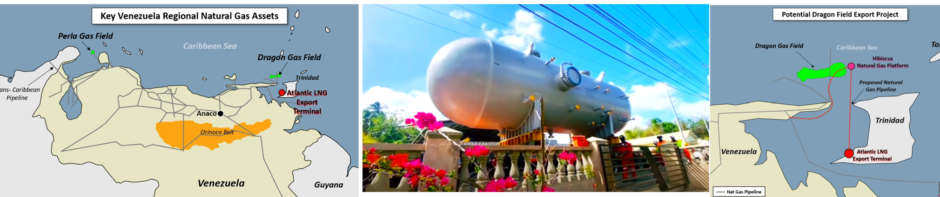
Operations have recently been identified by shareholders NGC and international companies BP and Shell, as important amid plans to explore and develop gas fields which in or near Venezuelan waters.
Atlantic said, “As chief executive officer, he will prioritise safety, reliability, and efficient operations in support of national energy and economic objectives, while fostering a culture where people feel supported, engaged, and aligned around shared goals.”
Atlantic LNG ships 5000th cargo
By
LNG Prime Staff May 6, 2026
Atlantic LNG shipped the 5,000th LNG cargo from its Point Fortin LNG export terminal since 1999.
IMF Executive Board Concludes 2026 Article IV Consultation with Trinidad and Tobago
May 18, 2026
The Executive Board of the International Monetary Fund concluded the 2026 Article IV consultation with Trinidad and Tobago.
- The economy continues to recover toward pre-pandemic levels, supported by resilient non-energy sector activity.
- Higher global energy prices are providing near-term support to external and fiscal positions, providing an opportunity to rebuild policy buffers.
A policy mix that combines stronger fiscal consolidation while protecting the most vulnerable, closing the interest rate differential with the US to stabilize capital outflows, and a gradual move towards greater exchange rate flexibility, is needed to address macroeconomic imbalances, safeguard macroeconomic stability, and strengthen resilience to shocks.
Washington, DC: The Executive Board of the International Monetary Fund (IMF) completed the Article IV Consultation for Trinidad and Tobago.[1] The authorities consented to the publication of the Staff Report prepared for this consultation.[2]
Economic activity continued its gradual recovery in 2025, with real GDP growth moderating to 0.8 percent and inflation returning to low, pre-pandemic levels.
At the same time, persistent fiscal deficits led to an increase in public debt. The current account balance remained in surplus, and while international reserves are trending downwards, they are supplemented by substantial (25 percent of GDP) liquid assets in the Heritage and Stabilisation Fund (HSF). Credit growth remained steady and the banking system stayed well-capitalized, underscoring continued financial sector resilience.
Looking ahead, growth is projected to remain at around 0.8 percent in 2026, and to strengthen over the medium term supported by new energy projects and continued momentum in the non-energy sector. Inflation is expected to rise temporarily to around 3.1 percent in 2026, reflecting global commodity price developments, before stabilizing around 2 percent over the medium term.
The overall fiscal deficit is expected to decline to 4.6 percent of GDP in 2026 from 5.5 percent in 2025 and international reserves are expected to remain adequate at about 5.5 months of imports. Higher energy prices are expected to support fiscal and external balances in the near term, while the authorities’ ongoing revenue and expenditure reforms, and new energy projects coming on stream underpin a gradual improvement in the fiscal and external positions over the medium term.
The outlook is subject to significant uncertainty, including due to the impact of the war in the Middle East. Delays in new energy projects or disruptions to production from mature fields could weigh on growth, while faster implementation of reforms under the Revitalization Blueprint and sustained investment could lift medium-term growth prospects.
Executive Board Assessment
Executive Directors agreed with the thrust of the staff appraisal. They welcomed continued economic recovery, low inflation and a healthy banking system. Directors agreed that the economic outlook is however subject to elevated uncertainty, including through the impact of the war in the Middle East. They encouraged the authorities to address underlying macroeconomic vulnerabilities through prudent fiscal and monetary policies and persevere in diversifying the economy and strengthening its resilience to shocks.
Directors noted that persistent fiscal deficits have led to an increase in public debt. They welcomed the authorities’ recent steps to strengthen the fiscal position—including by enhancing revenue mobilization, rationalizing spending and improving investment efficiency—and emphasized that a stronger sustained fiscal consolidation effort, while protecting the most vulnerable, is needed to place public debt on a credible downward path and preserve external stability.
In this regard, Directors emphasized the importance of closing tax gaps, reducing non‑priority transfers and improving the targeting of social programs. They stressed that higher-than-budgeted energy revenues should be primarily used to rebuild buffers, including through resumed deposits into the Heritage and Stabilization Fund.
Directors welcomed the authorities’ efforts to strengthen fiscal institutions and address fiscal risks. They commended the authorities for the courageous reforms to the National Insurance System, and called for further steps to improve the long-term sustainability of the public pension system.
Directors also encouraged the authorities to adopt a medium-term fiscal framework anchored by a well-designed fiscal rule and a credible debt anchor to manage volatile energy revenues and ensure intergenerational equity.
Directors concurred that monetary and financial sector policies should continue to support stability. They generally supported moving the policy rate toward a neutral stance to remove the negative interest rate differential with the United States and stabilize capital outflows.
Against the background of declining reserves, Directors also called for efforts to improve the functioning of the foreign exchange market and, over time, move toward greater exchange rate flexibility with appropriate supporting measures. They encouraged continued vigilance over the growing sovereign‑financial nexus and emerging cyber-security and climate risks.
Directors congratulated the authorities for their successful removal from the EU list of non-cooperative tax jurisdictions. They emphasized that structural reforms will be critical to raise potential growth and resilience and encouraged further efforts to improve the business environment and investment climate, including by removing excessive red tape and obstacles to trade, promoting more flexible labor market policies and harvesting digitalization and AI. Further improvements in statistical capacity and transparency remain a priority.
IMF Directors cheer Dynamo Dave
2026, 05/20
Assessment of the economy by the International Monetary Fund (IMF), gratified the government, commending the findings as a sign of renewed international confidence in the country’s economic direction and a validation of its policy agenda. The statement follows successful completion of the IMF’s 2026 Article IV Consultation, a routine evaluation of economic health and policy framework.
Finance Minister Davendranath Tancoo said the IMF conclusions highlight a stabilising economy showing early signs of recovery 12.5 months after the current administration won the 2025 election.
Inflation has returned to low levels, external accounts remain in surplus and the banking sector continues to be well-capitalised with steady credit growth. These indicators signal improved macroeconomic conditions and a strengthening financial system. Foreign reserves remain at adequate levels, estimated at five and a half months of import cover, reinforced by significant savings in the Heritage and Stabilisation Fund, which stands around 25 per cent of the gross domestic product.
These buffers are crucial in helping the country withstand external shocks while supporting economic recovery.
“In just over one year into our term, we have stabilised the decline, rebuilt international credibility and repositioned Trinidad and Tobago as a nation with strong, sustainable recovery potential,” Tancoo declared.
However, these improvements must be viewed against a challenging economic situation inherited upon taking office. The finance minister noted a sharp decline in official reserves over the past decade, from over US$10 billion in 2015 to just above US$5 billion by early 2025, alongside near doubling of public debt.
Employment declined during that period, while significant withdrawals from the Heritage and Stabilisation Fund place additional strain on national finances. Rising global energy prices present a limited opportunity to rebuild financial buffers and strengthen fiscal resilience.
IMF endorsement of ongoing fiscal reforms, including efforts to improve revenue collection, enhance public spending efficiency and protect vulnerable populations pleased Tancoo. The IMF acknowledged removal from the EU list of non-cooperative tax jurisdictions, a significant step in restoring international credibility.
The consultation highlighted the importance of continued reforms in digitalisation, labour market flexibility and improvements to the business environment to sustain growth momentum. Risks such as global economic uncertainty, energy sector volatility and foreign exchange constraints, are actively being addressed through targeted policy measures.
The ministry approved the IMF report, marking a turning point, reflecting progress towards economic stability and a broader agenda of national renewal, with continued expansion of opportunities for businesses and improvement in the quality of life for citizens.
IMF assessment reflects stability
2026, 05/20
While the economic outlook is showing tentative signs of stability, analysts and the business community warn that the country remains caught between short-term gains from favourable external conditions and deep-rooted structural weaknesses that continue to limit sustainable growth.
Higher global energy prices are expected to provide a temporary boost to revenues and support fiscal balances, the underlying reality is that output constraints, persistent fiscal pressures and slow diversification efforts continue to shape the economy’s trajectory. Against this mixed backdrop of cautious optimism and ongoing vulnerability, economists Mariano Browne and Indera Sagewan say modest growth prospects reflect stability rather than transformation.
The International Monetary Fund (IMF) projected the economy will grow by 0.8 per cent in 2026, with inflation rising temporarily to about 3.1 per cent due to global commodity price pressures. The Fund expects the fiscal deficit to narrow to 4.6 per cent of GDP from 5.5 per cent in 2025, while reserves are projected to remain adequate at around 5.5 months of import cover.
Browne said the latest outlook “is not going to be any different from the last assessment,”citing persistent issues of foreign exchange shortages, structure of the economy and high government spending. Although the fiscal deficit is expected to decline, “it’s still going to be higher than the projected amount, which means that the expenditure profile is still high.”
The country remains constrained by low gas output, while higher energy prices may provide some benefit. Selling the same amount or less product for a bigger amount cannot sustain long-term growth.
Sagewan cautioned against interpreting the projected improvement as a sign of real progress, stating that expected growth “has to do with increased revenues as a consequence of the higher prices of oil and petrochemicals.”
This is “a short-term blip” driven by global conditions rather than domestic output, warning policymakers to be careful in how such revenues are managed.
While the IMF flagged concerns about reserves, Sagewan said “our international reserves have been holding quite sturdy,” with import cover remaining about six months.
She acknowledged concerns about rising public debt but that the increase has been marginal and the Government opted to maintain expenditure to avoid deeper economic fallout after inheriting a high debt burden.
Kiran Singh, president of the Greater San Fernando Chamber of Commerce highlighted that the projected reduction in the fiscal deficit compared to last year supports expectations of continued, albeit modest, growth.
However, he stressed the need for energy windfalls to drive diversification, stating that “we are still an energy-based economy” and must prioritise expansion in non-energy sectors.
Increased manufacturing output and ongoing plans for the southern economy, including refinery operations, waterfront development, agriculture and tourism are potential growth drivers in the coming years.
The IMF stated that higher energy prices are expected to support fiscal and external balances in the near term, but the outlook is subject to “significant uncertainty,” including geopolitical risks and potential delays in energy projects. He urged authorities to strengthen fiscal discipline, boost revenue mobilisation and accelerate diversification, while using any excess energy revenues to rebuild buffers such as the Heritage and Stabilisation Fund.
Baldath Maharaj said Chaguanas Chamber of Industry and Commerce“welcomes the IMF 2026 report, especially recognition that the non-energy sector and the strong financial system are driving the 0.8 per cent growth…
it is “encouraging to see inflation return to low levels, which brings some level of stability to both consumers and business operators,” The current position is “a solid foundation but the real challenge lies in translating macroeconomic stability into tangible results for businesses.
“Our focus now is how we work to translate this positive indicator into everyday success,” he said, adding that improved access to foreign exchange for small and medium-sized enterprises could turn “those very stable figures into thriving prosperity on the ground.”
Energy gains and manufacturing boom lift economic performance
12 May 2026
UWI Economics don, Dr Vaalmikki Arjoon declared macroeconomic stability was maintained in 2025 by continued strength in the energy sector and a notable expansion in non-energy activity.
Arjoon highlighted that the energy sector grew by 2.2% in the first three quarters of 2025, supported by increased gas output from the Cypre and Mento fields.
“However, the most striking development was recorded in the non-energy manufacturing sector, which expanded by 12% over the period. The food processing industry in the manufacturing sector was the strongest performer, growing by 16% in the first three quarters. 2025 also points to an increase in consumer spending, with point-of-sale purchases increasing by 8.1%.”
The sector demonstrated longer-term resilience, growing by over 50% since the immediate pre-Covid period (Q3 2019), despite ongoing challenges in the private sector, including global supply chain disruptions affecting raw material imports, foreign exchange constraints and port-related inefficiencies. In the first quarter of fiscal 2026 (October to December 2025), the economy recorded a modest fiscal surplus of $100 million.
“Brent crude is hovering around US$105, while the LNG benchmarks used to calculate our gas price, like JKM, Dutch TTF and UK NBP, are all ranging between US$15 and US$20 per mmbtu. Indeed, these prices are much higher than the oil and gas prices the budget was predicated on, US$73.25 per barrel and a gas price of $4.25 per mmbtu. This, therefore, strengthens energy revenues for the State, improves export earnings and foreign exchange, and widens our overall fiscal space.”
These higher prices, if prolonged, could also narrow the overall fiscal deficit projected for the year, or may even produce a small surplus by September 2026.
“It also means that some portion of the revenues is likely to have been deposited into the HSF. Naturally, higher earnings from the energy sector might also cause, at the very least, the ratings outlook to improve from negative to stable, or even to positive.”
While the International Monetary Fund (IMF) projected growth of 0.7% in 2026 and 2.95% in 2027, stronger-than-expected energy revenues could allow T&T to outperform these forecasts. Improved fiscal space could support higher capital expenditure without increased reliance on borrowing.
“Further, higher forex inflows from the energy sector, given the higher prices, can also enhance short-term growth even further through improved private sector performance once the commercial banks make this increased forex earnings available to the private sector fairly.”
Businesses would be better able to import inputs on time, replenish inventories, service external obligations and undertake new investments. Greater availability of foreign exchange would reduce the cost of doing business, as firms would be less reliant on the black market and the premiums charged for forex.
Nutrien sale of fertiliser plant
2026, 05/08
Nutrien Ltd is exploring the possible sale of its Trinidad nitrogen facility, as the company continues a strategic review of its shuttered Point Lisas operation.
In an internal memo circulated to staff yesterday, following the parent company’s quarterly earnings release and conference call, Nutrien Trinidad vice president and managing director, Edmund Thompson confirmed the company is reviewing “all strategic options” for its Trinidad nitrogen operations, including a potential sale.
“As shared publicly, Nutrien continues to evaluate all strategic options for our Trinidad Nitrogen operations.
This review considers a full range of alternatives, including the exploration of a potential sale of the facility. There is no predetermined outcome, and no decisions have been made,” the memo stated.
The company also acknowledged uncertainty surrounding the operation’s future.
“We appreciate your patience and understanding as this work continues. We recognise that periods of uncertainty can be distracting, which is why maintaining our focus on safety remains more important than ever.”
The latest development comes as talks continue between Nutrien and the National Gas Company (NGC) over the future of the plant. NGC chairman Gerald Ramdeen confirmed discussions had entered a more delicate phase after both parties signed a non-disclosure agreement.
“Well, it has become even more sensitive because we signed our NDA (non-disclosure agreement) this week. The President reminded me that it doesn’t allow us to say more than to repeat what we said before, which is that talks are ongoing between NGC and Nutrien,” Ramdeen said.
Asked, Ramdeen declined to speculate on whether Nutrien will remain in Trinidad and Tobago,
“What is happening in relation to those talks is something that is at a very critical stage. And I don’t want to give people unsupported expectations. I don’t want to dampen anybody’s expectations of what may happen in that regard.”
Nutrien shut down the Point Lisas nitrogen facility on October 23, 2025.
In its first quarter 2026 financial report, the Canadian fertiliser giant confirmed there was “no production from the Trinidad and New Madrid facilities” since the controlled shutdown.
The company is “progressing as planned with the review of strategic alternatives for our phosphate business, Trinidad nitrogen facility, and Brazilian retail business with a focus on enhancing earnings quality and free cash flow.”
Nutrien did not detail what strategic alternatives may involve, but such reviews can include possible sales, restructuring, partnerships, or asset closures. Despite uncertainty surrounding the Trinidad operation, Nutrien posted a sharp increase in profits for the first quarter of 2026.
Net earnings climbed to US$139 million compared to US$19 million in the corresponding period last year, driven by stronger fertiliser prices, record potash sales volumes, and improved performance in its nitrogen and retail segments.
President and CEO Ken Seitz said the company remains focused on investing in operations it considers more competitive and efficient. Nutrien also maintained its 2026 nitrogen sales guidance at between 9.2 million and 9.7 million tonnes.
Moody’s withdraws NGC credit rating
2026, 05/21
National Gas Company of Trinidad and Tobago (NGC), headquartered in Point Lisas, Trinidad, is a diversified natural gas transmission and distribution company with exploration and production operations.
The company has equity stakes in Phoenix Park Gas Processors Ltd, owner and operator of Trinidad and Tobago’s sole cryogenic gas processing plant, and in Atlantic LNG Company of T&T, a supplier of liquefied natural gas (LNG) to global markets.
Through downstream subsidiary NGC Petrochemicals Limited (NPL), NGC holds 20 per cent in the Caribbean Gas Chemical Ltd’s Methanol and Dimethyl Ether Petrochemical Complex.
Over 70 per cent of NGC’s gas sales volume is directed to the domestic petrochemical industry (ammonia and methanol), with 19 per cent sold to the domestic power, 7.0 per cent to steel and under 5.0 per cent to other petrochemical and light industrial customers.
NGC owns around 1,000 kilometers of offshore and onshore pipelines, with a maximum capacity of 4.4 billion cubic feet per day (bcf/d).
On May 14, rating agency Moody’s, in a rating action, announced it had withdrawn its credit rating for state-owned National Gas Company of Trinidad and Tobago (NGC) due to insufficient information. Moody’s withdrew NGC’s Ba2 corporate family rating, ba2 baseline credit assessment and Ba2 senior unsecured notes. Prior to the withdrawal, its outlook on NGC was negative.
“We have decided to withdraw the rating(s) because of inadequate information to monitor the rating(s), due to the issuer’s decision to cease participation in the rating process.”
In response the NGC’s response indicated that the company has “realigned its external credit rating agency engagements” and that “a critical part of this realignment was the discontinuation of its relationship with Moody’s Investors Service, effective February 26, 2026.
“This review evaluated the continued alignment of that framework with NGC’s evolving financial profile, operating performance, and long-term strategic objectives. The company does not consider the previously assigned sub-investment-grade rating by Moody’s to be an accurate reflection of its standalone credit profile. “NGC’s financial position, operating model, and risk characteristics are, in management’s view, more consistent with an investment grade standing, supported by its earnings profile, liquidity and debt service capacity. The decision of the company to realign was with a view to achieve such a rating.”
On December 12, 2025, Moody’s maintained the Trinidad and Tobago’s long-term local and foreign currency issuer and senior unsecured ratings at Ba2, while changing its outlook on the country from stable to negative.
On December 15, Moody’s maintained the NGC’s Ba2 corporate family rating and, following its revision of the outlook of the T&T Government, revised NGC outlook from stable to negative. Moody’s applied similar treatment to Heritage Petroleum Company and to Port-of-Spain Waterfront Development Ltd, meaning that the rating agency kept its ratings of the three companies but changed its outlook to negative from stable.
“Accordingly, the change in the companies’ outlook to negative reflects the heightened government liquidity risks, which directly constrain the potential support available to Heritage, NGC, and Port-of-Spain Waterfront Development Ltd.”
Moody’s approach links the rating of state-owned companies to the sovereign ( T&T) rating.
NGC believes it should be rated at investment grade, higher than its 100 per cent owner Moody’s rated as junk. In the context of the decision to close the Nutrien five-plant complex and seek a buyer, NGC board performed as expected in completing negotiations with suppliers of natural gas and petrochemical users of gas, to extract a higher gas price from the light industrial and commercial (LIC) users of the commodity as the government plans to increase non-energy exports by US$5 billion in five years.
NGC accepted legal and financial advice to facilitate payment by TTNGL of a dividend after 3 years, bringing relief to shareholders.
NGC is yet to produce audited accounts for its financial year ended December 31, 2025.
Moody’s outlined three specific triggers that could signal future downgrades of NGC:
Margin erosion: A material weakening in margins or cash flow;
Aggressive extraction: Significantly higher taxation or excessive dividend extractions compromised NGC’s liquid capital
Mandate deviation: State diverting NGC from profitable commercial core operations to fund public policy or social programmes.
The Finance Ministry adopted an aggressive extraction approach to NGC and its subsidiaries, especially with regard to dividends.
To date, National Energy Corporation paid dividends of USD 60 million to parent NGC as follows: US$30 million on September 23, 2025 and US$30 million on January 13, 2026.
Moody’s noted state companies flush with cash, as NGC , are paying dividends to sole shareholder, Corporation Sole to boost T & T’s stated net foreign reserves. Questions remain on:
a. the quantum of dividends paid by NGC to its shareholder since May 1
b. the percentage of NGC cash reserves those dividend payments represent
c. payments of dividends depriving state companies of cash to pay bills, invest in new revenue-generating ventures, or safeguard the company in litigation, compromising the company’s liquid capital
d. payments of dividends by NGC Group in accordance with policy approved by the sole shareholder and the company.
e. payments of dividends based on a predictable schedule and on a defined percentage of NGC earnings.
NGC, MHTL ink gas deal
2026, 05/20
Methanol Holdings (Trinidad) Ltd signed a new natural gas supply contract with the National Gas Company of Trinidad and Tobago, amid questions about operations at Point Lisas facilities,
NGC disclosed it signed the contract with MHTL at the company’s head office in Point Lisas.
“The National Gas Company of Trinidad and Tobago Limited (NGC) has taken another significant step in advancing its downstream gas contracting agenda with the formalisation of a new gas sales contract (GSC) with Methanol Holdings (Trinidad) Limited (MHTL). MHTL is the largest methanol producer on the Point Lisas Estate. The execution of this contract evidences renewed confidence of the petrochemical producers and MHTL in particular, in the management of the downstream petrochemical sector by NGC.”
The agreement reinforces NGC’s continued commitment to supporting the long-term sustainability and competitiveness of Trinidad and Tobago’s petrochemical sector. MHTL is owned by the Swiss company, Proman.
The release outlined, “The execution of the methanol GSC comes shortly after the execution of new GSC’s for Proman’s ammonia plants, Caribbean Nitrogen Company (CNC) and Nitrogen (2000) Unlimited (N2000).
Under the agreement, NGC will supply natural gas to support MHTL’s methanol operations at the Point Lisas Industrial Estate. The GSC reflects NGC’s strategic focus on strengthening collaboration with downstream customers and supporting an industry that remains a major contributor to national economic development, foreign exchange earnings and employment.”
The execution of the MHTL agreement marked the successful conclusion of 100 per cent of NGC’s downstream gas contract renewals with its downstream customers and the Proman Group companies, including MHTL, CNC and N2000.
NGC said, “The completion of these agreements underscores the confidence of key downstream stakeholders in Trinidad and Tobago’s energy sector and demonstrates NGC’s continued ability to work collaboratively with its customers to secure commercially sustainable outcomes that support industrial continuity and long-term national value creation.”
NGC, enjoying a virtual monopoly in supplying natural gas to downstream petrochemical and light industrial customers, does not disclose the length of its gas supply contracts to the petrochemical sector.
Methanex weighs options
May 9, 2026
During recent earnings calls with investors, Methanex signalled that it is actively weighing its options amid uncertain gas supply negotiations with the National Gas Company (NGC). Methanex said its Titan methanol plant at the Point Lisas Industrial Estate could be idled if ongoing gas contract negotiations with the National Gas Company fail to produce commercially viable terms. Titan was restarted in 2024 after a 2-year natural gas agreement with NGC. At the same time, Methanex idled its Atlas plant when its long-term gas contract expired. The company’s current gas supply contract expires in September. In its first-quarter 2026 results, Methanex said:
“In Trinidad, the Titan plant produced 215,000 tonnes in the first quarter of 2026 compared to 174,000 tonnes in the fourth quarter of 2025. Production was higher in the first quarter as the plant experienced disruptions from unplanned outages in the fourth quarter.
We have a natural gas contract to supply the Titan plant which expires in September 2026. We are in discussions with the Natural Gas Company of Trinidad and Tobago to renew gas supply contracts to support our Trinidad operations, however there can be no assurance that we will be able to secure such contracts on commercially acceptable terms.”
During its first-quarter 2026 earnings call on April 30, Methanex president, CEO and director Rich Sumner referenced new gas pricing announced in January by NGC chairman Gerald Ramdeen, noting that the lion’s share of profits from Trinidad returns to the country. Gas prices increased from US$3 to US$5.30 per MMBtu. Sumner said.
“The economics of the existing contracts are—the lion’s share of the rents are going back to Trinidad. And any increase in any pricing means that it makes it very difficult for us to support running there. And so, obviously, a lot of this is going to be coming through the negotiations with the NGC… indications look challenging.”
Methanex was considering “all possible outcomes” in discussions with NGC, including a short-term arrangement or potential idling of the plant.
“Our gas contract is up in middle of September. We’re in discussions with the NGC. We’re considering all possible range of outcomes through those discussions, including a short-term deal, as well as the potential to have to idle the plants. It will come down to those NGC discussions.”
Trinidad remains “an extremely tight gas market”, with the LNG, ammonia and methanol sectors operating below nameplate capacity. He noted uncertainty around potential Venezuelan gas supplies.
“But we do think any new gas from Venezuela is quite a ways out and also carries risk on whether it can ever flow economically to methanol. There’s a lot for us to consider.”
Responding to questions on the number of plants offline as of April 13. Chairman Gerald Ramdeen said the purpose of the NGC is not to keep every plant on the Point Lisas Industrial Estate running “simply because we want plants to be running”.
NGC ends $700m in sponsorships
2 MAY
The National Gas Company of Trinidad and Tobago Ltd cut its $700 million corporate social responsibility funding to repair roads, supply medicine in hospitals, pay public servants and support the social net, chairman Gerald Ramdeen said at the signing ceremony of a gas supply contract between the company and EOG Resources Ltd.
“No one could have imagined that the NGC would return a profit that was 100% more than what was earned in ten months. And you hear how that was a result of Atlantic LNG restructuring. You know what it was about? To run the NGC before April 2025, it cost the NGC $1.8 billion; under this board, this was reduced to $1.1 billion. There was a hue and cry about sponsorships and everybody was down the NGC throat about the lack of sponsorships and cutting of sponsorships. That was $700 million in expenses.”
Ramdeen said now that $700 million can be returned to shareholders, among other benefits.
“Ten sponsorships reach my desk every single day. That money will now be taken to fix roads, to put medicine in hospitals, to pay public servants to look after the social net and that is where it rightfully should be.
The ability of the NGC to return that profit was because the business of the NGC was run differently. It had nothing to do with this big hue and cry about Atlantic LNG.” .
Ten months ago, the State energy company bought a truck compressor and comparing that to the restructuring of Atlantic LNG, he said pressures in the line were not allowing gas to flow.
“With restructuring, there were times we could not put a molecule of gas into Atlantic, and the investment decision to buy the truck compressor allows NGC, for the first time, to be able to control the flow of gas into Atlantic, for the first time, to be able to offer compression to our downstream customers on our gas transportation agreements, to put gas into the system.”
While there was a clarion call to focus on the gas that will come on-stream from several projects next year that will provide around 90 million standard cubic feet of gas, “we’ve been putting almost 200 million standard cubic feet of gas into Atlantic. This has allowed the country to lift an extra cargo of LNG, at present prices that put into the treasury over US$50 million. That is not because of restructuring. That is because of the right people in the right places to make the right decisions,” said Ramdeen.
Late last year, NGC announced that it would end funding for the Bocas Lit Fest and steelbands Couva Joylanders, La Brea Nightingales and Steel Xplosion in Tobago.
NGC, BP to monetise Loran gas field
2026, 05/02
During the EOG Resources Limited and NGC MOU signing ceremony in Port-of-Spain, yesterday, Energy Minister Dr Roodal Moonilal says this country stands to be the primary beneficiary of BP’s Memorandum of Understanding with the Venezuelan government, arguing that, regardless of upstream activity, the country remains central to monetise any near or cross-border gas.
Responding to BP and the Venezuelan government signing an MOU for the exploration of natural gas in the Loran offshore area this week, Moonilal said the agreement signals momentum but does not shift the underlying commercial reality that natural gas from Venezuelan fields must be processed through T&T’s infrastructure. This position is reinforced by ongoing work on the cross-border Manakin-Coquina field, a cornerstone project in the country’s medium-term energy outlook.
“The development of the cross-border Manakin-Coquina field is a significant project in our energy outlook. This project represents the first major cross-border hydrocarbon development that T&T aims to partake in.”
The project is anchored in cooperation with the US Government, with licences already secured to proceed. The administration is now focused on accelerating timelines, with continued engagement with bpTT to bring gas to market as quickly as possible.
Substantial investment is expected from 2027, with the first gas to follow. Once operational, the project is projected to add meaningful volumes to both the domestic market and the LNG sector, improving utilisation rates across existing plants.
He said that increased gas supply would also directly benefit the petrochemical industry, enabling higher production of ammonia and methanol and, by extension, increased export revenues. bpTT remains a long-standing partner in the sector, with established capacity to deliver complex upstream developments.
National Gas Company chairman Gerald Ramdeen confirmed that discussions on cross-border gas projects are already advancing. Following the signing of a new natural gas supply contract with EOG Resources Trinidad Ltd, Ramdeen said bpTT officials from London recently held talks at NGC on the Manakin-Coquina field.
While declining to disclose details, he said exploration work across key fields, including Dragon and Loran-Manatee, is progressing at a pace with the involvement of NGC, bpTT, and Shell.
Ramdeen addressed concerns about increased competition following the issuance of a general licence by the US Office of Foreign Assets Control, which has broadened access to Venezuela’s energy sector. He said that while more companies are entering the space, the fundamentals remain unchanged.
“None of that gas can be monetised except in T&T,” where its pipeline network, LNG facilities and offshore infrastructure are critical assets that position it as the region’s indispensable gas processing hub.
NGC signs gas supply contract with EOG Resources
2026, 05/02
EOG Resources Limited VP & General Manager George Vieira and NGC Chairman Gerald Ramdeen, signed the MOU between EOG Resources Limited and NGC yesterday.
Ramdeen says the state company reinforced its position in an increasingly competitive natural gas market after signing a new supply contract with EOG Resources Trinidad Ltd.
The agreement, concluded eight months ahead of schedule, renews an existing arrangement due to expire on December 31 and secures gas supply for the next two years.
Early completion reflects efficiency and the strength of the longstanding relationship between NGC and EOG, while ensuring continuity of supply to key downstream sectors.
The contract carries added significance following the restructuring of Atlantic LNG, which fundamentally changed NGC’s role as the sole aggregator of gas in the midstream.
“Prior to the restructuring of Atlantic LNG, the National Gas Company was the sole aggregator of gas in the midstream. Subsequent policy changes allowed upstream producers to market gas directly to Atlantic shareholders, increasing competition for supply.
NGC must now compete with multiple buyers for upstream gas, making the successful conclusion of agreements such as the EOG contract a demonstration of its negotiating strength.
“It proves the strength of the NGC and its ability to negotiate terms in relation to supply and volume and price that is more competitive than anyone else.”
Ramdeen noted that all natural gas under the agreement is produced within Trinidad and Tobago’s jurisdiction and reiterated NGC mandate to secure supply for power generation, petrochemicals, LNG obligations and large industrial customers.
On reports of plant shutdowns at the Point Lisas Industrial Estate, he said natural gas allocation is driven by value optimisation rather than keeping all plants operational. Limited supply requires prioritisation to ensure the highest returns to the country.
“The first priority is to ensure that the quantity of gas available from the NGC brings the highest margins to the country and that allocation decisions must balance domestic demand with LNG export opportunities.”
NEC pays NGC US$60M in dividends
2026, 05/09
In response to MP Stuart Young, Energy Minister Dr Roodal Moonilal revealed National Energy Corporation of Trinidad and Tobago (NEC) paid US$60 million in dividends to parent National Gas Company (NGC), between September 2025 and January 2026.
He confirmed in Parliament that currency for the payments was United States dollars.
“Yes, dividends were paid by National Energy Corporation. Part two, the total amount of dividends paid to date is US$60 million.
“Dividends were paid to NGC as follows: US$30 million on September 23, 2025 and US$30 million on January 16, 2026.”
The US$60 million was being held in reserves by the NEC to fund the dredging channels at Point Lisas and La Brea and for other infrastructure and maintenance work. However, the Minister provided little detail in response to another question from Young on NGC’s maintenance of the required right of way around its gas pipelines across T&T.
Moonilal replieid, “The NGC has partially maintained the right-of-way since the conclusion of contracts in place for vegetation control.”
There had been some reassessment done concerning the maintenance. “NGC has taken the opportunity to revisit and revise the scope of works and risk assessment for this particular activity, given the erroneous risk categorisation in the past, which required vendors to be STOW certified. NGC is currently finalising the strategy to re-engage the services with a focus on expanding the vendor lists to provide opportunities for the communities in which our right-of-way traverses.”
However, the Minister stated the Opposition MP would have to submit questions about specific contracts for more details about which companies were currently responsible for the partial maintenance.
NEC is 100 per cent owned by NGC, which is 100 per cent owned by Corporation Sole – Minister of Finance, Davendranath Tancoo, who holds all property transferred or vested in trust for the State.
US$ dividend option for TTNGL shareholders
2026, 05/02
The board of publicly listed TTNGL announced that it intends to provide shareholders with the option to receive dividend payment in either US dollars or TT dollars. In a notice to shareholders TTNGL said the payment of dividends in US dollars would be subject to “applicable regulatory requirements.”
TTNGL said a dividend currency mandate form will be mailed to shareholders for completion and submission to brokers. Shareholders are encouraged to complete and return the form, indicating their preferred currency option, at their earliest convenience to facilitate timely processing of dividend payments. The notice advised that the mandate form is available on the company’s website at www.ngl.co.tt and may be downloaded and submitted in accordance with the provided instructions.
Where no completed mandate is received, dividend will be paid in TT dollars, via the method currently on record. On April 9, TTNGL advised that, based on the unaudited financial results for the three months ended March 31, the company decided to declare a special dividend of TT$1 to shareholders on the register as of April 24.
That dividend was initially scheduled to be paid on May 13, 2026, but in a separate notice to shareholders, TTNGL said the dividend payment had been deferred to May 29, “to allow shareholders sufficient time to select their preferred currency option for dividend and ensure that the company has a robust and cost effective mechanism in place to facilitate these payments.”
In a notice on April 30, TTNGL advised of a delay in the publication of its unaudited interim financial statements for the three months ended March 31, 2026. This is due to ongoing audit work related to the financial statements for the year ended December 31, 2025 at TTNGL’s underlying asset, Phoenix Park Gas Processors Ltd.”
NIF reports $36.9M Q1 loss
2026, 05/13
The National Investment Fund Holding Company Limited recorded a net loss for the three month period ended March 31, 2026 (Q1 2026).
In its unaudited financial report, NIF chair Dr. Sandra Sookram stated, “The company recorded a net loss of $36.9 million before unrealised fair value adjustments, compared to a net loss of $37.7 million for the same period in 2025, consistent with the company’s usual first-quarter earnings profile, given that dividend inflows from our investee companies are typically weighted toward the latter part of the financial year. In accordance with IFRS Accounting Standards, the company measures its investment portfolio at fair value.”
“During the period, a net unrealised gain of $0.8 million was recognised, compared to a loss of $60.2 million in the prior-year period, representing a favourable movement of approximately $62.0 million. Total comprehensive loss therefore improved to $36.1 million, compared to $97.9 million in 2025, a reduction in loss of approximately 63 per cent. These movements are non-cash in nature and reflect changes in the market prices of the company’s listed investee companies.”
Sookram said NIF demonstrated resilience in core income streams, despite continued global and regional economic uncertainty arising from geo-political tensions and market disruptions.
-
-
- Total income of $33.6 million represented a modest increase over the equivalent prior-year period of $32.1 million.
- Dividend income remained stable at $27.0 million, consistent with the prior-year quarter.
- Interest income increased by 38 per cent to $5.7 million, reflecting improved returns on investments in the Sinking Fund and a higher average Fund balance.
-
The company successfully met all coupon payments due during the period, in full and on time, and maintained its CariAA credit rating, reflecting high creditworthiness, with a stable outlook.
NIF’s portfolio remains anchored by investments in Republic Financial Holdings (RFHL), Angostura Holdings Ltd (AHL), One Caribbean Media (OCM), West Indian Tobacco Company (WCO), and its wholly owned subsidiary, Trinidad Generation Unlimited (TGU).
French investors visit
2026, 05/08
The Prime Minister and the cabinet welcomed French executives to discuss investment opportunities at the Diplomatic Centre and Official Residence.
Prime Minister Kamla Persad-Bissessar yesterday met a high-level delegation of French business leaders and investors as part of the Government’s ongoing international investment engagement strategy aimed at attracting major investment, creating jobs and generating growth.
The meeting forms part of the Prime Minister’s broader vision to reposition T&T as a premier investment hub in the region, while restoring the country’s presence and credibility on the global stage.
Minister of Works Jearlean John, Attorney General John Jeremie and Foreign Minister Sean Sobers participated. French Ambassador Guillaume Pierre led over a dozen senior executives and representatives from a wide cross-section of industries including aviation, energy, transport, construction, agro-processing, luxury distribution, maritime services, infrastructure, manufacturing and technology.
Discussions focused on opportunities for investment and partnership in sectors critical to economic diversification and long-term development, including transport infrastructure, aviation , energy, manufacturing, logistics, construction, food production and technology-driven industries.
Prime Minister Persad-Bissessar reaffirmed the Government’s commitment to creating a stable, business-friendly environment that encourages investment, innovation and sustainable economic expansion.
Strategic geographic location, skilled workforce, industrial capacity and strong regional connectivity continue to make the country an attractive destination for international investors.
She emphasised that these engagements are part of a deliberate and sustained effort by the Government to open new avenues of economic cooperation with international partners while delivering tangible benefits through employment opportunities, revenue generation and national development.
The French delegation indicated strong interest in T&T potential as a gateway to the wider South American markets and welcomed continued dialogue and collaboration with the Government.
The meeting represented another important step in strengthening international business relations and expanding Trinidad and Tobago’s role as a competitive and emerging centre for investment, trade and regional commerce, according to a statement on the Prime Minister’s Facebook page.
Participants of the French business delegation were :
-
- 1) Paul Auriol – Director General Caribbean & Central America, Panama Moët Hennessy Alimentaire – Agroalimentaire
- 2) Yorgo Hernandez – Director, Americas, Panama OCEA Maritime / Civil & Defense – Maritime, Civil & Defence
- 3) Guillaume Leprince – Directeur Général, Panama AIRBUS – Aviation / Civil & Defence
- 4) Renaud Gorria – Directeur Général, Colombia POMA – Transport
- 5) Stephane Barc – Directeur Général, Trinidad and Tobago PERENCO – Oil & Gas
- 6) Florent Avelia – Directeur, Belize SILVER OAKS Services – Administration, Accounting & Human Resources
- 7) Riquette Bonne-Smith – Directrice, Saint Lucia BONNE BAGUETTE BAKERY LTD. – Agroalimentaire / Bakery
- 8) Katia Penault – Directrice, Suriname AMAZON SKY – Aviation
- 9) Jean François Gerin – CEO, Guyana AMAZON CARIBBEAN GUYANA – Agroalimentaire
- 10) Christophe Sureau – President, Guyana AMAZON CARIBBEAN GUYANA – Agroalimentaire
- 11) Timothée Delebarre – Director Caricom, Jamaica Vinci Corporation – Construction & Water Treatment
- 12) Rodolphe Massal – Directeur Général, Martinique AIRLINES TECHNICAL SUPPORTS – Aeronautical Maintenance
- 13) Soizic Duret-Motard – Directrice Caribbean-Caricom, Guadeloupe SOPREMA CARAÏBES – Construction & Materials Trade
- 14) Sébastien De Jaham – Director Caribbean, Central America & Dominican Republic GBH – Distribution / Automotive / Industry
Exercise Prudence in gas windfall
2026, 05/06 Dr Bhoe Tewarie
Former Minister of Public Administration Dr Bhoe Tewarie warns that the potential energy revenue over the next few years must be used wisely and not squandered as in the past oil and gas booms. He told a webinar on the Mid-Year Budget Review of the Trade and Economic Development Unit (TEDU) of the University of the West Indies (UWI),
“This 2026 budget is due for mid-year correction soon, what should they do now to take the country through to September 2026?
What will that mean for our economy and society? And what do they need to do in the 2027 budget, what is the action required in September 2026 for 2027 budget, and in 2028 (action required in September 2027) to truly benefit from when the flow of additional revenue begins to accompany the flow of natural gas from Dragon and Manatee in Venezuela. There is also likely to be increased production in our sovereign domain. But that is the optimistic part, what gives us hope.”
He then said the “dilemma” is how additional resources will be used. He warned that the Government cannot simply wait until 2028 hoping that increased gas flow will make up for current revenue shortfalls and that everything will be all right.
“What do we do in the interim, before the natural gas flow to make the 2028 increased revenue rewarding? Because we can use up anticipated revenue with expenditure, deficits and debt incurred in the intervening two years or we can build up revenue, attract investment, consolidate a technological platform that helps us to leapfrog and optimise new gas revenue to create a sustainable future for our grandchildren. And that is the stark choice.”
“ 2028 revenue flows will only make a difference if between now (2026) and then (2028) we can do the necessary action and preparatory work to optimise additional new sources of gas revenues. So, a lot depends on what we do in the next 18 to 24 months as we wait for increased flows of natural gas. So the mid-year review must focus on social stability and resilience and prepare for leapfrogging.”
Tewarie interpreted data which shows that while T&T’s economic performance is “resilient” it still is not in the place where it should be.
The World Bank and the Central Bank both state that the economic outlook is stable but depends on oil price and the Manatee field.
“The oil price has been good, if volatile, since the attack on Iran and Manatee seems to be on an accelerated track. But growth now is only 0.2 percent and energy dependent although other sectors – housing, manufacture, wholesale – don’t show any real buoyancy. This is in the Central Bank April 2026 report.”
In their April Macro Poverty outlook, Tewarie said the World Bank focuses on 2026 and 2027 with 0.7 per cent growth in 2026 and 3.2 per cent in 2027 which he said sounds good, but it is all upstream energy and Manatee dependent anticipating earlier than 2028 gains.
“So, what conclusions can we draw from these April 2026 assessments by the Central Bank and the World Bank? The Central Bank basically says that T&T is in a holding position. The economy is not collapsing but it is not about to lift off either. The optimistic side of the Central Bank’s assessment is that if oil prices remain high, future energy from Venezuela and from our own sovereign domain will see us through.”
The present United National Congress (UNC) Government is not to be blamed for the challenges the country faces. He urged the Government to look beyond short-term political victories and plan for the future.
“They inherited an explosive situation. And what they have been focussed on is keeping the ship afloat as well as changing course. But this mid-year review needs to accelerate things. The 2027 budget must cause our country to leapfrog forward and the 2028 budget must consolidate the T&T economy to make best use of the coming windfall.”
Predator Oil & Gas announces Placing to raise £3 million
15 May 2026
Potential award of Corrib South offshore Ireland is a new Company development. Recoverable gas resources 424.8 (P50) to 904.7 (P10) BCF with 44% Chance of Success.
- Adjacent to Corrib Gas Field infrastructure and addresses Security of Energy Supply.
Snowcap-3 site works onshore Trinidad have commenced. - Additional Snowcap-3 production testing programme planned.
Snowcap-2 and Jacobin-1 well reactivations and feasibility study on gas re-injection to boost production rates. - MOU-6 well planning and inventory build being progressed to maintain drilling schedule.
- April net production revenues in Trinidad 26% ahead of Company internal forecast.
Predator Oil & Gas Holdings, the Jersey based Oil and Gas Company with producing hydrocarbon operations focussed on Trinidad and Morocco, has announced that it has conditionally placed 85,714,286 million new ordinary shares of no par value in the Company (the ‘Placing Shares’) at a placing price of 3.5 pence each (the ‘Placing Price’) to raise £3 million (before expenses).
The capital raise of £3m was arranged by the Company’s joint brokers AlbR and OAK Securities.
Use of Proceeds
The Proceeds of the Placing, less expenses, will be spent on:
- Deepening the proposed Snowcap-3 (‘SC-3’) well by 150 feet and adding an additional testing programme for the Herrera #8 Sand, based on a revised reservoir correlation between Snowcap-1 and Rochard-1.
- Reactivation of the Snowcap-2ST1 and Jacobin-1 wells and acquire information for a gas re-injection reservoir engineering study for Snowcap-1 and Snowcap-2ST1 to assess the potential to maintain higher production rates for longer.
- Purchase Guercif MOU-6 long-lead well inventory to maintain the current drilling schedule given the impact on logistics of the Middle East conflict.
- Carry out preparatory reservoir engineering and facilities planning for the proposed pilot CNG development at Guercif.
- Commission an Environmental Impact Assessment for potential 3D seismic and a well to the Triassic TAGI in 2027.
These are prudent activities to support the ongoing partner negotiations, whilst third party technical and legal due diligence is being completed, to maintain the timeline to potential ‘First Gas’ upon a successful MOU-6 well testing programme.
Following a recent positive communication from the regulatory authorities in Ireland, the path for the Company to follow to secure progress for the award of the Corrib South successor authorisation has been clearly defined and is achievable within a short time framework.
Consequently, the Company is updating its technical package for Corrib South to include gas storage potential and will test the market for potential 3D seismic acquisition in 2027.
The SLR Consulting (Ireland) Ltd (‘SLR’) Competent Person’s Report (2019) will be updated to incorporate economics based on current gas prices and additional capacity in the Corrib infrastructure.
For context SLR gave unrisked gross recoverable gas in the range 424.8 (P50) to 904.7 (P10) BCF. The updated technical package will be focussed on supporting the P10 Case. Tracs International Ltd (2023) gave a 44% chance of success for the Corrib South prospect.
Corrib South was originally held as a Reserved Licence by Shell, the former operator of the Corrib gas field and was awarded as a Licencing Option to Predator Gas Ventures Limited in 2016 as a result of the Atlantic Margin Bid Round.
Parties previously expressing an interest in Corrib South will be re-visited based on this new development and additional potential partners will be approached, capitalising on the quest for strengthening Europe’s Security of Energy Supply.
Production operations onshore Trinidad for the month of April resulted in the Company receiving, after costs and royalties, approximately US$95,000 under the NABI Master Services Agreement, which represented a 26% increase over the forecast amount for April in he Company’s working capital forecast.
Completion of the Placing
Completion of the Placing is conditional on, inter alia:-
-
- the Placing Shares being admitted to listing on the Equity Shares (transition) category of the Official List and to trading on the London Stock Exchange’s main market for listed securities (‘Admission’).
- Admission, Settlement and Dealings in the new Placing Shares
- An applications will be made to the London Stock Exchange for Admission of the Placing Shares which is expected on or around 20 May 2026.
The rights attaching to the new Placing Shares will be uniform in all respects and all of the new Placing Shares will rank pari passu, and form a single class for all purposes with, the existing issued shares of no par value in the Company.
Warrants
6 million warrants are being issued exercisable at 3.5p. The Warrants have an expiry date of three years from the date of Admission.
Total Voting Rights
Following Admission, the Company has ordinary shares of no par value in issue, each with one vote per share (and none of which are held in treasury). The total number of voting rights in the Company is therefore 900,572,100. This figure of 900,572,100 may be used by shareholders in the Company as the denominator for calculations to determine if they have a notifiable interest in the share capital of the Company under the Disclosure Guidance and Transparency Rules, or if such interest has changed.
Paul Griffiths, Chief Executive Officer of Predator Oil & Gas Holdings Plc commented:
‘The new development associated with the application for the Corrib South successor authorisation is a significant boost for the Company’s potential operations offshore Ireland, that have hitherto been in a state of limbo.
This is timely news as it comes against the background of a crisis in confidence that Europe can maintain security of gas supply during periods of conflict and from sources where energy is a political weapon without anything other than indigenous self-sufficiency to meet demand for gas in the next 10 years and beyond. Green electrification is simply not going to be capable of replacing periodic reliance on gas during this period.
Corrib South has always been a compelling potential addition to the Corrib infrastructure and additionally offers a faster track route to gas storage and energy affordability than any other option currently available to Ireland.
It therefore makes abundant sense for us now to bring Corrib South back into our active operations portfolio. Morocco and Atlantic Ireland are two attractive gas projects adjacent and linked to European gas infrastructure. Our immediate objective is to ensure that the wider industry takes notice of our strategic position with relation to potentially material gas assets.’
Predator financial statements
30 April 2026
Predator Oil & Gas Holdings, the Jersey based Oil and Gas Company with hydrocarbon operations focussed on production in Trinidad and appraisal and near-term development in Morocco, announced its audited financial statements for the year ended 31 December 2025.
Predator Oil & Gas Holdings reported its audited financial statements for the year ended December 31, 2025, showing net petroleum sales revenue of £938,835 and no outstanding debt.
The company experienced an operating loss of £2,994,720, an increase from the prior year, primarily due to higher share-based payment charges.
-
- Administrative expenses decreased to £904,609 from £1,652,862 in 2024, reflecting prudent overhead management despite increased activity including the acquisition of three producing oil fields in Trinidad.
- Cash reserves stood at £1,518,874, down from £3,813,371 in the previous year.
- Post-period, the company raised £4.5 million in a share placing.
- Operational highlights include progress in Trinidad with asset acquisitions and production enhancements, and in Morocco with appraisal and development activities for gas resources.
Source: Predator Oil & Gas
bp agreement to develop Venezuela offshore gas

April 30, 2026
Courtesy BP
BP signs agreement with Venezuela to develop offshore gas fields
April 30, 2026
bp will develop Venezuela’s Cocuina-Manakin gas field, on the maritime border with Trinidad and Tobago and explore joint opportunities in the offshore Loran gas field, the company and government said after signing a memorandum of understanding (MoU) on April 29. The MoU formalizes the development of the Cocuina-Manakin field and pledges to explore the offshore Loran gas field.
Interim President Delcy Rodriguez said at the ceremony, “The return of bp is a clear sign of the future we want to chart for Venezuela and for international energy relations — relationships based on respect, cooperation grounded in a win-win approach, and shared benefits that contribute to the development of the Venezuelan people.”
William Lin, bp’s executive vice president for gas and low carbon energy, said the company was pleased to be partners with Venezuela on exploration of the Loran area, as well as on other projects, including the commercialization of gas.
Shell also expressed interest in Loran.
Rodriguez’s office said the MoU signed on Wednesday also “formalized the launch of gas development at the Cocuina-Manakin field,” a field that crosses the border between Trinidad and Tobago and Venezuela,
Cocuina, on the Venezuelan side of the field, is part of the inactive Deltana Platform project. Manakin, the Trinidad sector of the field, is operated by a bp subsidiary.
Venezuela said that the agreement “represents a milestone for the national energy industry by reactivating the multinational’s presence in key areas of the Deltana Platform.”
bp said in February it was seeking a licence from the US government to develop the Manakin-Cocuina gas field to bring over 1 trillion cubic feet of gas to Trinidad for conversion to liquefied natural gas for export.
Venezuela signed exploration and other deals with international producers, including Italy’s Eni and Spain’s Repsol, as it opens its oil industry to foreign investment.