US$6m grant for healthcare
21May
A lavish grant of US$6 MILLION from the philanthropic United States injected into healthcare will significantly strengthen disease prevention, healthcare preparedness, health services and public health surveillance.
Chairman of the North Central Regional Health Authority Dr Tim Gopeesingh highlighted the importance of the funding during a visit by staff of the US Department of Health and Human Services to the Mount Hope Women’s Hospital. The delegation led by Bethany Kozma, director of the Secretary’s Office of Global Affairs at HHS included Jena Arnott, senior adviser; Natalie Dodson, counsellor to the secretary; Bridget Lucas, special adviser; and Gwyneth Kozma, political officer at the US Embassy, Port of Spain.
Gopeesingh said the investment represented a major boost to the healthcare sector and would directly support initiatives aimed at improving healthcare outcomes for citizens.
‘The United States’ commitment of US$6 million to support Trinidad and Tobago’s health system over the next two years represents a major investment in disease prevention, public health surveillance, healthcare preparedness and the protection of the health and safety of the people of both nations.”
Collaboration between T&T and the USA extends beyond funding and includes partnerships focused on digital healthcare systems, healthcare training and public health technology. Initiatives such as the Trinidad and Tobago E-Learning Health Portal and strengthening of the DHIS-2 health information platform are expected to significantly benefit the NCRHA and healthcare institutions across the country.
These initiatives will improve healthcare monitoring, strengthen maternal and women’s health services, enhance disease surveillance, improve healthcare planning and support better healthcare outcomes for the population. The visit to Mount Hope Women’s Hospital included tours of maternal healthcare facilities, observation of women’s health programmes and direct engagement with professionals who provide healthcare to thousands of women, mothers, babies and families annually.
Gopeesingh described the visit as highly significant and reflective of the commitment to advancing women’s health outcomes and strengthening healthcare cooperation . He praised the long-standing relationship between the USA and Trinidad and Tobago in the health sector. Initiatives pursued through the partnership represented more than policies or programmes.
‘This visit reflects the United States’ continued commitment to strengthening women’s health outcomes, advancing maternal healthcare, and deepening healthcare cooperation with Trinidad and Tobago.
We strongly commend the government of the United States, the Department of Health and Human Services and the US Embassy in Port of Spain for their continued leadership, support and investment in strengthening healthcare development within Trinidad and Tobago. The United States has long been recognised globally for its leadership in science, healthcare innovation, medical research, technology and public health. Its continued willingness to partner with countries such as Trinidad and Tobago to build stronger, more resilient healthcare systems reflects genuine international leadership and a commitment to global public health. Far beyond programmes or policies, these initiatives are investments in human life, public health security and well-being of communities.”
OWTU training ahead of refinery restart
2026, 05/15
Oilfields Workers’ Trade Union and Collective Energy Ltd officials attended the signing of a memorandum of understanding at the Union headquarters. They included Anthony Baptiste, Ozzi Warwick, Ancel Roget, Collective Energy Ltd executive chairman Dr Joseph Khan, corporate services manager Sueann Sherwood and Ricky Benny.
Declaring that Trinidad and Tobago is on the verge of an “energy and economic boom,” the Union signed a training agreement with management consulting firm Collective Energies Ltd (CENERGY) to prepare workers for the proposed restart of the Petrotrin refinery and wider expansion in the energy sector.
OWTU president general Ancel Roget and CENERGY executive chairman Dr Joseph Khan signed the agreement at the Paramount Building, San Fernando. Under the arrangement, OWTU members will receive training for the changing demands of the energy sector and experienced workers will help develop training modules and delivery methods tailored to the industry’s needs.
Describing San Fernando as the industrial capital, Roget said T&T was entering a new phase of energy development and the union intended to ensure local workers were equipped to benefit from it.
“This country is on the brink of an energy and economic boom where all citizens will benefit. To be able to maximise our participation and therefore the benefit of the country takes human capital, human beings to work.”
The agreement signalled the union’s confidence in Government’s efforts to revive the economy and attract investment into the energy sector after a decade of stagnation.
“With all the different multinationals showing interest, bright days are not too far ahead. Bright days are here right now,” Roget said, adding that the union was positioning itself to capitalise on renewed activity in the sector.
While the OWTU has an experienced workforce, the union wanted workers trained at the highest technological level to prevent locals being sidelined in their industry.
“We want to change that. Flip that on its head, where everybody will be properly trained on the cutting edge and be ready to deliver and not have the unfortunate situation of expatriates taking all the prime jobs in those sectors.”
The agreement formed part of the union’s broader preparations for refurbishment and restart of the refinery. Roget pointed to the recent agreement with Italian firm Technimont, saying the company had recognised the capability and experience of local workers to undertake refinery-related work under its cooperation and direction.
“That was, and this is part of the OWTU preparing itself for undertaking the work of the refurbishment and restart of the refinery.
“But outside of the refinery and Heritage, as multinationals come to our shores, we want to be able to tell them, ‘We are ready.’”
On the status of the refinery restart, Roget said the public would have to await further announcements from the Government regarding ongoing discussions with major oil companies. However, there had been a noticeable shift in international interest in T&T’s energy sector since the April 28 General Election.
“There seems to be a renewed interest in Trinidad and Tobago’s resources, and if one is paying close attention, they would recognise that interest was not there.”
Khan described the agreement as the culmination of months of discussions between the two organisations on the importance of human capital development in the evolving energy landscape.
“We both agreed that Trinidad and Tobago is at the cusp of something great and we want to support the men and women who will be on that frontline as it relates to the workforce.”
CENERGY, which specialises in management consulting, training, development and capacity building, wanted to ensure workers were prepared for changes across the energy industry, including health and safety, quality management, renewable energy and emerging technical fields. A joint committee would assess the needs of OWTU members, customise training programmes and develop curricula, tools and delivery methods, drawing on the expertise of experienced union members.
Some interventions were expected to begin before the end of the year and would eventually extend beyond refinery operations into sectors such as electricity, fuel distribution, manufacturing and tertiary education.
Khan rejected suggestions that the energy sector was in decline, saying global energy demand continued to evolve despite the transition towards renewable sources.
“Energy is here to stay, whether it is oil and gas, whether it is renewables. We have the petrochemical industry, LNG and light manufacturing. Trinidad and Tobago requires energy.”
NGC defends Moody’s exit
2026, 05/15
A day after Moody’s withdrew NGC’s Ba2 corporate family rating, ba2 baseline credit assessment and Ba2 senior unsecured notes rating, the National Gas Company of Trinidad and Tobago Limited defended its decision to end its relationship with Moody’s Investors Service, saying the move forms part of a strategic realignment aimed at securing a credit rating that better reflects the company’s standalone financial strength.
Moody’s said the withdrawal was due to “inadequate information to monitor the ratings, due to the issuer’s decision to cease participation in the rating process.”
NGC said the split stemmed from “fundamental differences” in the way Moody’s assesses sovereign linkage and state enterprises. Moody’s “rigid methodological framework” failed to recognise the company’s “unique circumstances” and “intrinsic credit quality,” particularly following a “clear inflection point” in its performance over the last ten months.
NGC said its 2025 financial forecast projects profit-after-tax of approximately TT$3.3 billion, its highest level of profitability in 11 years, along with projected revenue of TT$23.7 billion.
The company added Fitch Ratings to its portfolio of international agencies alongside S&P Global Ratings.
NGC said it remains open to future re-engagement with Moody’s should the agency adopt an approach that better reflects the company’s “performance trajectory and the expectation of a more favourable credit rating over time.”
Credit ratings and the NGC
2026, 05/21
Ian Narine is a Financial Consultant who does not rate the current ratings discussion. [email protected]
There has been a great deal of commentary about Moody’s withdrawal of its rating from the National Gas Company of Trinidad and Tobago. That commentary and controversy was inevitable.
NGC is not an ordinary company. It sits at the centre of the country’s gas economy, the petrochemical estate, the LNG chain and, by extension, the fiscal fortunes of the country. When a rating agency withdraws from such an institution, the matter cannot be treated as a routine administrative occurrence.
The reality is that NGC has handled the issue clumsily. This is a matter that should have been addressed proactively. It highlights the lesson that in public finance, a vacuum is never neutral. Where an institution fails to explain, others will step in and explain for it. That is what has happened.
Commentators have stepped forward with opinions, some of them confident, some of them political, but I will go so far as to say that many of them were detached from an understanding of how rating agencies actually work. It is clear from much of the commentary that the media have chosen to engage people who neither understand the differences among the agencies nor remember how those differences have already shaped the national conversation. Neither condition qualifies them to guide the public on this matter.
There was a time when, in order to value and trade bonds, I would have had to review the methodologies of Moody’s, Standard and Poor’s and Fitch, then develop an internal rating model for where I was employed at the time. That work leads to the understanding that a credit rating is based on a weighting system across a specific methodology and different rating agencies have different methodologies.
Moody’s tends to organise sovereign risk around economic strength, institutions and governance, fiscal strength and susceptibility to event risk. The centre of gravity is the capacity and willingness of the sovereign to carry debt through cycles.
For a government-related issuer, Moody’s typically starts with the entity’s stand-alone credit quality, then considers dependence on government, probability of support and the constraints imposed by the sovereign. That matters greatly for NGC. If the sovereign is rated below investment grade, and if the company is viewed as deeply tied to government policy, fiscal flows and national energy risk, the company’s rating is likely to feel the gravitational pull of the sovereign. That is a material risk to NGC at this time.
S&P uses a different architecture. Its sovereign work is built around institutional, economic, external, fiscal and monetary assessments. It also places considerable emphasis on the balance between weaknesses and buffers. A country with fiscal slippage can still be defended by external assets, monetary credibility, institutional continuity and a demonstrated capacity to finance itself. That is why S&P can look at Trinidad and Tobago and remain concerned, yet still hold the sovereign inside investment grade.
Fitch comes at the problem differently. Its sovereign approach has a strong model-based element, with a sovereign rating model on top of which sits a qualitative review. Its treatment of government-related entities is also explicit about legal status, ownership, control, support record, the social or political implications of default and the financial consequences for the state.
That does not make Fitch lenient. It makes Fitch different. In the case of NGC, that difference can be material because the company’s credit story is not merely its profit and loss account. It is also its strategic role in the national energy system and the potential for new gas is part of that qualitative story.
These differences matter and we need to approach the issue from the understanding of: which methodology most faithfully captures the risks and strengths of NGC at this particular moment in the country’s economic cycle.
It is a failing of the media narrative that the public seems to have forgotten that Trinidad and Tobago has been here before. The divide between an S&P rating and a Moody’s rating is not new and has been in existence for some time now.
There was a time when the country carried a broadly comparable investment grade story from both S&P and Moody’s. It was not always identical notch for notch, but the market signal was broadly aligned.
Yet even then for Trinidad and Tobago, there was divergence with S&P carrying the sovereign in the “A” category and Moody’s also maintaining an investment grade view, in the upper “B” category.
The divergence was more impactful after the energy sector challenges over the last decade. Gas production weakened, energy revenues fell, the economy stagnated and fiscal deficits widened. Public debt became a factor and foreign exchange shortages became more visible.
The country still had assets and institutional stability, but the trend had moved against it. The agencies agreed on the direction but their rating paths were different because their methodology caused them to dimension the risks differently.
The objective reality is that Moody’s became the more severe judge. It focused heavily on deterioration in fiscal strength, weakness in growth, dependence on energy revenues and the reduced ability of the state to rebuild buffers quickly. Over time, that pushed Trinidad and Tobago below investment grade in Moody’s framework.
S&P also downgraded the sovereign over the years, but it kept the country at BBB minus, the lowest rung of investment grade. That difference is not cosmetic. In capital markets, the gap between BBB minus and Ba2 is the gap between an investment grade sovereign and a speculative grade sovereign.
The divergence became a public issue by 2017. The Government had been engaging Moody’s and S&P for several years. Then Cabinet approved the engagement of Fitch as a third rating agency for a period of 2018 to 2022. Fitch was to review the country’s sovereign debt ratings and provide an initial private or indicative rating.
The stated reason was the variance between the ratings being provided by Moody’s and S&P. The Government was telling the market, and implicitly the agencies, that it would not allow one methodology to dominate the national credit narrative. Without saying as much, it was seeking a third lens through which to test whether Moody’s had become too harsh.
There was another complication in 2018. Outdated natural gas production data had been provided to S&P. That helped trigger a negative outlook. The Government then moved to correct the data, saying the economy had contracted by less than the incorrect figures suggested and that growth was likely in 2018. That episode matters because ratings are only as good as the information fed into the process. The lack of data from the NGC is essentially why Moody’s withdrew its rating.
By now you should appreciate that there are parallels with the NGC discussion of today and the national discussion in 2018. The company operates in a difficult setting. Trinidad and Tobago has been trying to recover LNG value through revised Atlantic LNG arrangements.
New gas projects are expected to improve supply by 2027/8. At the same time, the petrochemical sector faced gas curtailment, plant closures, contract uncertainty, tariff pressure and disputes over port charges. NGC is exposed to all of that. It is a commercial entity but it is also an instrument of national energy policy.
In that context, one can understand why NGC might prefer Fitch over Moody’s. Moody’s lower sovereign view creates a harsher starting point. If Moody’s places strong weight on the link between NGC and the Government, then NGC may be pulled down by sovereign fiscal concerns.
It remains to be seen whether Fitch may offer a framework that better captures the nuances of the NGC in a more positive light. It could be that Fitch may be the more useful agency for explaining NGC’s credit story at this point in the cycle. The danger is that the public will interpret a move away from Moody’s as an attempt to shop for a better answer. NGC can avoid that only through full transparency.
It is important to note that with portfolio managers if there are two credit ratings some will defer to the lower rating. That means that the Moody’s rating may hold sway in the decision making process and the value of the higher S&P rating is diminished.
Moody’s and S&P already looked at the same sovereign (Trinidad and Tobago) at the same time and with similar data and drew different conclusions about the weight to be placed on fiscal deterioration, external buffers, institutions and energy risk.
The Government previously responded by challenging assumptions, elevating the S&P investment grade narrative and even bringing Fitch into the frame. NGC is now replaying that argument at the corporate level albeit, as previously indicated, in a very clumsy manner.
RBL Fee increase not linked to levy
2026, 05/08
Minister of Finance, Davendranath Tancoo, broke his silence on the fee increases implemented by Republic Bank Ltd (RBL), regarding the bank’s pricing history. The controversy erupted following RBL’s implementation of a new fee structure on May 1, 2026, in which the cost of essential services—such as fees for insufficient funds and commercial cheque books—spike by over 70 per cent. In a firestorm of criticism, many accused the bank of passing on the cost of the Government’s new 0.25 per cent asset levy directly to consumers.
Tancoo dismissed claims that the 2026 budget measure was the catalyst for the bank’s pricing adjustments.
“ …The media mischief of tying the fee hike to business levy is unfortunate and deliberately ignores the fact that the bank increased fees several times in the recent past. I appeal for responsible reporting.”
Former finance minister Colm Imbert suggested the fee increase could be related to the government’s introduction of that tax.
On the Corporation Sole’s oversight role, Tancoo confirmed that the Government engaged the bank’s leadership.
“What I can say is that the bank has been engaged by appropriate authority and will issue a statement likely tomorrow (today).”
FTC can help
The Fair Trading Commission (FTC) signalled willingness to collaborate with the Central Bank to resolve potential competition gaps following the surge in commercial banking fees. The Fair Trading Act states the legislation “shall not apply” in a number of areas, including for “banks and non-bank financial institutions, which fall within the purview of the Securities Act.”
FTC executive director Bevan Narinesingh emphasised that while the FTC does not directly regulate the banking sector, the current controversy highlights a possible need for legislative reform to provide regulators with “greater teeth.”
“If it’s a competition issue, I would suggest that legislation be looked at to see if this is something that the current legislation properly covers.” Narinesingh questioned whether the present framework allows the Central Bank to act effectively when banks raise fees.
Does the present banking regulation legislation deal with an issue where banks could raise their fees in the nature that was happening there without any oversight or any action being taken?
“Does the banking regulatory legislation properly cover the Central Bank dealing with this type of issue? So that’s what you have to know. Because it falls on the Central Bank, but they might say that the legislation does not give them that authority to regulate just raising fees.”
On the Central Bank’s current reliance on “moral suasion”—persuasion without legal force—Narinesingh suggested that the financial sector requires a legislative overhaul similar to recent moves in telecommunications as he drew a parallel to the Telecommunications Authority of T&T (TATT), which moved to amend its own laws to better handle competition issues.
Narinesingh acknowledged that banks have the right to adjust pricing for legitimate reasons but the FTC is watching for “opportunistic” pricing.
“If it was done for commercial reasons as they have alluded to, I think that then it’s justifiable. Any time there’s a price rise and we have done notices to that effect for instance, if there’s a rise in prices because of the global energy crisis now with the high price of oil and gas, we have tried to indicate to entities that they should not use these types of situations to take advantage of consumers.
So we have to take them at their word that it was commercially justifiable. My hope is that any time there’s a price rise in terms of any services that are being offered, that it is in accordance with proper commercial justifications for doing so.”
While no formal complaints reached the FTC yet, aggrieved citizens could also utilise the Financial Ombudsman or the Central Bank, as the FTC continues to refer sector-specific grievances to the relevant regulators to ensure the interests of consumers remain paramount.
Karen Yip Chuck, group vice-president, Republic Financial Holdings Ltd and vice-president, Republic Bank Ltd, said while customer concerns about the increase in the bank’s fees are valid, there has been a “complex and costly environment” created by cybersecurity concerns and regulations required for anti-money laundering frameworks.
Central Bank Governor Larry Howai on Wednesday clarified that while the regulator possesses a clear legislative mandate to monitor the conduct of financial institutions, the current framework does not extend to the direct “setting” of prices for specific bank services.
Instead, the Bank is utilising its legislative oversight to engage in high-level discussions with commercial entities, ensuring that the “regime” of fees remains one that the public could reasonably navigate.
T&T stable as economists predict restructuring work
2026, 05/07
Headline indicators that the economy appears stable may mask deeper structural challenges.
As attention turns to the upcoming mid-year budget review, analysts caution policymakers to address long-standing issues of limited economic diversification, weak productivity growth and persistent fiscal vulnerabilities.
Without targeted reforms reflected in the mid-year policy adjustments, underlying weaknesses could continue to constrain sustainable growth and long-term economic resilience.
A mid-term economic review hosted by the Trade and Economic Development Unit of The UWI St Augustine offered a sobering assessment of an economy caught between short-term macroeconomic stability and long-term stagnation, warning that unless decisive structural reforms are implemented now, the country risks repeating familiar boom-and-bust cycles even as new energy revenues dawn on the horizon.
The discussion was framed by growing concerns over the Central Bank assessment that economic growth is slowing, driven largely by weakness in the non-energy sector. While that narrative may appear intuitive, three panellists argued that it masks more fundamental questions about whether T&T is experiencing a temporary cyclical slowdown or a prolonged period of structural stagnation.
With international volatility mounting, foreign exchange pressures persisting and investment confidence subdued, they converged on a central message: stability alone is no longer enough.
Dr Daren Conrad, described the present economic condition as one of “fragile stability” fearing that while many key indicators remain within acceptable ranges, the economy lacks resilience. “It’s a very soft stability. I don’t think there’s room for any shock,”
The global backdrop is a major source of risk, with the international economy increasingly fragile amid geopolitical conflict and volatile energy markets. Rising oil prices could quickly translate into higher transport costs, import inflation and further pressure on local consumers.
“Even if the war ended, that price would remain until September. So we’re looking at a significant increase in movement of goods via transportation costs and movement of people because airfares have increased significantly. So things seem to be very, very fragile in terms of the global economic outlook.”
Domestically, signs of weakness are already evident in consumer behaviour. Retail sales were contracting since the third quarter of 2025, a trend that continued into early 2026. This is particularly concerning in an economy where domestic demand plays a central role.
Consumers are not spending, being very cautious and not very optimistic or confident about the future position of the economy.
New taxation measures under consideration could further dampen demand, Additional burdens on households and small businesses could deepen the slowdown. While unemployment remains relatively low at 4.8 per cent, labour market data must be interpreted carefully.
Participation rates remain subdued and job creation is concentrated in limited areas. Agriculture, construction and trade-related services are sectors with untapped potential but investment and policy focus have not yet aligned to realise that growth.
The government has made some progress in consolidating finances but the pace has been slow and fiscal space remains narrow.
Transfers and subsidies continue to dominate expenditure without generating productive economic activity, a handout.
In terms of meaningful economic activity, …”there should be some thought in terms of how long persons would be on subsidies and how long we would be able to take them into the future or divert some of those resources into some of the much needed activities that would create a more stable macroeconomic environment where they can then get meaningful jobs,” Conrad suggested.
Boosting non-energy exports
Professor Roger Hosein, building on concerns, raised alarm over the performance of non-energy exports, the clearest indicator of structural weakness. Government projections aim for a US$5 billion increase in non-energy exports by 2030, but available data suggest that total non-energy exports in 2025 are likely to be lower than in 2024.
“On this road to a US$5 billion increase in non-energy exports by 2030, we are starting off with a fall, which means that for us to reach the US$5 billion increase, we would have to go to about US$5.5 billion. That’s not an easy target.”
The challenge is compounded by an overvalued real effective exchange rate, estimated at 26 per cent above equilibrium even after marginal recent adjustments. This, combined with rising input costs and the loss of cheap natural gas for local manufacturers, erodes competitiveness and limits export growth. Trying to boost non-energy exports with an overvalued exchange rate is a very difficult road.
Tourism, showing modest improvement, remains far from transformative as annual arrivals would need to rise from 380,000 to nearly 3 million tourists to generate revenues comparable to even half of the energy windfall in 2022. That shows the scale of the challenge.
He acknowledged that new gas projects, including Manatee and potentially Dragon, could improve the medium-term outlook but would not generate fiscal returns of previous booms due to differences in royalty arrangements, taxes and investment write-offs.
“We cannot assume those revenues will solve our problems.”
The Ministry of Trade must take the lead in articulating and communicating a credible strategy for non-energy export growth, particularly within Caricom markets where T&T shows relative competitiveness.
Avoiding shocks
Targets without pathways are meaningless and clarity is needed on how diversification goals would be achieved.
T&T remains trapped in a model of resilience without momentum, sustained by energy revenues that prevent collapse but fail to generate broad-based growth. The buffer from energy keeps the floor from collapsing but there is no private-sector engine driving the economy forward.
Sharp decline in labour force participation is a critical constraint on growth, as large segments of the population disengage from productive employment and overall output and per capita income inevitably suffer.
Contraction in the labour force participation rate is strongly associated with a slowdown in growth. If a significant chunk of citizens is not participating in the labour force, then obviously that’s for each person that is not participating, per capita contribution made in terms of work is lost.
Dr Indera Sagewan offered a detailed data-driven assessment of the economic conditions inherited by the current administration, situating the discussion within both a mid-year budget review and a broader one-year evaluation of government performance.
She depicted an economy constrained by persistent fiscal deficits, foreign exchange shortages and prolonged non-energy sector underperformance. When the new administration entered office the fiscal deficit stood at 8.7 per cent of GDP and the non-energy fiscal deficit at 24.7 per cent.
Government revenues had consistently lagged expenditure since 2017, with the sole exception being a temporary energy-driven boost in 2022 following the Russia–Ukraine conflict. Despite those constraints, the new government deserves credit for stabilising key indicators over the past six months. Central Bank data show a fiscal surplus of approximately TT$126 million between October 2025 and January 2026.
“It is good but doesn’t necessarily sing a very healthy song because on both counts of revenue and expenditure we saw contraction. So the projected revenue over this period was not realised but the expenditure that was projected actually fell short.”
The improvement does not represent fiscal health as public debt has risen from 84 per cent of GDP in September 2025 to nearly 85 per cent by February 2026 and pressures are likely to intensify as government struggles to finance expenditure.
“Government simply does not have the fiscal space through revenue generation or through its capacity to be able to raise money in any alternative manner. Therefore we are going to see this continuing to rise.”
Sharp expenditure cuts would risk triggering a deeper contraction, given the state’s dominant role in domestic spending. Maintaining expenditure around TT$59 billion was a deliberate attempt to avoid shocking an already fragile economy.
Sagewan’s sectoral analysis painted a troubling picture of the non-energy economy as data show continued contraction in construction, manufacturing, wholesale and retail trade and agriculture through the third quarter of 2025.
“The non-energy sector contracted by a minus 1.2 per cent, a further contraction.
Private sector credit also weakened. Between October 2025 and February 2026, overall private sector credit growth declined from 6.3 per cent to 5.3 per cent, with business lending falling from 6.8 per cent to 6.6 per cent and consumer borrowing dropping sharply from 8per cent to 5.6 per cent.
“We need businesses to be borrowing for investment. Flat credit reflects low confidence.”
Sagewan concluded by echoing a central theme of the forum: while the government stabilised the economy, the hard work lies ahead.
Swift Response Contains Oil Spill Near Border
May 10, 2026
An offshore oil spill in Trinidad’s Main Field has been successfully contained after rapid intervention by the Ministry of Energy and Heritage Petroleum Company Limited prevented the spread of hydrocarbons toward Venezuelan waters.
The Ministry of Energy advises that Heritage Petroleum Company Limited (Heritage) detected an oil spill in the Main Field at 0725 hrs on May 1st, 2026, and immediately activated its oil spill response protocols.
Heritage instantly informed relevant regulatory authorities, including the Ministry of Energy, the Trinidad and Tobago Coast Guard, and the Environmental Management Authority. Approval was granted to use chemical dispersants at 0950 hrs on May 1st 2026.An oil spill trajectory modelling was immediately conducted which indicated that if left untreated the hydrocarbon material could cross the Trinidad/Venezuelan border in the Gulf of Paria.
Immediately upon receiving the approval of the use of the chemical dispersant it was deployed approximately 6 to 8 nautical miles from the Trinidad/Venezuelan border. Visual observations confirmed that the dispersant effectively broke up the hydrocarbon. Follow-up inspections using both drones and vessels showed no visible hydrocarbons remaining on the water’s surface.
The source of the leak was identified and stopped on May 1st 2026, repaired and returned to service on May 2nd 2026. This spill was estimated to be ten (10) barrels of oil. Daily inspections continue to be made within all operating fields offshore, which have revealed no spill incidents.
The Ministry of Energy will collaborate with all relevant authorities locally and abroad to provide any additional information which may be required. The Ministry is committed to working with its counterparts in Venezuela to develop a structured framework to manage any incidents of this nature which may arise in the future along our border.
The Ministry of Energy remains committed to ensuring that all of its stakeholders operate in a manner which advances the Government of Trinidad and Tobago’s commitment to protection of the environment in keeping with domestic law and international obligations.
T&T downplaying oil spill damage, says Venezuela
2026, 05/24
Venezuelan energy consultant Dr Einstein Millán Arcia said T&T is downplaying the true extent of the environmental damage caused by the oil three weeks ago.
Venezuela’s Foreign Minister Yván Gil demanded compensation for the oil spill and claimed that T&T’s Government has not been responding to Venezuela’s communication relating to the oil spill. Gil said there has been a real economic and environmental impact with over 140 species of fish affected and this is not the first oil spill from T&T in Venezuela’s waters.
He warned of an impact on 1,625 square kilometers in 12 strategic wetland systems and on the activity of over 500 fishermen.
Millán Arcia—a prominent former PDVSA consultant and Venezuelan energy analyst, commented on theoil spill and other energy relations between Venezuela and T&T in a recent interview. From 2016 to 2017, he was a personal advisor to former Venezuelan Oil Minister Nelson Martínez.
In response to a Venezuelan Government communiqué, T&T’s Ministry of Energy released an account of the incident three weeks ago confirming that Heritage Petroleum detected an oil spill at its main offshore field at approximately 7.25 am on May 1.
The Ministry reported that oil spill trajectory modelling indicated a risk of untreated hydrocarbons potentially entering Venezuelan waters. The spill was estimated at approximately 10 barrels of oil and daily inspections have since shown no recurrence.
Millán Arcia disagrees with the Ministry of Energy assessment that the spill was only 10 barrels.
“This is impossible, given that the hypothetical area that a spill of just 10 barrels of crude oil would cover would not exceed, at most, between 0.02 and 0.2 square kilometers, considering a film thickness that varies due to wind conditions and the turbulence of the water discharge in the area surrounding the Orinoco Delta. This area was clearly calculated for convenience and “fits the Trinidadian minister’s own narrative.”
Echoing Venezuela’s Foreign Minister, Millán Arcia urged T&T’s Government to pay for damage that Venezuela suffered.
“This is not the first time that spills have occurred from the neighbouring island, impacting the Venezuelan ecosystem. It is time to firmly demand that Trinidad and Tobago assumes its responsibility and pay every cent for the environmental damage repairs, including cleanup and restoring the ecosystem’s balance.”
Venezuela is essential to reviving T&T’s energy sector. Millán Arcia noted that T&T’s energy sector faces many challenges and ventures with Venezuela are essential if T&T is to advance its gas projects. In the 21st century, T&T reached peak oil and gas production in 2005 and 2009 respectively, but has been on the decline since then.
“Despite exploratory and redevelopment efforts from global oil and gas majors like Shell, Exxon, and BP, production continues to fall at a pseudo-constant rate of 3.2 per cent for the hydrocarbons liquids, and two per cent for natural gas. Crude oil producing assets started showing a higher decline rate relatively early in the development stage, while for the case natural gas, they remained relatively constant. This behavior is believed to be a combined result of volumetric reservoirs located in limited and highly compartmentalised formations.”
According to figures he gave, during quarter 1 of 2026, Trinidad crude oil and condensate production averaged some 52.000 barrels per day (BPD), while natural gas output about 2.59 billion cubic feet per day (Bcfd).
“To date, no major new oil or gas discoveries have come online. Exxon is continuing efforts in deepwater exploration in the seven new blocks, but no oil or gas production from these is yet contributing to the island portfolio, as exploratory results are still commercially inconclusive.”
He said the Loran-Manatee field, a joint asset extending across the Venezuela-Trinidad marine border, contains estimated gas reserves of nearly 10.3 TcF, with 73.75 percent of the total belonging to Venezuela.
He pointed out that on the Trinidadian side, the Manatee field began drilling early in 2026, but it is not expected to produce until late 2027 or early 2028. Manatee alone does not guarantee a net positive ROI for the operator without the gas from Loran-Venezuela, as out of each barrel of oil equivalent produced from the shared asset, the same 73.75 percent to 26.25 per cent interest ratio applies.
“A number of smaller gas projects including; Cypre, Mento, Coconut, Ginger, Frangipani, Onyx, Kanikonna, and Aphrodite from BP, Shell, Perenco, and EOG, were early produced helping, to some extent, to partially offset production decay in preexisting fields.
These projects were mostly underdeveloped, or in pre-FID stage. Unfortunately for Trinidad, most of these fields are capital intensive and low-return, precisely because of the low relative deliverability, and high lifting and corporate costs compared to larger oil and gas fields.”
He said the Woodside Energy Calypso deepwater gas project remains stalled without a Final Investment Decision for similar reasons.
“This project includes the unitisation of block-23(a) and TTDAA-14. Important to mention that so called 3.5 TcF of supposed gas reserves are not reserves, but resources, whose economic viability has not yet been rigorously established. Although the appraisal drilling campaign [Bongos-3, Bongos-3X, Bongos-4] encountered hydrocarbons, the full resource definition, including recovery factor calculations and economic viability under current market conditions, is still marginal to inconclusive.”
With all these into account,, increasing lifting and production costs are being actively translated directly to the end-customers, including key industries like petrochemical and manufacturing, as well as final consumers, constituting the main reason behind the sharp increase in the overall energy and gas costs being experienced since late 2025 and early 2026.
“As a consequence, the energy services sector reported a 56 per cent drop in business volume and value in Q1 of 2026, reflecting reduced upstream investment, and an increasing number of marginal-to-uneconomical greenfield projects. The downturn is linked to decreasing gas supply, while increasing energy costs, impacting industry, manufacturing sectors, productivity, and end costs.”
“Recently, the government announced moves to reopen Petrotrin’s refinery in phases, which could boost downstream demand for gas and oil, nevertheless, that is still in the conceptual phase, as revamping and reengineering costs can make this financially unattractive.”
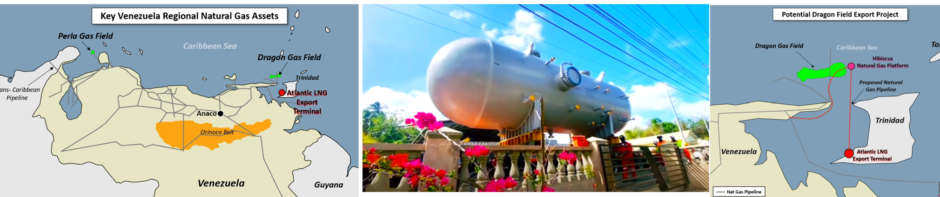
Finally, unfortunately politics has got in the way of potential business opportunities as in the meantime, major Venezuelan gas projects including Dragon, stalled because of tensions between both governments, derailing energy agreements.
“In summary, Trinidad energy sector faces challenges from stalled Venezuelan gas projects, underinvestment, increasing energy costs, and a broader downturn in upstream and downstream activity. Undeniably, remaining oil and gas assets on the Trinidadian side alone could hardly guarantee the energy survival of the island.”
GOV.UK
Prime Minister’s Office, 10 Downing Street
Joint Statement by President Macron and Prime Minister Starmer, Co-chairs of the International Summit on the Strait of Hormuz:
17 April 2026
:Today, France and the United Kingdom convened 51 countries for an international summit on the Strait of Hormuz. The meeting underlined the determination of the international community to support freedom of navigation, to stand up for international law, and to protect global economic stability and energy security.
Change made:
Trinidad & Tobago and Kosovo have been added as signatories.
Updated 5 May 2026
BP prioritises Manakin-Cocuina project
2026, 05/24
bpTT paused its Kanikonna project—a planned subsea natural gas development project located off the southeast coast of T&T—as it sharpens its focus on advancing the sanctioned Manakin-Cocuina cross-border gas development, a decision that underscores both capital discipline and the urgency of boosting gas supply in the Columbus Basin.
Several major fields remain in the final investment decision (FID) queue, including Woodside/bp’s Calypso, Perenco’s Onyx, and bpTT’s Kanikonna. These projects, once sanctioned, would be critical in shoring up future gas supplies.
The Manakin-Cocuina field is a significant natural gas resource that straddles the maritime boundary between T&T and Venezuela, located approximately 68 miles off Trinidad’s southeast coast. bpTT confirmed that the move to pause Kanikonna forms part of an ongoing review of its portfolio as it seeks to maximise production while remaining within its 2026 budget.In clarifying its position, bpTT emphasised that its core development pipeline of projects remains intact.
“bp Trinidad and Tobago (bpTT) can confirm that we have been assessing various options in our portfolio as we work toward maximising production from the Columbus Basin.
“Following the issuance of the OFAC General Licence 50A this year, we have brought the Manakin-Cocuina Trinidad/Venezuela cross border option back into our 2026 plan. Our teams are moving forward with plans to progress this project given the value it can unlock both for Trinidad and Tobago and for bp.
“Kanikonna is another one of the project options in our portfolio that was being considered. Through our investment governance process, we have taken the decision to pause Kanikonna and prioritize Manakin/Cocuina which allows us to stay within our 2026 budget,” bpTT said in its response when asked to clarify whether Kanikonna had been cancelled.
The strategic shift comes amid renewed momentum for the Manakin-Cocuina field, which straddles the maritime boundary between T&T and Venezuela.
The project has been reintroduced into bpTT’s 2026 plans following the issuance earlier this year of the United States Office of Foreign Assets Control (OFAC) General Licence 50A, which allows certain energy activities involving Venezuela under defined conditions.
Within industry circles, the prioritisation of Manakin-Cocuina has been widely viewed as a pragmatic move, particularly given the project’s sanctioned status and its potential for faster delivery of gas volumes.bpTT’s decision reflects a logical prioritisation of resources. Kanikonna never reached the level of formal approval required to be considered part of the company’s committed pipeline. Manakin Cocuina is being prioritised because the project is already sanctioned and represents one of the quickest paths to boost gas supply.
That urgency is closely tied to the needs of T&T’s downstream energy sector, particularly Atlantic LNG, where both bp and Shell each hold a 45 per cent stake.
Therefore they have a vested interest in proving up new gas to keep the plants running. Whether their new developments will have sufficient gas for NGC and petchems is a question that can only be answered in time. There is some optimism in the market that there will be.
Confirmed numbers for reserves and flow rates for projections will be 15 to 18 months away.
The company’s announcement triggered a range of follow-up questions seeking deeper insight into the implications of pausing Kanikonna and advancing Manakin-Cocuina.
Central among these are issues related to capital allocation. Queries have been raised about what portion of bpTT’s 2026 budget had initially been earmarked for Kanikonna, and whether that funding is now being redirected toward the cross border project.
Closely linked are questions about comparative project economics including seeking clarity on whether Manakin-Cocuina requires lower initial capital expenditure than Kanikonna or whether its advantage lies primarily in a faster timeline to first gas—an increasingly critical factor in T&T’s supply constrained environment.
Uncertainty also surrounds the future of the Kanikonna project itself. Questions have been posed about how long the pause is expected to last and whether there is a risk the project could be shelved entirely if Manakin-Cocuina demands greater resources.
There is also interest in understanding how far Kanikonna had progressed technically, including what seismic, drilling or engineering work may already have been completed prior to the decision.
Regulatory risk has emerged as another focal point.
While OFAC General Licence 50A reopened the pathway for Manakin-Cocuina, stakeholders are questioning how bpTT plans to manage the volatility historically associated with US sanctions policy. Clarification has also been sought on whether the current licence extends across the full life of the project or would require renewal to sustain development through to commercial production.
Further attention has been directed at the anticipated value and timeline of Manakin-Cocuina. Questions have been raised about how the project would contribute to bpTT’s production levels in the Columbus Basin over the next three to five years, and when key milestones—such as a Final Investment Decision and first gas—are expected.
Beyond project delivery, the economic implications of pausing Kanikonna are also under scrutiny. Further questions sought to seek estimates of the local content value associated with the project, including employment opportunities, contracts for local firms and broader supply chain activity that may now be delayed or foregone.
The pause raised broader concerns about domestic gas security.
Questions regarding fiscal considerations examine how revenue streams from a domestic project like Kanikonna—through royalties and petroleum profits tax—might compare with those from a shared development such as Manakin-Cocuina.
bpTT said it “will share more details when we are in a position to do so. There has been no change to bpTT’s sanctioned projects and we continue to progress these as planned. Kanikonna is not a sanctioned project and was one of our project options being considered.”
Former energy minister Stuart Young noted that bpTT is a very strategic company and always plots its gas production schedule years in advance to hold a consistent production pattern. The decision to reprogramme Kanikonna for Manakin-Cocuina is very layered and indicative of much more than appears on the surface.
Kanikonna, the Indian laburnum, cheers the landscape with golden blooms and takes center stage representing hope, happiness and prosperity in the agrarian economy of India.
Strategic benefits from India
May 8, 2026
As Trinidad and Tobago marks 181 years of the Indian presence, it is expected to reap multiple benefits from the two-day visit of India’s External Affairs Minister, Dr. Subrahmanyam Jaishankar who arrived on Friday . Prime Minister Kamla Persad-Bissessar SC told Parliament that Trinidad and Tobago is set to sign Memoranda of Understanding further strengthening bilateral ties with India during his visit. Agreements stemming from the visit of India’s Prime Minister Narendra Modi last year will be advanced.
“These agreements established frameworks for cooperation in public sector training, healthcare standards, youth development, cultural exchange and community-based initiatives.”
The current visit will feature signing of additional agreements across a range of sectors, including economic and financial cooperation, bilateral investment and trade, tourism, education and other areas of mutual interest.
“Collectively, these agreements that we share today reflect the continuing transformation of our relationship, T&T and India, into a deeper strategic partnership centred on practical cooperation, innovation and shared development.”
The Government of India delivered several gifts to Trinidad and Tobago.
“Prime Minister Modi had pledged 2,000 laptops to support our government’s Secondary Schools Laptop Programme. Today, Minister Jaishankar comes bearing gifts and these devices will be officially handed over across all seven educational districts.”
India will donate 20 haemodialysis units and two ambulances to support T&T healthcare.
Following the Prime Minister’s statement in Parliament, Minister Jaishankar went to the Red House Rotunda where the MOUs were presented to Ministers. Dr. Jaishankar noted the MOUs were the result of commitments by Prime Minister Modi during his visit to Trinidad last year. He delivered on another promise from Prime Minister Modi, presenting laptops to secondary schools which was about more than just keeping a promise.
“This is awareness, it is opportunity, it is in many ways connecting yourself to all that is happening and today we are in a digital era moving toward artificial intelligence. Our lives are going to change and probably the best thing we can do for our young people is to prepare them for that.”
Strong Diplomatic Ties
Trinidad and Tobago and India are reaffirming long-standing diplomatic relationship, as India’s External Affairs Minister, Dr. Subrahmanyam Jaishankar, begins a two-day official visit. At a flag-raising ceremony at the Foreign Ministry , Minister Sean Sobers said the engagement is expected to advance the partnership even further.
“It is my privilege to welcome the Honorable Subrahmanyam Jaishankar, Minister of External Affairs of the Republic of India to our shores. This flag-raising ceremony serves as the official commencement of your visit to the Republic of Trinidad and Tobago. Your official visit today and tomorrow, is an eloquent representation of those deep ties and mark a significant milestone that further the success of the July 2025 visit by the Honorable Shri Narendra Modi, Prime Minister of India.”
Talks are expected to focus on expanding cooperation across several key areas. The visit builds on recent high-level engagements between the two nations. Minister Jaishankar reflected on the unique connection between the countries.
“India has traditionally had very warm and friendly relations with Trinidad and Tobago, underpinned by shared history, our struggle against colonialism and by our very special bonds of cricket. In fact, the people of our two countries share so much in common, whether clothing and sports or food habits and traditions.”
Both countries continue to build on cooperation following arrival of the Indian workforce in 1845 to salvage imperial agriculture and food production. Minister Jaishankar expressed optimism about outcomes of those engagements and is excited to try local food.
“I also hope to see something beyond office rooms and perhaps enjoy some of your local delicacies. I believe the famous doubles are what people look forward to.”
The visit continues on Saturday, with several high-level meetings .
India proposes digital and pharmaceutical partnerships
2026, 05/10
India’s Minister of External Affairs Dr Subrahmanyam Jaishankar says Trinidad and Tobago stands to benefit from deeper collaboration with India in areas ranging from digital payments and pharmaceuticals to energy security and renewable energy initiatives. Dr Jaishankar outlined India’s vision for strengthening bilateral relations with T&T and the wider region.
The Indian minister, who participated in a two-day official visit to this country, said the trip was aimed at advancing discussions and deliverables following the visit of Indian Prime Minister Narendra Modi last year.
“My visit to Trinidad and Tobago is a step in the direction of further enhancing bilateral engagement between the two countries.”
Discussions with Government officials included a review of the implementation of agreements and announcements made during Modi’s visit and contemporary regional and international issues of mutual interest. Among the major initiatives discussed was T&T’s adoption of India’s Unified Payments Interface, commonly known as UPI, a digital payment platform widely used across India. T&T was first in the region to move toward adopting the system.
“We are glad that Trinidad and Tobago is the first country in this region to adopt our flagship digital payment initiative, the UPI,” he said, adding that officials from India’s NPCI International Payments Limited have held several rounds of discussions with local authorities.
“We hope to see the rolling out of UPI in T&T as soon as possible.”
The Minister highlighted opportunities for collaboration in the pharmaceutical sector with India, one of the world’s largest suppliers of affordable generic medicines. Adoption of the Indian Pharmacopoeia by Trinidad and Tobago last year paved the way for stronger cooperation.
“The road is clear for a tangible collaboration in this field,” he stated, noting that work was ongoing to register Indian pharmaceutical molecules locally.
On the energy front, Jaishankar said there was significant room to expand trade and investment, particularly in refining and downstream industries. Discussions are currently underway between the Ministry of Energy and India’s state-owned Indian Oil Corporation regarding potential collaboration opportunities.
The minister pointed to renewable energy and climate resilience as emerging areas of cooperation, citing initiatives launched under the leadership of Prime Minister Modi, including the International Solar Alliance and the Global Biofuel Alliance, both of which Trinidad and Tobago joined. Jaishankar stressed that India views the region as an important strategic partner despite the geographical distance.
“We consider countries of this region as important partners, particularly in the context of the Global South,”
Addressing global geopolitical tensions and ongoing conflicts affecting energy markets and trade routes, Jaishankar said countries must build “reliable and trusted partnerships” to reduce risks to supply chains and economic stability.
“De-risking supply chains, including energy , is vital. Trinidad and Tobago can contribute in this regard.”
India funds Brechin Castle agro-processing
2026, 05/09
Agro-processing facility aimed at boosting Trinidad and Tobago’s food industry opened at Brechin Castle, Couva.
Prime Minister Kamla Persad-Bissessar officially opened the Brechin Castle Agro Processing Facility and said the $1 million project funded by India marked a new phase for agriculture in the country. After more than 11 years, the former packing house had been converted into a modern agro-processing facility equipped with three automated stainless steel processing lines capable of converting locally grown root crops, vegetables and fruits into value-added products for export markets.
The products would meet international food safety and quality standards while creating greater commercial value for local produce.
“This is agriculture driven not only by cultivation, but also by processing, branding, exports and innovation.”
The facility would strengthen food security, reduce dependence on food imports and help create a more resilient economy. Recent global disruptions highlighted the importance of food security and she encouraged young people to view agriculture as an industry with long-term opportunities. Persad-Bissessar thanked the Government of India and Prime Minister Narendra Modi for providing the equipment at the facility.
“When we campaigned in Couva and elsewhere in Trinidad last year, we promised the people we would deliver and we began that delivery. Promise made, promise kept.”
India’s Minister of External Affairs Subrahmanyam Jaishankar said the project would help Namdevco source agro-commodities from farmers, process and store them and expand local and export markets. He said the initiative would help farmers secure better prices while consumers would benefit from improved products.
India’s Farmer Producer Organisations (FPOs) help farmers market produce on a larger scale, increase incomes and create employment opportunities for young people. India has about 15,000 FPO products available on online platforms and he hoped that similar initiatives could expand in Trinidad and Tobago.
TTMA hails opening of Couva facility
2026, 05/11
Agriculture Minister Ravi Rattiram, Prime Minister Kamla Persad Bissessar, and India’s Minister of External Affairs, Dr Subrahmanyam Jaishankar unveiled a plaque to open the agro processing facilities at Brechin Castle on 9 May 2026.
Trinidad and Tobago Manufacturers’ Association endorsed the opening of the Brechin Castle Agro-Processing Facility in Couva, stating that the project can support SME growth, food security and export development.
TTMA said the facility represents an investment in manufacturing, agro-processing and economic diversification. The plant can create opportunities for farmers and agro-processors to convert raw produce into products for export markets.
The initiative can reduce post-harvest losses and increase the commercial value of local agricultural products. TTMA President Emil Ramkissoon said facilities such as Brechin Castle are necessary for building the manufacturing sector.
Agro-processing remains an area for diversification as Trinidad & Tobago seeks to
- increase local production,
- support SMEs and
- create export opportunities in CARICOM and other markets.
The project can
- create jobs,
- support entrepreneurship and
- increase economic activity
in surrounding communities.The facility aligns with calls for investment in downstream manufacturing and processing industries to support food security goals and reduce dependence on imports.
TTMA commended the Government for pursuing partnerships aimed at expanding the manufacturing sector and creating opportunities for innovation and exports.The association referenced its recent trade mission to India, which involved meetings with manufacturers, investors and business leaders in several sectors. The TTMA mission highlighted opportunities for international collaboration, technology transfer and private partnerships.
The TTMA also pointed to the recent opening of a prosthetics centre, stating that specialised industries can serve CARICOM markets while generating foreign exchange through the export of goods and services.
Investments in manufacturing and processing industries are necessary to position Trinidad and Tobago as a regional production and innovation hub. The TTMA remains committed to supporting initiatives aimed at industrial development, manufacturing expansion, food security and economic opportunities.
Capitalism
2026m 05/10
While the majority applauds Prime Minister Kamla Persad-Bissessar’s espousal of Capitalism and free enterprise, policies must uplift the business community. She made it clear that she believes capitalism and pro-business policies are the best way to create wealth and spread prosperity.
At the 50th Regular Meeting of the Caricom Summit in February, Persad-Bissessar said “We want to live here in our Caricom region under democracy and capitalism.”
Two weeks ago she repeated the philosophy saying she shares the vision of the conservatism and capitalism of the President Donald Trump administration. On the International Monetary Fund (IMF) website, economists Sarwat Jahan and Saber Mahmud state:
“Capitalism is often thought of as an economic system in which private actors own and control property in accord with their interests, and demand and supply freely set prices in markets in a way that can serve the best interests of society.”
They concluded that while it may not be perfect, it is the best way to organise an economy. However, growing inequality around the world has given rise to more critics of the global capitalist system and market-driven economies.
Even in the USA, the world’s largest economy, inequality and rising poverty led Americans to question their economic system. A Gallup poll in 2025 showed a drop in Americans who viewed capitalism positively from 60 percent in 2021 to 54 percent in 2025. In Britain, perception of a capitalist economic system was negative in 2024, viewed favourably by 30 percent of Britons.
T&T is characterised by a mixed economy with the state involved in energy, utilities, health and education while the private sector invests in energy, finance, banking, retail and manufacturing. Both sectors employ significant quotas of the labour force. The SME sector contributes 30 percent of Gross Domestic Product employing almost 200,000, according to the Ministry of Finance. According to the Ministry of Public Administration and Artificial Intelligence, the Government employs over 120,000 employees.
Economist Dr Ronald Ramkissoon is unsure what the Prime Minister had in mind in her statement on conservatism and capitalism but for a small developing economy like T&T, policymakers should concentrate on what practical system delivers the best results.
“One can speak of state capitalism and private capitalism and there is sufficient quality literature to recommend noteworthy qualifications to these .In any case, small economies, should focus on what arrangement works best in delivering goods and services to consumers at reasonable prices and promotes socio-economic development.”
He can agree that the state has bitten off more than it can chew in delivering goods and services to the population. That means the state should divest parts of the economy where it does not add value.
“… government should divest some state assets, no doubt. This should allow it to do much better in the provision of the things for which governments are primarily responsible, such as enabling infrastructure including ICT, national security, roads, health etc.”
Capitalism or free enterprise has its limitations as it relates to poverty alleviation and market entry of new businesses of any size, but especially SMEs.
“Appropriate regulation needs to be seen as an important aspect of a market economy. As for SMEs, Government can be helpful in areas such as provision of access to finance with the assistance of financiers and accountants for example.”
He advocated a mixed economy where both the state and the private sector make their contribution but it must generate results.
“Yes, this is a useful approach as there is an important role for the state in socio-economic development. However, the approach to economic management and structure must be dynamic rather than static. Conditions are changing all the time, externally and internally and governments must understand that there might be times to intervene and times to pull back. Just as important, the Government must have a vision and a plan to achieve that vision. There will always be a role for the state.”
President of Greater San Fernando Area Chamber of Commerce Kiran Singh welcomes the Prime Minister’s clear declaration of support of capitalism and free enterprise.
“For the business community, this signals recognition that the private sector and SMEs are critical drivers of employment, investment, and economic growth . However, support for business must go beyond statements. While there have been positive signs over the past year, SMEs continue to face serious challenges- foreign exchange shortage, rising operational costs and banking fees and crime.”
The SME sector employs over 200,000 and contributes significantly to the economy, so needs stronger and more targeted support.
“We must improve our world ranking on the Ease of Doing Business. This includes affordable access to financing, reducing bureaucracy, enhancing security and safety in business districts and creating a more efficient environment for investment and expansion.”
Divestment of state companies
Divestment of state-owned enterprises involves a government selling equity, assets or subsidiaries to private investors to improve efficiency, reduce fiscal burden and foster competition. Former Minister Dr Bhoe Tewarie agreed with the Prime Minster’s pro-business stance and said taxpayers should not be subsidising loss-making companies.
“Let state companies be driven by the profit motive and get political interference out of companies that need to be efficient, effective, competitive. We should not get hung up on ideology. John Kenneth Galbraith said in the 1960s that it does not really matter if a company is publicly or privately owned. But he identified two issues that are critical. A business, whether public or private, must be run according to business principles. And the first business principle is that a business must make a profit. The second principle is that there must be no political interference in business decision -making in the company.”
A strong business sector is important as the sector that will drive non-energy exports.
“When energy fails there is no private sector capacity to drive export earnings. We need to reduce the state which is too large and burdensome on taxpayers, make the country more business friendly, by making it easy to start a business, by attracting forex- earning export investors from the non-energy sector.”
Tewarie advocated for a “strong state” in strategic sectors but noted that the state “should not be in everything. Singapore has a strong state, but the private sector is big. China is state power manifest, yet China would not be able to compete in the world without the private sector. The private sector leads the tourism industry in Costa Rica.”
EDITORIAL
JEWEL IN THE CROWN OF THE EMPIRE
INDIA offers FOOD, PEACE, KNOWLEDGE and more
The Foreign Minister of democratic India targeted aid for food, energy,education, healthcare and culture on a visit which will revive the elusive regional ZONE OF PEACE, a cardinal VIRTUE. The Hindi word for PEACE is SHANTI. The INDIA: SHANTI Act, 2025 is the most sweeping reform of India’s nuclear regime to date, repealing previous Acts. India aims to achieve 100GW of nuclear capacity by 2047 (from about the current c.8.8GW capacity) through private sector participation, to ensure energy security and clean baseload power
The SHANTI (Sustainable Harnessing and Advancement of Nuclear Energy for Transforming India) Act, 2025 is a landmark piece of legislation that ends state monopoly on atomic energy and opens India’s nuclear sector to regulated private and foreign investment. Dynamic India earned the title of the “Jewel in the Crown for monumental contributions as the economic, military, and strategic backbone of the British Empire, providing fundamental resources as an indispensable supplier of cash crops of cotton, silk, indigo, jute, tea, wheat, rice, sugar and fertiliser, vast markets for British goods and millions of soldiers and workers. Its fabled wealth and manpower allowed expansion and defence of global territories. Africa imported Indian cotton and silk textiles sold in colonies and valued by West Indians.
India has been producing food for 9000 years. As food prices rise, Brechin Castle can include corn/maize among the crops it processes. This vital cereal is valuable as poultry feed and as bread, cake (pone) soup and and can be frozen, using cheap electricity to be Nutritious crops for Brechin Castle include many brought from India-
NUTS- cashew, chataigne (chestnut) , sea almond, coconut
VEGETABLES- avocado, saijan (seeds, leaves, flowers), topi tambo, ochro , peas (dried, ground,) watercress, lettuce, tomato, pumpkin, aubergine, sweet potato, spinach, beans, cucumber, sweet pepper
FRUITS- banana, balata, cherry, cerise, citrus, cocoa, guava, melon, passion fruit, pomegranate, pomerac, pommecythere, papaw pineapple, sapodilla, sorrel, soursop, tamarind. World-famous mango can be exported dried, frozen or pickled
HERB & SPICE- ginger, nutmeg, coriander-seed, leaf- cardamom, turmeric, podina, thyme, lemon (fever) grass and chive.
DIVESTMENT, DEBT, DEMOCRACY
To cut debt and create a shareholding democracy State assets can be offloaded in ANGOSTURA, WITCO AND OTHER FIRMS to repay debts owed to PRC for significant positions in the telecommunications sector, gifts of hundreds of police motorcycles and purchases of PRC buses. Rumors abound of the PRC acquiring the defunct refinery, closure of which led to a commitment to China Harbour Engineering Corporation to build a $500 million dry-dock and $102 million industrial park in La Brea . PRC projects include Brian Lara cricket stadium, velodrome and aquatics center, all built by Shanghai Construction Group, refurbishment of St. James police station, the landmark National Academy of the Performing Arts in Port of Spain, Southern Academy of the Performing Arts San Fernando, South terminal of Piarco Airport, and Couva Children’s Hospital built with a $250 million loan.
China Investment Corporation, PRC sovereign wealth fund, invested $850 million in a 10 percent interest in Atlantic LNG. UWI Confucius institute is the official PRC vehicle for Chinese culture, employing PRC professors funded by PRC. Trinidad and Tobago Coast Guard acquired a multi-purpose military Long Range Vessel (LRV), TTS Nelson II (CG 60), procured through a concessional loan from PRC. On a May 2018 trip to PRC, Rowley signed the Belt and Road Initiative in a Memorandum of Understanding whose content and commitments were unknown, to boost tenuous ties to PRC markets, loans, and investments. He secured a commitment from PRC to purchase material from Lake Asphalt for the new Beijing airport runways. China Jiangsu International secured a half-billion-dollar contract to build UWI South campus.
Bilateral trade exceeds US$1 billion annually. PRC economic footprint includes:
Phoenix Park Industrial Estate: A flagship special economic zone project at Point Lisas, constructed by the Beijing Construction Engineering Group (BCEG) through the Belt and Road Initiative.
Prime Minister’s Official Residence: Shanghai Construction Co. invested in the official residence.
Digital Infrastructure: PRC multinational Huawei supplies 5G networks, IT infrastructure for local telecom providers, and digitization services for the Ministry of Digital Transformation.
Foreign Aid Grants: The PRC routinely supplements large-scale projects with targeted socio-economic grants, such as a previously finalized RMB 100 million (approx. TT$94 million) aid agreement and a China-donated Forensic Science Centre in Port of Spain.
In Venezuela, the leftist regime was one of the first purchasers of PRC military hardware in the region. While a functioning democracy, the last TT regime’s embrace of PRC and the unpredictable anti-USA regime in Venezuela, raise concerns about petroliferous Trinidad and Tobago, strategically located at the entrance to the Atlantic Subcontinent and Antilles Archipelago, where PRC expansion left a heavy debt burden. Engagement continues with an Aid Grant from PRC of TT$94 million in 2025 for mutually agreed projects. Cuba maintained regular military interactions with the PRC.
IDEOLOGY for SECURITY
Islands in the Dragon’s Mouth are ideal for security facilities in collaboration with USA SOUTHCOM. Uninhabited Chacachacare, an asset of the former US Chaguaramas Base awaits a decision to establish a modern US NAVAL BASE and RADAR STATION to counter totalitarian hegemony. The moderate majority seeks a Base to counter criminals preying on homes, schools and businesses, inflicting violence on innocent citizens during robbery and other crimes. Monos was the scene of kidnapping of elderly homeowners.
Security will be crucial for Carrera Resort featuring a hotel, villas, marina and spa. US forces will protect the iconic Port of Port-of Spain, the Innovation and Development Hub and the busy harbour including vessels in the vital energy industry. Subscribers can fund a ferry to Nelson Island, named for Rev.John Morton, champion of IndIan workers there in 1866-1917. Chinese imported for projects of PRC-based companies spark concern over gambling and other illicit activities in their establishments. Activities include the national lottery paid out of Chinese shops without taxes for laundering money ( U.S. dollars) and exploitation of Venezuelan refugees.The U.S. can expand attention to .help this strategically important island rationally plan a logical series of investments, grounded in sound business cases and objective value analysis. The U.S. can also help the government more effectively conduct open competitive procurement, including the evaluation of legal and technical aspects of PRC proposals and contracts such as the Deepwater Blocks. The U.S. is strongly connected to Trinidad and Tobago by history, geography, language, commerce and family; it has been a close partner to the country for far too long for the relationship to degenerate through escalating populist rhetoric and recriminations that might deepen its embrace of PRC in ways that would neither be beneficial to the US, nor Trinidad and Tobago.
WHY T&T CAN CANCEL DW BLOCK AWARD
As an AU government terminated concessions for offshore oil blocks, for reviews and renegotiations , ensuring a more advantageous exploitation of resources, T&T must review awards to CNOOC, following negative news about endemic PRC corruption amid a State of Emergency in Trinidad & Tobago. The Energy Ministry must cancel the award to CNOOC of highly prospective deepwater Blocks 24 and 25 ( TTDAA 24 and TTDAA 25), citing FORCE MAJEURE – support of war in the Middle East and Europe and aggression in Asia. After a positive report from Exxon on deepwater prospects, these 2 Blocks can be offered to Chevron/Exxon/BP/Shell to promote democracy under the Shield of the Americas as unscrupulous hegemons threaten security, grab ports, minerals and other assets in a quest for supremacy. As criminals flourish, T&T does not need more spies, crooks, outlaws and gangsters posing as investors. Potent, long-term democratic ally USA in the vanguard and cherished, indispensable democratic India in the rearguard can pull battered TT and CARICOM out of the nosedive into oblivion. Having signed onto the ACCC , T&T must strengthen cooperation for democracy and counter totalitarian influence, driving debt, espionage, fraud, substandard behaviour and greed . As the USA negotiates a meaningful pact with Iran, Secretary of State Marco Rubio said an agreement to reopen the Strait of Hormuz could be announced soon. Iran said a deal is not imminent as it excludes immediate concessions on the “nuclear issue.”
Russia
PRC abstained from United Nations votes that condemned the Russian invasion of Ukraine. Imports of PRC manufactured goods with important military uses play a key role in Russia’s defences in Ukraine and keep them equipped and supplied despite heavy losses of equipment and tremendous expenditures of munitions. Aid to Ukraine from NATO is counterbalanced by imports from PRC for Russia’ to hold Ukrainian territory. PRC openly provides massive volumes of goods and technologies for Russia relevant for its war effort, including vehicles, enabling Russian military logistics to move equipment and supplies to the front, production of tanks and continued flow of silicon chips to provide key components for Russia to restore weapons production, enabling artillery, missiles and drones, to continue destruction on Ukrainian forces and civilians . All these materials more than quadrupled in September 2022 including excavators for trenches and other defensive fortifications.
The conflict is an unmitigated catastrophe for global peace and particularly for peace in Europe and greatly compounds preexisting adverse global economic trends in rising inflation, extreme poverty, increasing insecurity, fuel and food shortages of oil and wheat, supply chain disruptions, rising military spending, deglobalization and worsening environmental degradation.
IRAN
PRC maintains a stance of official neutrality in the Iran conflict, playing a dual role as Iran’s diplomatic defender and essential economic lifeline.A decentralized network of PRC commercial entities covertly supplies Iran with critical dual-use military technology, drone components, and missile propellants. 3 PRC firms provided satellite imagery to enable Iran’s military strikes against U.S. forces in the Middle East in energy producers hosting US bases. The action holds PRC -based entities accountable for support to Iran.
PRC is the largest consumer of Iranian OIL, importing the vast majority of its seaborne oil, providing the revenue to sustain the Iranian war economy. Independent refiners, using a decentralized network of interchangeable micro-enterprises and “dark fleet” tankers, facilitate the sale and transport of Iranian oil beneath the regulatory line of sight.
Iran’s drone campaign consumed thousands of expendable unmanned aerial vehicles (UAVs). The critical technologies, manufacturing equipment and components underpinning these platforms trace to the civilian manufacturing system of PRC, channeled through private capital acquisition, reverse engineering and the systematic exploitation of dual-use trade ambiguities. The PRC drone supply chain operates as a “manufacturing plain” distinct from the defense contractors that sanctions are designed to neutralize. Individually targetable but collectively inexhaustible, with minimal staff and nominal business scopes unrelated to aviation, these firms channel drone-applicable material to sanctioned end-users at scale.
Western sanctions targeting these supply chain entities are unable to meet this challenge. Designation lists expand rapidly while adversary drone production accelerates, because enforcement models designed to neutralize large, identifiable contractors cannot suppress a diffuse network of expendable nodes that regenerate faster than regulators can act. PRC-based networks continue to ship dual-use precursors (sodium perchlorate) used in the manufacture of solid-fuel propellants for Iranian ballistic missiles. Iran relies on PRC BeiDou Navigation Satellite System for its military architecture, giving Iranian forces encrypted, high-precision signals and communication capabilities resistant to Western jamming. PRC anti-stealth radar systems and technological expertise are integrated into Iran’s electronic warfare and defense capabilities. PRC actively advocates for diplomatic resolutions and UN ceasefires, to protect its massive economic investments in Iran and the Persian Gulf. While supporting Iran’s commercial nuclear energy, PRC officially opposes Iran developing nuclear weapons, fearing that a severe escalation could completely destabilize the region and disrupt global energy supply chains.
Behavior, actions and statements indicate PRC indifference towards opening Hormuz since PRC told its “teapot” oil refineries to continue buying oil from Iran, in defiance of US sanctions.