ExxonMobil drills Canje sweet spot after four-year-plus hiatus
Fabio Palmigiani South America Correspondent
Rio de Janeiro 14 May 2026
US supermajor ExxonMobil resumed exploration offshore with a new well in Canje block after failing three consecutive times to find commercial quantities of hydrocarbons in the play. The operator drilled Bulletwood-1, Jabillo-1 and Sapote-1 wells in 2021.
Exxon resumes drilling in Canje block after four-year absence
May 14, 2026: Carl Surran, SA News Editor
Exxon Mobil has returned to the Canje block offshore with a new exploration well after failing to strike commercial quantities of hydrocarbons in the play in three consecutive attempts. Exxon drilled three wells in the block in 2021, but each prospect was deemed unsuccessful, as the company struggled to make a relevant discovery outside the prolific Stabroek block, where it is producing over 900K bbl/day of oil.
The new Goby-1 program has been launched in ultra-deep waters 290 km from the coast with the Stena Drilling drillship Stena Carron and is due for completion in late July.
Exxon has always planned to return to Canje and in 2022 submitted environmental studies mapping 12 potential drilling sites in the block. Exxon operates the Canje block with a 35% stake, with partners TotalEnergies , JHI Associates and Mid-Atlantic holding respective stakes of 35%, 17.5%, and 12.5%.
Exxon accelerates seismic analysis with AI
May 07, 2026
HOUSTON, May 5 John Ardill, vice- president of exploration, told the Offshore Technology Conference that Exxon Mobil is applying artificial intelligence and new technology to interpret seismic data in days rather than months. High‑performance computing and AI‑driven algorithms have accelerated seismic imaging.
“We’re using what was called deep learning, classification and so reinforced learning. … We can turn those tools around in just a few days and then the interpreter can get a prioritized list of anomalies to effectively validate.“
Exxon Mobil leads the consortium that controls all oil and gas production in the petrostate, which has boosted output capacity to over 900,000 barrels per day since crude production began six years ago. The company uses new technologies in other parts of the world to revisit oil prospects previously considered uneconomic. Future exploration will increasingly focus on areas that were once too difficult to develop but are becoming viable as technology improves.
Exxon expects to complete seismic acquisition by the end of the year and quickly assess its Trinidad and Tobago offshore block UD1 bordering Guyana . The company believes the geology could resemble Guyana or Angola.
“Angola is deep water reservoirs, same as Guyana, and the concept we are looking for in Trinidad is similar deep water oil reservoirs,” Ardill told media at OTC.
He cited Guyana and Trinidad and Tobago as examples of governments that move quickly and offer political and commercial terms that work for both the host country and Exxon.
While Venezuela also has a large resource base, he said commercial and political conditions must align for Exxon to consider a possible return to the country.
“It is one of the largest endowments in the world, and with investment and technology it can be unlocked. It’s about creating the right investment conditions.”
MIDDLE EAST
Ardill said the world has yet to feel the full impact of global supply disruptions from conflict with Iran and closure of the Strait of Hormuz. He said Exxon routinely plans for such disruptions and was not caught completely off guard. Revealing the incentive structure in which these tools are created, Ardill said “We evaluate all these eventualities and plan,” noting that the company used its diversified global supply base to respond to disruptions.
Oil and gas projects in the Permian Basin and Guyana “are extremely important when Middle East oil and gas are restricted.” Exxon’s break‑even oil price in the Permian Basin and Guyana is below $30 a barrel and new projects, including planned exploration in Alaska, must compete with that benchmark, Ardill said, adding that new technology could make that possible.
The challenge for Alaska is not political or geological but commercial. “Alaska, because of location and conditions, is more expensive. “That’s where technology comes in, to unlock the resource and bring those costs down.”
Exxon awaits environmental approval for Haimara
May 25, 2026
Exxon Mobil applied to the Environmental Protection Agency (EPA) for authorization to develop the Haimara gas-condensate discovery in the Stabroek block. The project would be the consortium’s ninth development in the block.
The project’s scope includes
- well drilling and completion,
- installation of subsea equipment and
- flowlines, and
- the commissioning of a newly built floating production, storage and offloading (FPSO) vessel.
The EPA determined the project requires a full environmental impact assessment before a decision can be made. The agency cited potential significant, long-term environmental and socioeconomic impacts given the scale and duration of the proposed activity.
Exxon seeks environmental licence for ninth project
Haimara discovery will anchor the next Stabroek block development
7 May 2026 Fabio Palmigiani
South America Correspondent Houston
US supermajor ExxonMobil is fast-tracking development in the prolific Stabroek block offshore , with plans to file later this month the environmental application for the ninth oil and natural gas project.
Record high oil output drives industry-leading Exxon profits
May 03, 2026 –
Guyana’s Floating Production Storage and Offloading vessels (FPSOs) have been singled out in Exxon Mobil’s 2026 first quarter report for their unmatched performance, which the global energy giant described as “industry leading” pushing the company’s earnings for the first three months of this year to US$4.2B.
The report published on Friday states, “Net production in the first quarter reached 4.6 million oil-equivalent barrels per day, with Guyana setting a new quarterly production record of more than 900 thousand gross barrels of oil per day.”
As such, the company told shareholders that earnings for the quarter totaled US$4.2B or $1.00 per share assuming dilution.
Exxon puts the spotlight on Guyana’s Prosperity FPSO- taking the cover page of its 2026 first quarter report.
The report also explains, “Earnings excluding identified items were $4.9 billion, or $1.16 per share. Earnings were $8.8 billion, or $2.09 per share, excluding identified items and unfavorable estimated timing effects that unwind in subsequent periods.”
Meanwhile, cash flow from operating activities was US$8.7 billion, or US$13.8 billion excluding margin postings, which primarily fluctuate with the fair value of underlying derivatives. Shareholder distributions of $9.2 billion included $4.3 billion of dividends and $4.9 billion of share repurchases, consistent with the company’s previously announced plans.
According to Chairman and Chief Executive Officer (CEO), Darren Woods, “This quarter demonstrated that ExxonMobil is a fundamentally stronger company than it was just a few years ago, built to perform through disruption and across market cycles. Events in the Middle East tested that strength with the safety of our people remaining our top priority. Those events also underscored the importance of reliable, affordable energy products and the value of the capabilities we have built to deliver them.”
He added that the underlying business delivered strong results, reflecting the benefits of the strategy executed by Exxon Mobil consistently since 2018.
Woods highlighted that the company has grown “advantaged volumes, optimized our operations, reduced structural costs, and strengthened our earnings power.” Consequently, the CEO noted that the result is a more resilient, lower-cost business, grounded in advantaged assets, disciplined capital allocation, and execution excellence. “That foundation gives us a durable platform to grow earnings, cash flow, and shareholder value through 2030 and beyond,” he assured.
In the first quarter of 2026, the four FPSOs in the Stabroek Block, operated by Exxon generated a combined total of approximately 920,000 barrels per day (bpd).
Three of the vessels have been optimized by the company, producing above the initial design capacity. In March, the operator revealed plans to push the fourth project, Yellowtail from 263,000 bpd to 290,000 bpd.
Exxon’s report said, “Guyana 1Q26 FPSO performance is industry-leading in operational availability against Solomon Associates’ most current benchmarking report, dated April 2026. Solomon defines industry-leading as the top two performers.”
Hess recovers investment – 2025 financials
May 19, 2026
Hess Guyana Exploration Limited, a 30% stakeholder in the Stabroek Block recovered all contributions, according to the company’s 2025 financials. Accountant and attorney, Christopher Ram conducted an analysis of the 2025 returns. Ram highlighted that over the life of its operations in Guyana, the branch received approximately GY$717.7 billion in Head Office Contributions to finance exploration, development and operational activities.
This amounts to about US$3.6 billion at an average exchange rate of $200. “Over time, however, those sums were fully repaid. By December 31, 2025, the balance had fallen to nil, meaning Hess had completely recovered every dollar of its invested capital – not from loans or external financing, but directly from earnings generated in Guyana.”
The 2016 Production Sharing Agreement (PSA) Guyana signed with the Stabroek Consortium allows 75% of production to be deducted for expenses relating to operations in the block. The remaining 25% is split with Guyana receiving 12.5% of profits and an additional 2% royalty paid every quarter.
Hess recorded net income last year of GY$605.45 billion or approximately US$3 billion – more than Guyana’s earnings of US$2.5 billion in the same period,

Extra large Stabroek Block now measures about 24,000 square kilometers.
After recording net income of GY$605.45 billion in 2025 alone, the branch reports an accumulated surplus of GY$1.741 trillion at 31st December 2025, up from GY$1.417 trillion in 2024.
Comparing the company’s profits to Guyana’s revenue, he highlighted that the National Budget for 2026 is set at $1.558 trillion, yet Hess’s accumulated profits from the Stabroek Block exceed the State’s total annual budget. Accumulated revenue is four times the Guyana Revenue Authority’s projected tax collections for 2026.
Guyana currently has four Floating Production Storage and Offloading vessels (FPSOs) producing oil in the Stabroek Block.
Hess holds 30 per cent in the block while ExxonMobil holds 45 per cent and CNOOC 25 per cent.
After the companies recover their investments, Guyana will be entitled to 50 per cent of the revenue generated in the block after operating expense is cleared.
In March, ExxonMobil revealed that approximately US$5 billon was remaining in the cost bank. When this cost is recovered
Guyana’s share would increase significantly from 12.5 per cent to 50 per cent.
Oil boom drives SBM revenue surge
May 08, 2026
Dutch floating production specialist SBM Offshore (SBM), raised its 2026 revenue guidance on Thursday after first-quarter directional revenue more than tripled, driven mainly its turnkey business and the sale of One Guyana.
The company sold One Guyana, a floating production, storage and offloading vessel (FPSO), to ExxonMobil in February for US$2.3 billion. The One Guyana FPSO was built by SBM.
The Amsterdam-listed company said year-to-date directional revenue rose 216% to $3.49 billion from US$1.10 billion a year earlier, and lifted its full-year directional revenue outlook to above $6.9 billion from around US$6.5 billion. It maintained its 2026 directional EBITDA baseline guidance at around $1.8 billion and said directional net debt fell 43% to $3.2 billion at end-March. SBM said the increased revenue outlook reflected the Longtail FEED award, an early-stage engineering contract for a potential new FPSO vessel in Guyana, and additional scope of work secured in the period.
Its turnkey division revenue rose 359% to $2.88 billion, while lease and operate revenue increased 28% to $610 million. “There’s upside” to SBM’s six-year, $2.1 billion shareholder return plan, CFO Douglas Wood, citing backlog upside and potential vessel additions.
SBM, which joined the AEX index in March 2026, said it had ordered two additional Fast4Ward hulls to support tendering activity, citing a strong outlook for the floating production storage and offloading market. CEO Øivind Tangen said SBM Offshore did not currently expect geopolitical tensions, including in the Middle East, to have a material impact on its operations, projects or financial position.
“If anything, the situation in the Middle East has proven the need for a well-diversified source of oil,” Tangen said, adding that this underscored the importance of the Atlantic basin deep-water market.
The company uses directional reporting, which books revenue from construction-phase payments before leases begin.
Tax system fails to keep pace with oil boom
May 13, 2026
According to the recent Revenue Statistics in Latin America and the Caribbean 2026 report, jointly produced by the Organisation for Economic Co-operation and Development (OECD), the Inter-American Development Bank (IDB), the United Nations Economic Commission for Latin America and the Caribbean (ECLAC), and the Inter-American Center of Tax Administrations (CIAT), Guyana has become a major driver behind declining tax-to-GDP trends in the region because the economy is expanding much faster than its tax collections.
The fiscal report says explosive oil production is transforming the economy and fundamentally changing how the Government earns revenue. .“Guyana drove the overall decline in tax revenues as a share of GDP in the Caribbean between 2019 and 2024…non-tax revenues increased strongly in Guyana between 2019 and 2024,” partially offsetting the decline in tax revenues as a share of GDP as oil production accelerated.
Traditionally, governments rely heavily on Value Added Tax (VAT), corporate tax, income tax and import duty to finance public spending.
However, Guyana’s oil production boom is rapidly altering that model. Tax-to-GDP ratio fell by 2.4 percentage points in 2024 because economic growth far outpaced rises in tax revenue. Oil-related GDP reportedly expanded by 58% in 2024, while non-oil GDP grew by 13%. This means that although Guyana may still be collecting more taxes in absolute terms, the economy is growing so quickly due to oil production that taxes now represent a smaller share of overall national output.
Revenues flowing directly from the petroleum sector, including royalties, profit oil and other state earnings classified outside traditional taxation are becoming increasingly important to finances. The region’s average tax-to-GDP ratio declined to 22.3% in 2024, due largely to falling revenues in Trinidad and Tobago and Guyana’s rapid economic expansion. Guyana recorded the lowest tax-to-GDP ratio in the Latin America and Caribbean region at 9.2%, far below the regional average of 21.7%.
The report warned that commodity-dependent economies remain vulnerable to swings in international energy prices. Hydrocarbon revenues across major producing countries are projected to decline in 2025 because of falling oil and gas prices.
Meanwhile, the publication pointed out that countries across Latin America and the Caribbean continue to lose enormous sums due to tax evasion and aggressive tax planning. According to ECLAC estimates cited in the report, the region lost US$433 billion in 2023 — equivalent to 6.7% of GDP because of tax evasion and avoidance.
$100 billion saved annually from fuel tax removal
May 19, 2026
Minister of Finance Dr Ashni Singh said government absorbed billions of dollars in fuel-related costs to cushion citizens from rising global oil prices. Guyana, a crude oil producer, still imports refined fuel products from the international market and is therefore affected by fluctuations in global oil prices.
“As a result of global developments, the world market price for oil has been increasing in recent weeks and months.”
He said the government, under the leadership of President Dr Mohamed Irfaan Ali, implemented several measures to protect consumers from the full impact of increases. Among those measures was the complete removal of excise taxes on fuel, a policy the government maintained to reduce pressure on consumers. Removal of the excise tax resulted in savings of approximately $100 billion annually for consumers.
“At a micro level, consumers are saving about $500 per gallon of diesel or gasoline purchased at the petrol station.”
The government also absorbed higher fuel costs incurred by the Guyana Power and Light Incorporated (GPL) and the Guyana Water Incorporated (GWI), both of which rely heavily on fuel for their operations. Electricity tariffs remained unchanged despite higher operational costs because the government intervened financially to prevent increases being passed on to consumers.
“We have said we will not pass on those increases through electricity tariffs,” Minister Singh stated.
Increases at the fuel pumps in Guyana have been significantly lower than the actual rise in global crude oil prices because of deliberate policy interventions by the government. The administration remains committed to cushioning citizens from global economic shocks while maintaining stable utility costs.
Canada’s Prime Minister meets Guyana’s President
May 09, 2026 –
Today, Prime Minister, Mark Carney, met President Dr. Mohamed Irfaan Ali in Toronto. The leaders emphasised the strong ties between Canada and Guyana, strengthened by over 100,000 Canadians of Guyanese ancestry.
Guyana is one of Canada’s largest trading partners in the Caribbean Community. The leaders discussed Canada’s role as a reliable trade and investment partner and opportunities to boost Canadian investment in Guyana in energy, technology, agriculture and mining.
Prime Minister Carney conveyed his best wishes for the Canada-Guyana Chamber of Commerce’s Business Forum in Toronto, celebrating 60 years of Guyana’s independence and diplomatic ties with Canada. The Prime Minister looks forward to visiting Guyana in the future and the leaders agreed to remain in close contact.
Ali touts global investment plans for NRF in Canada
May 10, 2026
As Guyana oil revenues continue to surge, the government signals a major shift in management of growing wealth. President Dr Irfaan Ali announced that Guyana is proceeding beyond accumulating savings in its Natural Resource Fund, with plans being explored to invest portions of petroleum revenues abroad. At the Gala in Toronto hosted by Guyana-Canada Business Chambers, he told the diaspora audience that the NRF reached a point where saving was no longer the only option on the table.
“In our sovereign fund, our National Resource Fund, we now have to find investment opportunities and as the fund grows, we will be looking at opportunities that are safe, give a decent rate of return and importantly, investing in countries and economies that share the same values where the rule of law and predictability are important factors in the way to do business.”
As of the end of September 2025 the NRF received US$3.6 billion. In 2025 the government withdrew US$2.46 billion from the NRF to finance public spending. The president outlined government spending , highlighting new developments, including
-
-
- Silica City,
- industrial parks,
- port development and
- road links to Brazil, Suriname and French Guiana.
-
Revenues are invested to expand Cheddi Jagan International Airport , including the construction of Terminal 2 which will lift passenger processing from 800 to 3,200 an hour. He listed
-
-
- a deep-sea training facility developed with ExxonMobil,
- a tourism and hospitality institute,
- a STEM centre for primary school children,
- commitments to
- healthcare,
- home ownership and
- pension expansion,
-
which will provide world-class services and opportunities.
Significant resources are being spent to modernise agriculture , including introduction of new technologies and construction of world-class infrastructure to complement the rapid economic expansion.
“That is the Guyana we are building. One in which the careful architecture of the future is built on what we do today.”
The remarks follow his bilateral talks with Canadian Prime Minister Mark Carney , where both leaders discussed investment expansion. Canada, predictable in its policies and values, matches the profile set for potential partners.
The NRF, established in 2019 and strengthened in 2021 by the People’s Progressive Party/Civic (PPP/C) Administration, manages revenues from Guyana’s offshore oil sector. Assets are held at the Federal Reserve Bank of New York.
Ali urges new thinking on energy transition
2026, 05/05
Guyanese President Dr Mohamed Irfaan Ali told the Offshore Technology Conference (OTC) 2026 that the world is facing a widening and dangerous energy gap, driven by surging demand, uneven investment and growing mineral constraints.
He urged global leaders, investors and industry players to move beyond a narrow view of “energy transition” and instead pursue a pragmatic and inclusive model of “energy balance.” Global debate on decarbonisation, renewables, artificial intelligence and emerging technologies cannot be separated from a basic pressing question: whether the world is producing enough energy, at a reliable cost, to sustain economic activity and human development.
“It is a question grounded in the daily functioning of the global economy. It is a question about whether factories can operate, whether hospitals can function, whether food can be produced and transported, whether homes can be cooled and heated, whether data can be processed and whether economies can grow.”
Data showed that while global energy supply has risen steadily since the mid-1960s, demand accelerated sharply since 2010, creating a structural imbalance rather than a temporary disruption.
Post-COVID rebound, combined with rapid digitalisation and artificial intelligence growth, further widened the gap, contributing to price volatility and energy insecurity across regions. While renewable energy expanded rapidly, growing more than five times faster than overall energy demand in recent years, fossil fuels still account for over 80 percent of the global energy mix.
Coal and natural gas remain central to electricity generation, particularly in emerging economies, as the world builds a new energy system while still relying heavily on the old one.
“Coal, despite being the most carbon-intensive fuel, has seen significant growth in electricity generation, increasing by over 70 per cent over the past decade. The growth has been driven largely by industrialisation and emerging economies as coal remains the most accessible and affordable base-load energy source.
Natural gas expanded with electricity generation, increasing by 26.6 percent. Gas plays a critical role in balancing the dependency of renewable energy, providing flexible and reliable power when solar and wind generation fluctuate.”
Oil, by contrast, has seen a steady decline in its role in electricity generation. These trends indicate the energy transition is not a simple substitution of fossil fuels with renewables.
Ali highlighted the scale of the financial challenge. Global energy investment reached a record US$3.3 trillion in 2025 but current levels remain insufficient to meet climate targets. To align with climate targets, particularly the goal of limited global warming to 1.5°C, investment must increase dramatically.
“Many economies are already facing difficulties in meeting their own targets.To achieve this,
- the United States needs to increase annual investment by 76 per cent.
- European countries by 36 per cent, and
- China just under 30 per cent.
None of these figures took into consideration the current global challenges and geopolitical realities. Global clean energy investment is highly concentrated, and I wonder if it will face new specific potentials.”
Beyond financing, Ali cautioned about mineral constraints, describing the energy transition as a shift from a fuel-intensive system to a mineral-intensive one.
Electric vehicles, offshore wind, batteries and grids require dramatically higher volumes of:
-
-
- lithium,
- cobalt,
- nickel,
- copper and
- rare earth elements,
-
resources that are finite, geographically concentrated, and environmentally costly to extract.
Without major advances in technology, recycling and governance, the world risks replacing fossil fuel dependence with mineral dependence, creating new geopolitical and environmental vulnerabilities. Mining-related water use, toxic waste, deforestation and biodiversity loss already pose serious risks to communities and ecosystems.
Against this backdrop, Ali outlined Guyana’s approach, which is a deliberate dual-track strategy- developing its oil and gas resources to finance transformation, while simultaneously investing in renewable energy, grid modernisation, storage systems and regional energy integration.
“We reject the false choice between development and environmental stewardship. Managed properly, they reinforce each other.”
Energy balance: case and cost for strategic investments
As industry professionals gathered in Houston, Texas for the 2026 Offshore Technology Conference (OTC), Guyana’s President Irfaan Ali, made a bold call for strategic investments to achieve a global “energy balance,” a phrase he championed in his keynote at the opening ceremony. Energy transition from fossils to renewables is not a simple feat of replacing one source of power with another.
Instead, the world must build an entirely new system, from its power grids to vehicles used, fueled by renewables while relying and even expanding the existing system powered by diesel, gasoline, coal and other fossil fuels as energy demand continues to grow.
He urged stakeholders to work towards achieving an energy balance.
“The time has come to find a balanced approach to the energy needs of the world.”
2 ways exist to achieve this goal. Developing countries must benefit from better financing support and more investments in energy systems to meet growing demand.
More research and technological advancements must be funded to find the best solutions for sustainable development. This is particularly crucial in light of the growing demand for minerals like lithium and cobalt for renewable energy development.
Guyana is already showing possibilities as a small country in South America with about one million people. In 2019, it began producing oil and currently produces over 900,000 barrels daily. Guyana has rapidly become an oil hotspot and its government supports expanded output while demonstrating the energy balance.
Offshore oil funds low-carbon development onshore. The flagship Gas-to-Energy project is the cornerstone of that development, soon harnessing natural gas offshore to power homes, businesses and industries through a new grid, a system-wide transformation.
Using Guyana as an example , the President encouraged investors to work towards supporting the energy balance needed globally.
New PSA boosts local share, keeps green model intact
May 6, 2026
The new production sharing agreement (PSA), which lays out the framework for future oil developments has been finalised,. The PSA marks a decisive shift in how Guyana will secure greater value from petroleum resources while advancing an ambitious model of environmentally sustainable growth. During the ‘Future of Guyana’ conversation at Rice University Baker Institute in Houston, USA, President Dr Irfaan Ali told an international audience that while existing agreements will be honoured, all new developments will fall under strengthened fiscal and governance terms.
“We have made it very clear that the sanctity of contract is important for us, but we also said that it would be a new production sharing agreement, and that agreement has been finalised. There is no second-guessing what we are doing. We are ready to make the hard decisions.”
The new PSA introduces significantly improved returns for Guyana. The ‘cost oil’ has been reduced to 65 per cent, down from the 75 per cent ceiling under the Stabroek Block agreement, increasing the share of profit oil.
The agreement establishes a 10 per cent corporate tax and 10 per cent royalty, up from zero and 2 per cent respectively, ensuring higher government revenues from future production. Companies entering new agreements will also face higher upfront costs, including a US $20 million signing bonus for deepwater concessions and US $10 million for shallow water blocks.
New concessions are significantly smaller, specifically nine times smaller than the 26,800 square kilometre Stabroek Block.
Noting that predictability remains central to maintaining investor confidence, President Ali stated, “If investors cannot see predictability in your policy-making and decision-making, then you will find it very difficult.”
Guyana’s rule-based and transparent framework continues to attract global interest. Beyond fiscal reforms, President Ali positioned Guyana as seeking to redefine the relationship between oil production and environmental stewardship.
“We’re interested in being a model that shared the wealth, protected its environment and built a diversified economy.”
Guyana currently maintains about 85 percent forest cover and one of the lowest deforestation rates globally, with forests storing an estimated 19.5 gigatonnes of carbon. These assets form the backbone of the Low Carbon Development Strategy (LCDS) 2030, championed by Vice President Dr Bharrat Jagdeo.
“We do not see Guyana as a petro-producing country that adds problems to the world. We see Guyana as utilising this advantage to demonstrate that development powered by energy can coexist with environmental stability.”
Leaders have long advocated for market-based mechanisms to monetise ecosystem services, including carbon storage and biodiversity, in a broader strategy to diversify the economy and reduce long-term dependence on oil revenues.
Guyana earned an estimated US $750 million in carbon credits from Hess Corporation, in a consortium of ExxonMobil, under the same 2030 low-carbon development project. Guyana signed a Memorandum of Understanding with the World Bank’s International Development Association (IDA), on April 17, 2026, to propel collaboration under the Global Biodiversity Alliance, a key initiative led by President Ali.
The strong partnership is expected to strengthen international cooperation on conservation, restoration and sustainable use of biodiversity, while scaling innovative financing mechanisms that reward environmental stewardship. President Ali maintained that oil and gas will remain a central pillar of the economy, supported by competitive production costs and increasing efficiency.
UK engineering expertise for mega- projects
May 14, 20260
According to the Ministry of Public Works, following a meeting between Minister Juan Edghill and newly-appointed British High Commissioner Joseph Guy Fisher, Guyana hopes to leverage UK expertise to support megaprojects here.
Minister Edghill “steered the discussion in the direction of leveraging British engineering expertise to support large-scale projects; integrating green technologies and sustainable practices into upcoming civil works; and exploring opportunities for knowledge sharing and technical training between British firms and Guyanese counterparts.”
Guyana is pursuing an aggressive transformational agenda to modernise infrastructure and diversify the economy beyond oil and gas.
Minister Edghill highlighted plans, noting that “international partnership is a cornerstone of the strategy to modernize its landscape.”
The meeting at the minister’s office served as a pivotal platform for deepening the bilateral relationship between Guyana and the United Kingdom, specifically within the realm of national infrastructure development.
“The dialogue underscored a shared vision for high-quality, transparent and efficient project delivery,values that align with the Government’s commitment to providing value for money and world-class facilities for its citizens.”
High Commissioner Fisher reaffirmed the U K commitment to supporting Guyana’s growth.
“As Guyana approaches its milestone 60th Independence Anniversary, this meeting signals a continued era of international cooperation aimed at ensuring the nation’s infrastructure keeps pace with its rapid economic trajectory.“
Guyana leads region with strong HDI, lowest debt burden
– UNDP May 19, 2026
Guyana continues to maintain a high Human Development Index and low debt pressure, according to the UN Development Programme Democracy and Development Report 2026, which acclaimed improving economic and social indicators amid broader regional challenges. Guyana remains within the region’s “High HDI” grouping, recording the best debt-to-GDP ratio . The HDI is a composite measure developed by the UNDP that evaluates countries based on life expectancy, education and income levels.
The High HDI group includes: [ Alphabetical order ]
-
-
- Belize (0.721),
- Cuba (0.762),
- Dominica (0.761),
- Dominican Republic (0.776),
- Grenada (0.791),
- Guyana (0.776),
- Jamaica (0.72), (lowest)
- Saint Lucia (0.748),
- Saint Vincent and the Grenadines (0.798) and
- Suriname (0.722).
-
The Very High HDI group includes
-
-
- Antigua and Barbuda (0.851), (highest)
- The Bahamas (0.82),
- Barbados (0.811),
- St. Kitts and Nevis (0.84) and
- Trinidad and Tobago (0.807).
-
“Overall, the record invites optimism, according to the most recent HDI data for 2023, which show that 93 percent of the countries evaluated show high or very high human development, with the exception of Haiti, in the medium range.
In parallel with its process of democratic consolidation since the early 1990s, notwithstanding heterogeneity and persistent challenges, LAC achieved remarkable progress in terms of human development over the past three decades.”
Between 1990 and 2023, “the overall HDI value for LAC increased from 0.648 to 0.783,” enabling the region to move from a medium to a high level of human development.
The UNDP linked these gains to economic expansion and social policy reforms.
“HDI trends are consistent with sustained improvements in income levels across the region,” the report stated, noting that much progress was driven by “the strong economic growth experienced during the commodity boom. The commodity-driven cycle of economic dynamism coincided with democratic expansion and the strengthening of welfare and social protection systems.”
Despite these gains, the UNDP warned of inequalities and vulnerabilities across LAC.
“Although substantial progress has been made in reducing poverty, deep territorial inequalities remain,” the report said, noting that rural poverty rates continue to exceed those in urban centres.
The Report emphasizes the importance of advancing toward resilient human development. This entails not only “expanding capabilities and opportunities, but strengthening the ability of individuals, communities and institutions to withstand, adapt to and recover from economic, social, climate or security shocks.”
On governance and democracy, “countries with higher HDI tended to report slightly higher satisfaction with democracy.”
The report highlighted the challenge of public debt , particularly among countries with high poverty levels and limited fiscal space.
Under the section titled “The fiscal pressure of debt,” the UNDP stated: “Some countries with the highest rates of poverty and unsatisfied basic needs are, simultaneously, those with the largest and most suffocating public debts.”
Debt service imposed heavy burdens on governments, with “debt-to-GDP ratios sometimes exceeding 100 percent, a situation that tended to worsen with the COVID-19 crisis.”
Guyana continued to emerge as a notable exception in the region. A graph comparing government debt as a percentage of GDP in 2019 and 2023 showed its debt burden falling sharply over the period.
In 2019, Guyana’s debt stood at 44 to 45 percent of GDP. By 2023, the figure had declined to 20 percent, the lowest debt-to-GDP ratio among states assessed .
The decline reflects the rapid expansion of Guyana’s economy in recent years, driven largely by oil production and broader economic growth, which significantly increased GDP relative to public debt levels.
The report concluded that fiscal governance remains critical for the region, stating that “this section also highlights the importance of governance frameworks in addressing the challenges arising from fiscal constraints, paving the way for the State to advance its development agenda.”
UNDP- In oil boom mode, Guyana brain drain ahead of crisis-hit LAC
May 13, 2026
Despite its status as a burgeoning economic powerhouse, Guyana recorded in 2023 a human flight index that rivals, and even surpasses, nations gripped by active conflict, systemic violence and total state collapse.
While the global community associates mass displacement with the visible chaos of a humanitarian emergency, the 2026 UNDP “Democracy and Development Report” reveals that a silent exodus of skilled professionals placed Guyana 12th in the world for brain drain.
Guyana is 4th in the LAC trailing just a single rank behind Haiti, experiencing a severe, unprecedented humanitarian and security catastrophe, with armed gangs controlling the capital and widespread violence driving displacement of over 1.4 million people, acute food insecurity, collapse of basic services, and severe disruptions to medical care and education.
Guyana in 2023 had the highest human capital loss in South America with a score of 8.2/10, significantly outpacing Venezuela (6.5/10) and Suriname (5.7/10). In CARICOM, Guyana’s emigration indicator is higher than almost all states except Jamaica (9.5/10) and Haiti (8.3/10).
Guyana had the highest rate of brain drain in South America in 2023, uniquely characterized by the departure of its most qualified citizens; data suggests nearly 90 percent of Guyanese with a tertiary education eventually relocated to the Global North. This rate of departure for its intellectual engine is significantly higher than in many war-torn territories, where physical and logistical barriers often prevent the middle class from leaving.
In Guyana, the relative stability of the state actually facilitates this drain, as professionals use their credentials to access legal migration pathways into the OECD, effectively hollowing out domestic capacity even as its GDP continues to climb. This phenomenon is further complicated by a stark disparity in quality-of-life indicators usually reserved for failing states.
UNDP reported “The Brain Drain and Human Capital Emigration Indicator considers, on a scale of 1 to 10, the economic impact of human displacement (for economic or political reasons) and the consequences this can have on development.
It includes the voluntary emigration of the middle class and economically productive segments of the population and the forced displacement of professionals or intellectuals fleeing due to real or feared persecution or repression.”
Guyana and Haiti have the lowest life expectancy ratings in the region.
In 2024,The Guyana Public Service Union (GPSU) urged the government to prioritize growth and modernization agendas to include adequate accommodation for public servants.
In November 2022, the World Bank Fact Sheet on Guyana reported high emigration and brain drain, with 39 percent of all citizens currently residing abroad and half of graduates with a tertiary education migrated to the USA.
UNDP revealed that, according to PAHO data of 2025, Guyana and Haiti share the shortest life expectancy in the region, with averages of 66 and 76 years, below the regional average of 77.8.
This health gap serves as a primary driver for the exodus, as nurses and doctors seek better-resourced environments. The report suggests that for many, the decision to leave is not a flight from violence but a rational response to a domestic environment that has yet to convert its immense natural resource wealth into basic social protections and healthcare standards elsewhere in the hemisphere.
A“revolving door” migration pattern creates a unique demographic tension within Guyana borders. While the skilled workforce departs for North America and Europe, Guyana simultaneously becomes a critical refuge for migrants fleeing the Venezuelan humanitarian crisis.
Although the government utilized MERCOSUR frameworks and temporary permits to regularize these arrivals, many migrants report persistent difficulties in accessing the same essential services failing the local population. This creates a precarious cycle where the country is losing highly trained citizens while struggling to integrate a new, vulnerable population into a social infrastructure that the report classifies as being in a state of “fragility.”
Ultimately, the 2026 UNDP report issues a stern warning regarding the sustainability of Guyana’s current trajectory. Amid significant progress since the 1990s, the “setbacks” recorded between 2022 and 2024 in institutional and electoral quality suggest that the brain drain is both a cause and a symptom of a deeper democratic malaise.
Exodus of the educated class leaves a vacuum in public oversight and administrative expertise, further weakening institutions needed to manage newfound wealth. Without a radical reimagining of how to retain and reinvest in its human capital, the report concludes that Guyana risks maintaining a high-growth economy lacking the human architecture to support a fully- functioning, long-term democracy.
Guyana & US discuss bauxite and other investment opportunities
13/05/2026
President Dr Irfaan Ali held bilateral discussions with the US Under Secretary of State for Economic Affairs, Jacob Helberg.
Mr Helberg’s delegation included the US Ambassador to Guyana, Nicole Theriot.
President Ali was joined by ministers Dr Ashni Singh, Hugh Todd, Vickram Bharrat and Zulfikar Ally, Foreign Secretary Robert Persaud and Director of the National Intelligence and Security Agency, Colonel Sheldon Howell
US Under Secretary of State for Economic Affairs Jacob Helberg said Guyana and the USA are poised to hold talks on investments in bauxite, infrastructure and technologies that can include companies from Silicon Valley in California.
“Now we’re going to have technical conversations following today’s meeting. We may explore the establishment of a working group to ensure a certain level of cadence and follow through.”
Buoyed by talks with President Irfaan Ali, Mr Helberg told media at the US Embassy before ending his one-day visit , that the US was keen on more investments in the bauxite sector. “We did talk about things that were prospective, but obviously because the reserves of bauxite are known and there are already investments today, we talked a fair amount about those.”
PRC company BOSAI Minerals and US-owned First Bauxite are producing bauxite in Guyana and RUSAL is expected to resume operations after leaving in 2018 during a labour dispute.
Helberg said the US was keen to expand Guyana’s economic activities in the bauxite sector with additional private investment. That could take the form of infrastructure development, especially roads and potentially autonomous trucking technology, that “can actually be catalytic to get more Guyanese bauxite on the global market.”
Against the backdrop of the American private sector having US$55 trillion of floating assets, the “single biggest pool of investment that will be most beneficial to Guyana as well as to the US,”
Helberg disclosed investment opportunities in data centres, tourism, agriculture, food and other technologies. There was scope for Silicon Valley, the global high-tech hardware and software hub, to bring new technologies to Guyana.
“We think that there is a lot of room that can be explored to actually materialise those opportunities and make Guyana potentially an incredible place for Silicon Valley companies to come test new technologies and potentially set up shop here.”
Artificial intelligence (AI) could establish Guyana as a major logistical hub to facilitate northern Brazil’s shorter duration access to regional markets. Helberg praised President Ali’s posture towards Guyana’s economic development.
“I can confidently say after this trip that President Ali does bring a level of decisiveness that really avails an opportunity to be transformative for Guyana.”
Dominican Republic and Guyana sign contract for exploration of oil block
Bnamericas May 14, 2026
SANTO DOMINGO.
Governments of the Dominican Republic and Guyana signed a contract for the exploration, development, and eventual production of oil or natural gas in the onshore Berbice block, in Guyana, as part of a strategic alliance aimed at strengthening energy security and bilateral cooperation.
The agreement was signed with the participation of Refinería Dominicana de Petróleo, representing the Dominican State in the project. The Government of Guyana will officially grant the exploration licence .
According to the project documents, the agreed model guarantees the Dominican Republic 10% equity stake in the block without the need to make a capital investment, thanks to bilateral efforts promoted by President Luis Abinader and Guyana President Irfaan Ali.
If exploration is successful, the Dominicans would have access to crude oil or natural gas under preferential conditions, which would represent strategic and economic benefits. The process stems from the Memorandum of Understanding signed on August 8, 2023 between both governments to study Dominican participation in oil projects in Guyana.
Based on that agreement, a binational working group was formed to facilitate exploration and production rights in the Berbice block. During the consultation process and technical evaluation, the Ministry of Energy and Mines and Refidomsa participated on behalf of the Dominican State and international companies in the hydrocarbon exploration sector were consulted. During the signing the minister of energy and mines, Joel Santos, president of Refidomsa, Samuel Pereyra, and the Dominican ambassador to Guyana, Ernesto Torres Pereyra, accompanied the head of state.
In the follow-up to this initiative, the Dominican leader appointed engineer Tulio Rodríguez as commissioner to advise on and monitor relations between the Dominican Republic and Guyana in energy and food security. As a result of strengthening of bilateral cooperation, both countries experienced sustained growth in trade and investment, consolidating an increasingly broad strategic relationship in the energy and economic spheres.
This approach drove evaluation of new large-scale joint projects, including installation of an oil refinery and petrochemical complex, initiatives that reflect mutual interest in deepening productive integration and regional energy security. The technical documentation for the project was formally delivered to the Guyana Ministry of Natural Resources on February 2, 2026 by the Dominican embassy, paving the way for the process of reviewing and negotiating the oil contract to be signed this week.
Falklands: Eco Atlantic update on proposed acquisition of JHI Associates Inc.
30 April 2026
Eco (Atlantic) Oil & Gas, the oil and gas exploration company focused on the offshore Atlantic Margins, provided an update, further to the Company’s announcement on March 11, 2026, regarding the proposed acquisition of JHI Associates, Inc. by way of a court-approved plan of arrangement.
Eco confirms that JHI successfully obtained an interim order from the Ontario Superior Court of Justice (Commercial List), which provides for, inter alia, the calling, holding, and conducting of the annual and special shareholders’ meeting and other procedural matters in connection with the Arrangement. The receipt of the Interim Order is a key milestone in the transaction process and allows JHI to proceed with seeking final shareholders’ approval.
JHI set its annual and special meeting of shareholders for May 12, 2026, at 10:00 a.m. (Toronto time). JHI shareholders will be asked to, among other things, pass a special resolution approving the Arrangement with Eco.
Approval of the Arrangement requires at least two-thirds of the votes by JHI shareholders present at the meeting, in person or by proxy. Eco is informed that shareholders representing approximately 60% of JHI’s outstanding shares have already entered into voting support agreements in favour of the Arrangement, demonstrating strong alignment on the transaction.
Following shareholder approval, JHI intends to seek a final order of the Court, on May 15, 2026, to approve the Arrangement.
Once shareholder approval is obtained at the meeting, the Transaction is expected to close on or before the end of the third quarter of 2026, subject to the satisfaction of customary closing conditions under the Arrangement agreement, including applicable regulatory approvals by the Falkland Islands Government and the TSX Venture Exchange.
Assuming completion of the Transaction, Eco will indirectly hold 100% of the outstanding Shares in JHI and, in turn, a 35% participating interest in PL001 offshore the Falkland Islands operated by Navitas Petroleum LP (holding the remaining 65% interest).
Gil Holzman, President and Chief Executive Officer of Eco Atlantic, commented:
‘The JHI acquisition is progressing well with this important milestone of the interim court order. The next step, expected within two weeks, is to receive JHI’s final shareholders’ approval, and as early voting support agreements indicate there is overwhelming support for the plan of arrangement, Eco expects a positive outcome from the JHI shareholder meeting allowing the companies to progress to closing of the Arrangement and completion of the JHI acquisition upon final approvals from the Falkland Islands Government.
We then look forward to working closely with Navitas Petroleum on the exploration of the PL001 license offshore the Falkland Islands.
Additionally, it is noted that in the interim JHI remains engaged with the Government of Guyana with respect to a potential extension of the Canje block offshore.’
PillarFour Capital Inc. is acting as Eco’s financial advisor on the transaction. Strand Hanson is acting as Nominated Advisor, and Torys LLP and Chun Law are acting as legal advisors to the company. Fogler Rubinoff and Dorsey & Whitney are acting as legal advisor to JHI.
Source: Eco Atlantic
Healing bonds: Jaishankar & Anthony discuss advancing bilateral medical cooperation
May 8 (ANI):
Indian External Affairs Minister Subrahmanyam Jaishankar shared a positive update from his stopover in Guyana, highlighting the growing synergy with India in the healthcare sector.
Diplomatic relations between India and Guyana have existed since a Commission of India was established in Georgetown in May 1965 and was made a full-fledged High Commission of India in 1968 after independence on May 26, 1966. He shared an op-ed in Trinidad and Tobago media , titled ‘From shared journeys to a shared future’.
“‘The India-Trinidad and Tobago relationship reflects a unique convergence of history, human connection and shared aspirations. It has evolved from the movement of people to a partnership of purpose. Today, as we navigate an increasingly turbulent and unpredictable world, it is imperative that these ties must use their deep complementarities to evolve into a pillar of strength and stability for both our countries.”
He had also addressed representatives from various sections of Surinamese society on the theme ‘Partnership for Progress’.
Jaishankar embarked on a three-nation tour to Jamaica, Suriname and Trinidad and Tobago as part of his official visit to the West Indies on May 2 to May 10. He is currently on a stopover to Guyana. The visit underscores India’s close historical and cultural ties with the three countries, due to the presence of Girmitiya communities.
British Indian Influx on the Wild Coast
May 06, 2026
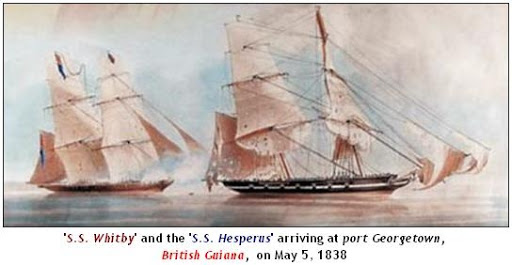
The Head of State urged Guyana to honour shared history while pursuing unity and inclusive development, as the petrostate observes IndianArrival Day 2026 and prepares to celebrate its 60th Independence anniversary. The observance is a moment of reflection and a call to action, honoring sacrifices and contributions of all who laid foundations of independence before 1966.
He paid tribute to the diversity of Asiatic tribes migrating after 1000 bce, inhabitants before and after emancipation in 1834, Europeans since 1498 and indentured Chinese from 1853.
SS Whitby sailed from Calcutta on January 13, 1838 with 249 Indians and 112 days later docked in Port Demerara/ Georgetown, then docked in Port New Amsterdam / Berbice . SS Hesperus followed from Calcutta on January 29, with 165 Indians and docked in Demerara/ Georgetown also on May 5. Between 1838 and 1917, over 240,000 Indian assets of the British Empire on 5-year contracts crossed two oceans to British Guiana, initiating the impetus of work in a pivotal period of the region’s demographic, economic and cultural evolution.
The mobile indentured Indian workforce rescued sugar plantations established in 1658 by the Dutch West India Company, trading from 1616 in cotton and other crops, until acquired by Britain in 1796.
Despite hardships, displacement and separation, they persevered, building communities, preserving traditions, and contributing to the economic and social fabric .Progeny played a vital role in Guyana’s development, contributing to agriculture, industry, religion and education.
Guyana’s enduring challenge has been forging unity from its many cultural strands. “One Guyana” vision is the pathway to building a society where all feel valued and included, ensuring that the wealth from oil and gas to agriculture and natural resources, benefits everyone. As its Diamond Jubilee approaches, he encouraged renewed commitment to Guyana where every citizen has the opportunity to thrive.
Urging citizens to carry forward ancestral aspirations he declared “Arrival Day should not only be a day of remembrance; it should be a day of responsibility. Let us move forward together: united, determined, and committed to a future where everyone belongs,”