Venezuela restructuring debt after default
May 14th 2026 –
The Sectoral Vice Presidency for the Economy announced the formal launch of an “integral and orderly” restructuring of Venezuela’s public external debt and that of state oil company PDVSA, in the most concrete step by acting President Delcy Rodríguez’s administration toward financial normalization after nearly a decade in default.
The communiqué sets as its central objective “to put the economy at the service of the Venezuelan people and free the country from the burden of accumulated debt.
For too long, the country has been deprived of normal access to financing and its economy lost the capacity to invest in health, electricity, water, education, infrastructure, productive recovery, and the well-being of its population.
This is a responsible, nationalist and social decision. Its purpose is to rebuild the country’s capacity to mobilize financing, attract investment, stabilize the economy and materially improve the quality of life of every Venezuelan.”
In default since 2017 the OPEC founder attributes non-payment to US sanctions imposed that year. The petrostate accumulated USD 60 billion in unpaid bonds, while total external debt, including PDVSA obligations, bilateral loans and arbitral awards from expropriation cases, stands at between USD 150 and 170 billion, one of the largest unresolved sovereign defaults.
Among the main creditors are distressed-debt “vulture funds”; companies ConocoPhillips and Crystallex holding outstanding arbitral awards and bilateral creditors PRC and Russia which extended loans to Nicolás Maduro and Hugo Chávez. The announcement is part of an accelerated financial reconfiguration. On 5 May, the US Treasury Department issued General License 58, which temporarily authorizes the provision of legal and financial advisory services to Venezuela and PDVSA for a possible restructuring.
The license came 20 days after the International Monetary Fund announced restoration of relations with Caracas after a 7-year rupture, a diplomatic normalization enabling the Fund to provide technical and financial assistance to the Venezuelan government.
The document does not detail concrete mechanisms, deadlines or designated counterparts for the negotiation, leaving open the question of how a process of this magnitude will be operationally articulated. Restructuring advances within the framework of the gradual easing of sanctions following removal of Maduro to USA for judicial proceedings .
The US administration prioritized unblocking the energy sector, a strategic axis for ensuring US oil independence from the Persian Gulf.
T&T will negotiate gas terms with Venezuela
2026, 05/14
Responding to Opposition MP Stuart Young concerning fiscal policy on natural gas, Finance Minister Davendranath Tancoo said the government will negotiate the terms of the cross-border natural gas deals in the best interests of Trinidad and Tobago.
“We are establishing a fiscal framework that will ensure Trinidad and Tobago captures value from external hydrocarbons entering this country. Possible revenue arrangements may include fixed fees for importation of hydrocarbons, commodity charges based on the volume of gas consumed, unit transit fees based on distance, reserved volume or consumed volume, and any other mechanism required to protect the national interest while preserving project viability.
Existing government-to-government arrangements with neighbouring jurisdictions did not establish specific fiscal terms for the importation of hydrocarbons into T&T. That is a serious gap. It means that while the country had arrangements, discussions and expectations, the revenue system and structure was still unfinished.
We are not seeking to suffocate investment. We are seeking to ensure that investment does not take place at the expense of Trinidad and Tobago.”
Young asked if these terms were discussed with BP and Shell, currently in talks with the Venezuelan government concerning these fields.
Tancoo replied, “The government, as I described, is involved in negotiations with substantial multinationals as it relates to this package and to our treatment with the oil and gas developments in negotiation and discussion stages.”
On Young’s query about policy for natural gas allocation from these projects, Energy Minister Dr Roodal Moonilal, stated, “The government’s policy as it relates to the allocation of natural gas from cross-border and across-border projects will be to adhere to the agreed allocation arrangements, which formed the part of the negotiated commercial arrangements prior.”
NGC, LNG, Petrochemicals, Venezuela
2026, 05/17
Mariano Browne, Chief Executive Officer of Arthur Lok Jack Global School of Business.
The natural gas economy is in uncertain territory and structurally weak because the natural gas supply will not be sufficient to bring all Point Lisas plants up to full capacity utilisation.
Rising natural gas feedstock prices to the petrochemical plants would translate into operating losses. In these circumstances, “stability” in the T&T economy is temporary, as natural gas remains the dominant factor in economic performance, which depends on the success of current exploration activities and on T&T relationship with Venezuela.
A substantial share of installed capacity has been idled, intermittently curtailed, or operating below nameplate capacity. To put this in context, T&T has 11 ammonia plants and 10 Methanol plants. 6 major petrochemical plants at Point Lisas are shut or idled due to natural gas curtailment.
These include:
-
- 3 of Proman’s 5 methanol plants,
- the larger of Methanex’s 2 methanol plants (the other is offline for maintenance),
- 1 Yara ammonia plant and
- Nutrien’s nitrogen complex, with
- 4 ammonia and
- 1 urea plants, began controlled shutdowns in late 2025.
Only CCGL methanol plant in La Brea, a joint venture between Mitsubishi, Massy, and NGC, is fully operational. 54% of ammonia plants are thus idled.
The core issue is declining domestic gas supply which reduced feedstock for ammonia and methanol producers, worsened by disputes over port charges and gas pricing matters. Higher gas prices squeezed local industrial customers (LICs). These midstream customers use only 1% of the gas but have a significant impact on unemployment numbers.
The National Gas Company at the heart of the energy sector as an aggregator, middleman, and intermediary responsible for managing the flow of gas to different market segments buys gas upstream under contract and sells it downstream under contract. The difficulty with this is that the contracts do not align in duration or volume, leading to tense negotiations with petrochemical companies.
The plan acknowledged the current situation: declining gas reserves, downstream gas shortages, concerns about LNG pricing and transfer pricing, fiscal leakages and the future structure of the gas industry. It strongly emphasised the need to accelerate offshore exploration, improve upstream incentives and encourage new reserve replacement.
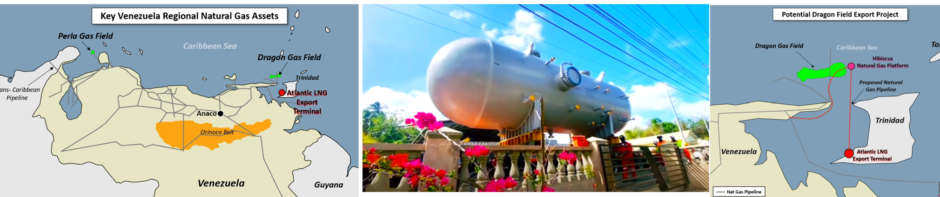
Upstreamers have the upper hand, controlling gas supply and the investment resources to explore for and bring new gas to market. This explains the focus on the Manatee field and efforts to acquire a licence for Venezuela’s Dragon field.
Recognising recurring gas shortages, the plan recommended allocating natural gas in line with national priorities. This gave NGC a key role. The plan suggested protecting electricity generation, strategic industries and major employers like the LIC segment.
It proposed that any curtailment system be transparent, rules-based and predictable, so downstreamers could plan shutdowns and maintenance. The plan noted that petrochemical plants contributed more financially and economically than ALNG.
NGC suggested a decision to promote the interests of the upstream Shell, BP, EOG and LNG at the expense of the petrochemical sector.
Whilst there may be a short-term situation in which realised net back prices (the net realised price on shipments net of regasification, transport and marketing costs) may favour LNG, the long-term picture indicates that the longer-term contribution of the petrochemical plants is greater.
Starving petrochemicals of feedstock is not in T&T’s long-term interest. Neither NGC nor T&T truly has the upper hand. Proman’s announcement of expansion in Oman shows that its investment priorities lie elsewhere.
In 2012-13, Methanex dismantled and relocated two methanol plants from Chile, to Louisiana, because of lower gas prices. Similarly, Nutrien’s parent company earnings were unaffected by closure of its T&T operations.
Nor should BP and Shell’ negotiation with Venezuela be misinterpreted. They are pursuing their corporate interests, not T&T’s national interest. While they may direct enough of any additional gas they may secure to make use of ALNG spare capacity in T&T, Venezuela has multiple idle or partially idled ammonia and methanol plants, primarily located within the José Antonio Anzoátegui Petrochemical Complex.
The gas need not be directed to T&T. Further, there is the option of setting up shop in Guyana, which has abundant gas supplies.
Financial decisions are made at the margin. NGC lacks capital and infrastructure for gas exploration. Capital flows instinctively toward environments where it is most valued, respected and yields the highest returns.
It is important that NGC gets its relationships with stakeholders right in both upstream and downstream sectors. The energy sector is critical to T&T’s economic fortunes for the foreseeable future. Assuming either NGC or T&T has all the cards would be a catastrophic strategic error.
US removes uranium from Venezuela’s RV-1 reactor
May 9th 2026 –
The U.S. Department of Energy’s National Nuclear Security Administration (NNSA) has completed the removal of 13.5 kilograms of highly enriched uranium from the former RV-1 research reactor at the Venezuelan Institute for Scientific Research (IVIC), in Miranda state, in an operation coordinated with the United Kingdom, the International Atomic Energy Agency (IAEA), and Venezuela’s transitional government.
The material, enriched above the 20 percent threshold separating low-enriched from highly enriched uranium, had been considered surplus since the reactor ceased operations in 1991.
The extraction took place between 18 and 29 April. The uranium was packaged into a spent-fuel cask, escorted overland for some 160 kilometers to the docks at Puerto Cabello, and transported aboard a specialized vessel operated by the British firm Nuclear Transport Solutions to the Savannah River Site in South Carolina, where it will be processed into high-assay low-enriched uranium (HALEU).
“The safe removal of all enriched uranium from Venezuela sends another signal to the world of a restored and renewed Venezuela,” said NNSA Administrator Brandon Williams.
He credited “President Trump’s decisive leadership” for the speed of an operation the agency said would normally have taken years. The mission falls within the three-phase plan that the Trump administration and Secretary of State Marco Rubio designed for Venezuela following the capture of Nicolás Maduroin January. Energy Secretary Chris Wright visited Caracas in February to lay the groundwork.
Venezuela’s transitional government, led by interim President Delcy Rodríguez, framed the operation differently. In a statement issued on 7 May by Foreign Minister Yván Gil, Caracas said the U.S. military strike on 3 January — which hit roughly 50 meters from the former reactor during “Operation Absolute Resolution” — “objectively raised the level of risk and confirmed the urgency of carrying out an operation that Venezuela had long been requesting.”
That bombing damaged IVIC’s electrical grid and partially affected its Mathematics, Physics, Chemistry, and Ecology centers as well as its Nuclear Technology Unit, according to institute director Alberto Quintero, cited at the time by news agency EFE.
The RV-1, designed by Venezuelan scientist Humberto Fernández-Morán, reached criticality in 1960 under U.S. President Dwight Eisenhower’s “Atoms for Peace” program, which contributed 300,000 dollars toward its construction.
It was among the first research reactors in Latin America. Its formal closure was completed with the IAEA in 1997, and the facility was later converted into a gamma-ray sterilization plant for medical and industrial use.
U.S. oil rush into Venezuela tests Trump’s democracy promises
5/11/2026, James Bikales and Sophia Cai0
The White House is full steam ahead on growing the oil industry in Venezuela. Elections are another matter. Jarrod Agen joined authorities at a ceremony after a U.S. commercial flight landing at Simon Bolivar International Airport in Maiquetia, Venezuela, on April 30, 2026.
When the White House’s top energy adviser landed in Venezuela last month, he was asked to sign a guest book. On the wall hung a portrait of the former dictator, Nicolás Maduro, who drove most U.S. oil companies out of the country until he was deposed by President Donald Trump in a military operation in January.
Under the portrait’s watchful eyes, National Energy Dominance Council Executive Director Jarrod Agen signed the book with Trump’s energy catchphrase: “Drill Baby Drill.” The experience, which Agen recounted after returning from Caracas, encapsulates how much has shifted in the OPEC founder over the last four months and the uncertainty that remains.
Agen and other US administration officials shuttled back and forth from Caracas to facilitate deals for US energy and mining companies to invest in Venezuela, and in doing so forged closer ties with interim President Delcy Rodríguez and her administration, largely hold-overs from Maduro’s regime.
That engagement picked up in recent weeks, especially as Trump pushes Venezuelan crude as an alternative to supplies disrupted by the war in Iran.
OTC: Venezuela reopening hinges on stability & legal clarity
May 6, 2026
Venezuela’s energy sector presents attractive opportunities, but challenges remain. Companies are cautious but optimistic about the oil and gas resource potential, emphasizing the importance of stable policies and long-term commitments for successful engagement.
The conversation emerges as the US administration continues easing sanctions and encouraging American operators to re-engage with Venezuela’s oil and gas sector. Signs are growing that major international energy companies are reassessing opportunities there.
ExxonMobil and ConocoPhillips recently dispatched technical teams to evaluate oilfield infrastructure and upstream prospects, while Gulf Coast refiners have increased imports of Venezuelan heavy crude.
Speakers warned the 2026 Offshore Technology Conference in Houston that Venezuela’s reopening to the US energy sector presents significant long-term potential but large-scale investment will depend on political stability, legal certainty, and the country’s broader geopolitical risk profile.
Barbara Thompson, Project Director at Baker Hughes moderated the discussion during the Executive Dialogue session, “How US Energy Companies Are Sizing Up Venezuela’s Revival,” featuring Maria Angela Capello, president of Red Tree Consulting LLC, and Ted Borrego, energy law professor at the University of Houston Law Center.
Panelists said the central question facing US energy companies is no longer whether Venezuela will reopen, but whether the conditions, pace and overall risk profile of reopening are sufficient to support large-scale, long-term capital investment. Speakers noted that Venezuela’s appeal extends far beyond short-term political change.
The petrostate holds one of the largest and most diverse hydrocarbon resource bases, including extra-heavy crude in the Orinoco Belt, conventional light and medium oil and significant offshore natural gas resources.
The opportunity lies not only in the size of the resource base but also in the long-term development potential. However, years of underinvestment, deteriorating infrastructure and labor losses mean rebuilding the sector will require significant technical expertise and sustained capital commitments.
Oilfield service companies are expected to play an important role if activity accelerates, particularly in offshore gas, heavy oil upgrading, drilling services and infrastructure rehabilitation.
Recent reports indicate service providers have begun reactivating rigs and equipment stored in Venezuela in anticipation of renewed activity. Speakers emphasized that investors are seeking stable policies and durable legal frameworks before committing capital at scale.
Trust in Venezuela’s legal and regulatory system remains weak following years of expropriations and contract disputes. Companies must evaluate not only Venezuela’s domestic political outlook but also broader geopolitical dynamics involving the US and PRC, Borrego noted.
PRC’s long-standing investments and influence in Venezuela’s energy sector were an important factor. Panelists aagree that oil and gas investment could play a major role in rebuilding Venezuela’s economy and restoring its middle class but companies intending to enter the country must be prepared to establish long-term partnerships and navigate potentially lengthy investment payback periods.
Europe Parliament Venezuela sanctions await democracy
April 30th 2026 –
The European Parliament approved a resolution urging the Council of the European Union not to lift sanctions imposed on those responsible for human rights violations until Venezuela adopts “significant measures toward a peaceful transition to democracy.”
The text, promoted by the European People’s Party was backed by the Socialists and Democrats despite internal divergences over the strategy toward the government of acting President Delcy Rodríguez.
Among the conditions the European Parliament sets for the lifting of sanctions are:
-
- unconditional release of all political prisoners,
- withdrawal and cancellation of politically motivated charges against the democratic opposition, and
- the establishment of a credible roadmap for free and fair elections.
At least 470 people remain arbitrarily detained in inhumane conditions and the EU seeks reform of judicial, polic, and electoral institutions, and closure of facilities for arbitrary detention, mistreatment and torture.
The immediate trigger was Rodríguez’s decisiond on April 23, to end the Law of Amnesty for Democratic Coexistence that the National Assembly approved on February 19. The Parliament condemns that the law’s “premature repeal, its limited scope, the lack of independent oversight, and its discriminatory application” failed to lay the groundwork for political reconciliation. The resolution stresses that “the amnesty law must under no circumstances be applied to protect those responsible for human rights violations, who must be held fully accountable.”
The vote complicates plans of the Spanish government, which proposed gradual lifting of sanctions against Rodríguez and invited her to the Ibero-American Summit on November 4 and 5 in Madrid.
Rodríguez has been subject since 2018 to EU sanctions that bar her from entering European territory, save for occasional exceptions. European Popular Party Member of the European Parliament Dolors Montserrat defended the resolution and criticized Spanish Foreign Minister José Manuel Albares for promoting a relaxation of the sanctions regime. “Those who whitewash tyrants should not sit at Europe’s table.”
The Spanish Socialist Workers’ Party voted in favor of the final text despite its amendments not being approved, considering that the resolution includes a “firm call for respect for international law.” EU High Representative for Foreign Affairs and Security Policy Kaja Kallas proposed in February lifting sanctions against Rodríguez, in line with the Spanish position, without the Council having yet taken a decision on the matter.
Chevron: Venezuela needs better contract terms to attract investment
May 29, 2026, : Val Brickates Kennedy, SA News Editor
Chevron CEO Mike Wirth said Venezuela needs to lower its taxes and royalties on oil to attract new investment.“We need a new set of fiscal terms under which we would invest in the country, Right now the amount of tax and royalty that’s paid doesn’t leave enough for an investor to get a return on their investments.”
Bloomberg noted that Chevron currently only invests money that it makes within Venezuela as part of a U.S. program to recover debt from the country’s state-owned oil company, Petroleos de Venezuela SA. Wirth said he sees the debt being paid in full within a year.
American oil giants Chevron, Exxon Mobil and ConocoPhillips have been meeting with Venezuelan officials to discuss terms and contracts following recent changes to the country’s oil and gas laws.
“There are negotiations underway, discussions even this week. I expect over the next short period of time we may see some clarity from them
-
-
- on specific values,
- on corporate income tax,
- on a range of things
- on royalties, and
- how that might be applied.”
-
Chevron plans to boost production in Venezuela by 50% over the next two years, using local profits to pay the costs, but would need more clarity before it considers committing additional capital.
“We don’t have enough clarity right now.We don’t understand what the regime would look like. And so it’s unlikely we would put capital to work until those things are clarified.”
Exxon & ConocoPhillips negotiate Venezuela return
May 26, 2026 (Bloomberg) –
ExxonMobil and ConocoPhillips are pushing for durable contract terms and a way to resolve billions of dollars owed to them as they consider re-entering Venezuela after exiting two decades ago.
Both companies are in active negotiations with President Delcy Rodríguez’s government about tapping Venezuela’s vast oil reserves. While Venezuela has more work to do on production-sharing agreements and other matters, the companies are privately encouraged by the willingness of Rodríguez and her advisers to negotiate different aspects of the contracts, according to people familiar with the matter.
An Exxon team met U.S. embassy officials in Caracas and had discussions with Venezuelan officials in Houston. Earlier this month, Chief Executive Officer Darren Woods said Exxon is studying how to apply its expertise in Canadian heavy oil to Venezuela’s crude, which has a similar high viscosity.
The political push from both Rodríguez and U.S. President Donald Trump to restart production represents a once-in-a-generation opportunity for the oil majors to tap into one of the largest sources of crude unaffected by the conflict in the Middle East. Chevron Corp. stayed in Venezuela through the late President Hugo Chávez’s nationalizations and years of U.S. sanctions. It is now in prime position to quickly grow production as crude is trading for about $100 a barrel.
Exxon and ConocoPhillips don’t want to miss out. Their interest has gathered pace since January, when Woods called the country “uninvestable” under then-current conditions. Still, both companies are wary of what may happen if the political situation changes, either in the U.S. or Venezuela.
For Venezuela, getting Exxon and ConocoPhillips back in the country would signal a clear move toward economic stability, opening a path to more investors.
“Bringing back ExxonMobil and ConocoPhillips is a top priority for the government, and they’re putting a lot of resources and effort behind it,” said Carlos Bellorin, an executive vice president at Welligence Energy Analytics. “But for either company to seriously consider returning, the deal would likely need to be very attractive.”
ConocoPhillips said it’s evaluating opportunities in Venezuela, including gathering data and engaging in discussions with “relevant stakeholders. As with any potential investment, decisions will be guided by a range of factors, including economic and policy stability, safety, adherence to the rule of law and market competitiveness. Any decision to proceed would need to take into account mechanisms to recover the debt that is owed.”
One of the most critical issues is whether the companies can structure their investments in such a way that they can avoid losing billions of dollars if they were nationalized in the future. Global oil producers typically insist on stability clauses that mean contracts can’t be unilaterally changed by successive governments when negotiating major deals to enter new countries. They also routinely insist on settling any disputes through international arbitration proceedings rather than local courts.
In the years following its nationalization, ConocoPhillips was awarded about $12 billion compensation in arbitration proceedings, the majority of which has not yet been paid. “They are trying to think about different ways to satisfy the debt that’s owed to our company,” CEO Ryan Lance said .
“Until we get some relief there, going and investing a lot more money into Venezuela, given the current situation, would be difficult for us.
“They have a long ways to go. The current hydrocarbon law is not sufficient to attract a whole lot of investment.”
Recent changes to Venezuela’s oil law were designed to attract much-needed foreign investment in the country’s crumbling oil infrastructure. But the law still gives the government wide latitude to charge royalties of up to 30% and as much as 15% in taxes and other levies.
Some Exxon operations ended up being part-owned by Russia’s Rosneft Oil Co. after the oil major was forced out by Chavez. The US administration made it clear it wants to lessen Russian, Chinese and Iranian influence as the U.S. helps rebuild Venezuela’s oil industry, raising the possibility of Exxon reclaiming assets it formerly owned.
“We need to get our adversaries, particularly their nefarious activities, out of our hemisphere,” Energy Secretary Chris Wright said in February.
U.S. Interior Secretary Doug Burgum, who heads Trump’s National Energy Dominance Council, has spoken with Rodríguez about the need to offer companies attractive returns if she wants them to help revive production.
“I remain very optimistic about where this is going. These companies, if they don’t like the terms, they’ll say ‘no,’ and that’ll put pressure on Venezuela to get to a spot where they become competitive for capital.”
ECLAC cuts growth projections for region
May 3, 2026
The economies of Latin America and the Caribbean will grow by 2.2% on average in 2026, according to the updated projections released by the Economic Commission for Latin America and the Caribbean (ECLAC), which represents a slight downward revision from the 2.3% estimated in December 2025.
“This result reflects a more complex external environment than what was foreseen at the end of last year, characterised by greater geopolitical tensions, restrictive financial conditions and the resurgence of inflationary pressures at a global level,” ECLAC said in a release last week.
According to the United Nations regional economic commission, this reduced dynamism is expected to be widespread. Growth is seen decelerating in 2026 in 24 of the region’s 33 countries, and accelerating in just seven of them. If this projection is borne out, the region as a whole will have had four straight years of growth rates around 2.3%, revealing a pattern of low capacity for growth.
A more restrictive international context
The deterioration in the external scenario is one of the main factors behind the downward revision of the regional growth projections.
“During the first four months of this year, the increase in geopolitical tensions and war in the Middle East have exacerbated global uncertainty and volatility in financial and commodities markets.
“In particular, the average price of oil in the first three weeks of April was 74% higher than the average value in December 2025, creating global inflationary pressures and increasing production and transportation costs. This was compounded by a rise in food prices globally and a deceleration of growth in some of the region’s main trading partners – such as the euro area, China and India – along with less dynamic international trade. The World Trade Organisation (WTO) forecasts 2.7% growth in the volume of global goods and services trade in 2026, after a 4.7% expansion in 2025,” it stated.
In this context of higher inflation and diminished trade prospects, the world’s main central banks have adopted more cautious stances, maintaining less favourable financial conditions than what was expected at the end of last year, ECLAC said.
Contained domestic aggregate demand
At the regional level, growth is seen being constrained mainly by less dynamic private consumption“While investment shows signs of recovering, it continues to be moderate in the majority of countries.
“During the second half of 2025, a deceleration in economic activity was already observed, especially in the region’s main economies, and this trend has continued into 2026.In line with the reduced dynamism of economic activity, employment in Latin American and Caribbean economies is also seen expanding moderately, with growth estimated at around 1.1% in 2026 versus 1.5% in 2025,”
Meanwhile, the effects of inflation pressures at a global level are seen fuelling increased inflation in the region, with the median forecast topping 3% in 2026, compared with 2.4% in 2025. This situation is especially relevant in South American economies, where there continue to be pressures associated with exchange rate volatility and the impact of more costly imported inputs and transportation, it observed.
“In total, nine countries are seen growing by 4% or more, eight countries are seen growing between 3% and 4%, 13 will expand below that level, and three will undergo contractions,” ECLAC stated.
Subregionally, it is estimated that South America will grow by 2.4% in 2026, below the 2.9% recorded in 2025, reflecting a deceleration in the majority of the subregion’s economies.
In Central America growth is seen easing in comparison with 2025, totalling 2.2% in 2026 versus 2.3% last year. This result is affected by the contractions forecast for Cuba and Haiti. If those two economies were excluded, the average would be 3.9% in 2026, which represents a slight increase from the 3.8% seen in 2025. In the English- and Dutch-speaking Caribbean 5.6% growth is expected for 2026, which is just above the 5.5% notched in 2025. This result reflects forecast high growth in Guyana. If that country were excluded, the estimated regional average would be 1.2%, versus 2.0% in 2025, ECLAC stated.
Relevant risks remain
The region’s risk balance contemplates factors that, if they were to come about, could lead to further downward adjustments to this year’s growth projections.
“These risks include the continuation of restrictive financial conditions, inflationary pressures associated with increased energy and food prices, volatility in international markets, countries’ vulnerability to external shocks, and the weakness of domestic demand in several of the region’s economies.
“In addition, in some countries, structural factors such as external restrictions, limited policy space and institutional weaknesses could affect economic performance,”
World Bank office, a ‘game-changer’ for T&T
…but transparency key to unlocking funds
May 2, 2026
Prime Minister Kamla Persad-Bissessar, signed the establishment agreement for the World Bank Group office in Trinidad and Tobago, at the Diplomatic Centre in St Ann’s.
Present were Planning Minister Kennedy Swaratsingh, Finance Minister Davendranath Tancoo and a representative of the World Bank.
Business leaders and economists say the planned establishment of a World Bank Group office in Trinidad and Tobago could be a game-changer, boosting investor confidence, unlocking development financing, and improving the ability to design and deliver major projects. They stress that transparency, inclusion of local businesses and stronger institutional capacity will be critical to ensuring the benefits are widely felt.
Chief strategy officer of the Confederation of Regional Business Chambers Angie Jairam said,“The possible establishment of a World Bank office in Port of Spain is a significant development for Trinidad and Tobago. It represents more than just a physical presence; it signals closer engagement with our local realities and development challenges.”
Having the institution on the ground could improve the quality of dialogue around investment, policy support and development financing, particularly in SME growth, economic diversification and social development.
“For a country like ours, where access to foreign exchange, investment facilitation and structural economic reform are ongoing concerns, a local office could bridge gaps between global financial expertise and local implementation realities.”
She noted potential for more consistent engagement among the World Bank, Government, private sector and civil society.
“Ultimately, if structured well, this could strengthen how Trinidad and Tobago positions itself for development financing and reform support, while ensuring that external partners better understand our lived economic and social conditions.”
President of the Greater San Fernando Chamber of Commerce, Kiran Singh says the agreement represents “a significant step” toward improving investor confidence and access to development financing. He highlighted the potential to unlock up to US$5 billion in financing over the next three to five years, describing it as a major opportunity for businesses facing constraints such as limited access to affordable capital, infrastructure bottlenecks and delays in project execution. He welcomed the expected role of the International Finance Corporation in supporting private-sector development and noted public-private partnerships are a key mechanism for accelerating national growth.
“Strategic investment in transportation, water management, healthcare, and education can directly improve the ease of doing business while stimulating economic activity” .
Success will depend on transparency in project selection, efficient procurement processes and meaningful inclusion of local contractors and SMEs. While supporting the incentives and operational flexibility expected to be granted to the World Bank Group, he warned that local businesses must have fair access to opportunities.
“The benefits of tax exemptions and regulatory flexibility afforded to international institutions should translate into tangible opportunities for domestic firms, rather than creating uneven competitive conditions”.
He underscored the need for complementary reforms, particularly in foreign exchange access, regulatory efficiency and public sector responsiveness, to fully realise the country’s potential as a regional hub for development financing.
“The true measure of success will be the speed at which projects move from concept to execution, the extent to which local businesses are integrated into these initiatives, and the tangible economic benefits delivered to citizens,” .
President of the Chaguanas Chamber of Industry and Commerce Baldath Maharaj described the development as a major win for Trinidad and Tobago. “From the chamber, this isn’t just another international agreement; it’s a major seal of approval for our economy. It sends a clear message to the world that we are a stable, credible place to do business.
For our members in Chaguanas and across the country, having a permanent physical presence means we finally have a direct line to world-class expertise and technical support without the usual hurdles of distance.
This move may be what we need to push our non-energy sector forward.”
Economist Dr Vaalmikki Arjoon said the move gives Trinidad and Tobago a permanent presence of World Bank agencies IBRD, IFC and MIGA, while improving the country’s global economic standing by signalling deeper engagement with one of the world’s leading development multilaterals.
“Importantly, it provides us with stronger access to development finance, technical expertise, investment support and project preparation assistance, while helping to strengthen the quality, credibility and execution of major national development projects”.
The most important benefit is likely to be improved execution capacity. “We have no shortage of development priorities, but the challenge has often been converting these priorities into well-designed, properly financed and successfully implemented projects within a reasonable time-frame. A local World Bank presence can help ministries and State agencies prepare projects to international standards, conduct feasibility studies, strengthen procurement, improve monitoring, and reduce delays. This matters because weak project preparation usually leads to cost overruns, slow capital spending and lower investor confidence.”
He said this support could be especially valuable in infrastructure, water, transport, digital transformation, education, health, and renewable energy. Better-structured projects from the outset can lead to faster delivery, better value for money and stronger long-term development outcomes.
“There is also an important institutional benefit. Through training, knowledge transfer and improved project systems, the World Bank can help strengthen ministries, regulators and State enterprises. Better institutions reduce waste, lower transaction costs, improve policy credibility, and make public spending more productive.”
Another major benefit is access to finance and risk-sharing tools, while through the wider World Bank Group, Trinidad and Tobago can potentially access sovereign lending, technical assistance, IFC private-sector financing and MIGA guarantees.
“These instruments reduce political and commercial risks, mobilise private capital, improve project credibility and lower financing costs”. This improves investor confidence. “Foreign investors are more likely to consider long-term projects locally when supported by credible feasibility studies, transparent procurement, strong governance, and recognised international institutions.”
“World Bank involvement can therefore reduce perceived country risk, in infrastructure and PPP projects where investors are concerned about policy changes, payment risks and contract enforcement.”
The Couva Chamber said the move by the World Bank Group is an excellent opportunity for Trinidad and Tobago. It called the undertaking “a great initiative by the Government to provide international financial services to the business community and the country”.
“While there are ongoing discussions and plans to expand investment and grow the economy, establishment of a local World Bank presence is evidence of structures being put in place not just to provide support, but to ensure access to international services and alliances.”
The potential for Trinidad and Tobago to serve as a regional hub for the World Bank “speaks volumes about the confidence in the country as a business and financial centre. A very welcome move, and one of strategic importance at this time for the business community and the country”.
Trinidad and Tobago Coalition of Services Industries said, “The arrival of the full World Bank Group—comprising the IBRD, IDA, IFC, and MIGA—serves as a necessary ‘jolt’ for our economy. As we face a landscape where traditional energy revenues can no longer be our sole anchor, this permanent presence unlocks direct access to a projected US$1 billion to US$3 billion investment pipeline specifically for local businesses. This financing is expected to scale up to US$5 billion over the next five years, providing the critical injection of capital needed to fuel private-sector-led diversification.”
San Juan Business Association president, Abrahim Ali, said the World Bank will be an important factor in determining how the region expands as a trading bloc. “The World Bank is the most powerful institution designed to monitor economic activity and growth throughout the world. Strategic alliance with the United States and the potential to transform our economy will provide for a sustainable expansion and prosperity which is under threat.
Once we play the pivotal role in how Caricom survives, the region will benefit. An economic plan for the survival must be revisited in the shortest time. The World Bank will be an important factor in determining how the region expands as a trading bloc. I am sure our Government has been instrumental in this development.”
Guyana-Brazil investment opportunities
May 08, 2026
Guyana and Brazil trade relations expanded significantly , creating new opportunities for investment, private sector growth and regional economic integration. Chief Investment Officer at Guyana Office for Investment, Dr. Peter Ramsaroop, said rapidly expanding trade relationship with Brazil reflects the strengthening partnership under the leadership of President Irfaan Ali.
Brazil’s Ambassador to Guyana, Maria Cristina de Castro Martins, confirmed that bilateral trade surged from US$58 million in 2020 to US$1 billion in 2026. The increase was a major expansion in economic cooperation driven by growing demand in energy, mining, infrastructure and construction.
Guyana exports to Brazil are concentrated in crude oil, accounting for approximately 98 per cent of shipments, while Brazil exports to Guyana consist of machinery and industrial equipment used in construction, mining, extractive industries and oil production.
Dr. Ramsaroop said her statement “reflects the significant expansion in engagement and cooperation in recent years, particularly in trade, infrastructure, agriculture, logistics and private sector collaboration.”
Several major infrastructure initiatives position Guyana as a strategic commercial link . These include upgraded road connection between Guyana and northern Brazil, expansion of port facilities at the Tristar terminal, plans for a deepwater port in Berbice, expanded logistics infrastructure and plans to transform the Lethem airport into an international hub.
These developments are expected to create new opportunities in trade, tourism, transportation, manufacturing and industrial development. “We are seeing increasing interest from companies in large-scale agriculture, agro-processing, logistics, construction, manufacturing, energy support services and infrastructure development. Guyana is strategically positioned between the Antillean Archipelago and South America, creating opportunities for regional expansion and integration.”
Local businesses, particularly in Lethem and Region Nine, are expected to benefit from stronger commercial ties with Brazil through increased economic activity and improved connectivity.
“Expanded port capacity, improved transportation corridors and enhanced connectivity between Guyana and Brazil will create new opportunities for our local private sector in transportation, logistics, hospitality, cargo handling, tourism services, warehousing, retail and agro-processing.”
Guyana’s expanding agriculture sector is opening doors for joint ventures and regional partnerships. Future opportunities lie in fertiliser production and industrial processing as Guyana continues expanding its energy and logistics capabilities. Strengthening the Guyana-Brazil partnership aligns with President Ali’s Vision 2030 agenda, focused on regional integration, economic diversification, food security and building a globally competitive economy under the One Guyana initiative.
Partial scope agreement with India
2026, 05/14 Dr Bhoendradatt Tewarie
Three strong currents—
- 1) navigating the geopolitical terrain with powerful countries in an uncertain world;
- 2) India’s civilisational reach and influence globally; and
- 3) the option of leveraging the economic and technological leap that India made after almost 80 years of sovereign independence
—very interconnected currents were all at play in Dr Subrahmanyam Jaishankar’s engagement of Trinidad and Tobago during his visit as Foreign Minister of India.
His books and interviews on geopolitical and international relations matters are formidable.
India is interested in the region because our countries can benefit from cooperation. Such collaboration can lift all our countries and make the region a success story through effective partnership. India has a lot to offer economically and technologically. By engaging the region effectively and well, India can show a good example of a positive developmental partnership to the world. A great deal of mutual benefit is possible all around.
India can do these things now because the country has more leeway, some operating space it did not have before. Congressional agreements in the US made India a US partner in the hemisphere.
The preferential relationship that the Prime Minister of T&T developed with the US creates the possibility of a triangular relationship between T&T, India and the US. T&T’s heightened relations with India in industry and technology can boost its capacity to play a more meaningful role as an economic partner in Caricom.
T&T can thoughtfully reposition itself as a leader, even as a small state, if it leverages this deepening partnership with India effectively. India has cooperation agreements signed with Caricom as an entity—15 countries and associated dependencies. China has 10 Caribbean countries signed on to the Belt and Road Initiative and does not entertain countries aligned with Taiwan.
The United States’ relationship with Caricom is fractured, as it takes a bilateral, reward-and-punishment approach to engagement with each member state. India is the only big country willing to engage Caricom as a whole, while having bilateral relations with Jamaica, T&T, Guyana and Suriname. The EU and UK have well-structured relations with Caricom.
We are already seeing the impact of the India/T&T partnership with the roll-out of Verify TT by iGOVtt, in the agro-processing facility at Brechin Castle and the National Prosthetics Centre. The diplomat talked about creation of digital public infrastructure, a pharmaceutical industry and deploying advanced technologies in agriculture here.
What will make a massive difference in forex earnings outside energy and in leapfrogging the economy via technology, are investments by Indian manufacturers and service leaders in T&T for export to the US and Latin America; secondly, rolling out the digital stack in a well-structured and integrated way so that identity recognition, payments effectiveness and movement of information all converge to make thousands of transactional and entrepreneurial opportunities possible.
A partial scope agreement between T&T and India in the current 2026 geopolitical climate can become a sophisticated manoeuvre to navigate the America First trade policies of the US, while securing a high-tech future for T&T.e T&T Government should pursue this vigorously, because it will open the door to Indian investment for nearshoring to the US as a low tariff gateway as well as through the Caribbean Basin Initiative.
Coupling nearshoring with the fact that T&T is seeking to adopt India’s open-source digital stack, which will strengthen identity, payments and finance and facilitate easy movement of information and documents, will initiate a formidable partnership in creating jobs and boosting competitiveness. By leveraging these opportunities effectively, T&T can become the indispensable tech gateway for Caricom and lead the way to digital sovereignty T&T but for the Antillean Subcontinent.
India’s greatest value to T&T and the region now, beyond culture and civilization, is investment to boost prosperity and technology to facilitate digital sovereignty and to make T&T AI-driven and quantum-ready. This will help the West Indian archipelago to leapfrog in a world economy of increasing complexity and uncertainty.