The Guyana Energy Conference and Supply Chain Expo February 17–20, 2026
Uaru and Whiptail projects ahead of schedule
February 19, 2026 – Reuters
-Alistair Routledge, President of Guyana Operations, said that Exxon Mobil’s fifth and sixth projects Uaru and Whiptail, are on schedule and within budget but gave no timeline for the start-up of projects.
Whiptail is expected to begin production in 2027. Uaru will produce 250,000 barrels a day, and Whiptail, 200,000. Guyana’s total output will be 1.15m bpd once Uaru begins,and 1.4m bpd after Whiptail comes online.
At the Guyana Energy Conference, Routledge outlined a plan to connect an existing gas pipeline to a potential new pipeline which would supply gas to Berbice Region to power industrial projects. According to the diagram Routledge showed, Exxon’s eighth project Longtail, which will begin production in 2030, could be connected to a potential Berbice pipe.
Guyana officials urged Exxon to develop gas projects that will expand the energy sector beyond oil and power future industries such as a data centre and fertilizer plant, which are not yet in existence.
Routledge reiterated Tuesday’s comments regarding the progress on the gas plan.
Exxon committed to accelerating gas project, awaits demand sources for gas
February 18, 2026 – Reuters
Exxon Mobil is ‘committed’ to moving quickly to develop natural gas resources but the government must advance industrial projects to ensure a long-term demand for the gas. Leading the consortium operating Stabroek Block,
Exxon Mobil is under government pressure to develop and build natural gas projects, including petrochemical facilities and data centers, to diversify the energy industry beyond oil. Exxon Upstream president Dan Ammann stated that the pipeline constructed by the company was ready to transport gas to Guyana and awaited completion of power plants this year.
Ammann stated that the supply and demand of natural gas must be coordinated and Exxon is in discussions with the Government about onshore industrial gas uses but was not involved directly in any negotiations. “Committed” to provide the government with gas they need on the upstream supply side, Exxon was prepared to meet demand as soon as the demand picture changes.
Ammann says Exxon must understand how the Government is developing industries that use natural gas. The government has a responsibility to build the industry and create an environment where people will want to invest. Exxon announced a plan in its early stages, “Wales Gas Vision”, which aims to supply gas for onshore petrochemical projects and power plants. Since then, little progress has been made.
Exxon, the government and a group of potential investors were told in November that they needed to develop industrial plans for all parties to make decisions about investment at the same time. Ammann said that parts of the Stabroek Block are still under force majeure and not accessible for exploration due to their location in disputed territory.
The UN International Court of Justice is currently overseeing a case about a border dispute. Ammann stated that the decision will be an important step in determining if force majeure should be lifted.
However, “it isn’t the only consideration.” “We are as eager as anyone to get back in those areas as quickly as possible.”
Exxon working to determine gas resource, minister says
February. 19, 2026 Carl Surran, SA News Editor
Minister of Natural Resources, Vickram Bharrat, told the Guyana Energy Conference Exxon Mobil is working to determine the total natural gas resources of the Stabroek Block and
“still needs to do more work to evaluate the amount of resources there.”
The government’s priority is to develop onshore industrial projects such as data centers and fertilizer plants to use gas and advance the economy and would begin exports once it is determined there is excess gas beyond that.
Head of Exxon Guyana operations told the Energy Conference Exxon’s fifth and sixth projects – Uaru and Whiptail – are ahead of schedule and under budget, . The Uaru project is scheduled to begin oil production this year and Whiptail is anticipated to start up in 2027. Uaru and Whiptail will each produce 250K bbl/day, raising Guyana’s overall output to 1.15M bbl/day when Uaru starts and 1.4M bbl/day when Whiptail comes online.
Natural gas investment hinges on state bureaucracy
17 February 2026
ExxonMobil said its investment in development of offshore gas depends on the rate at which the bureaucracy works and a rules-based system, even as the government said it was ready to produce gas jointly with neighbouring Suriname.
President of ExxonMobil Upstream Company and Vice President of ExxonMobil Corporation, Dan Ammann said Guyana needs to take the same approach as it did for the development of the oil reserves.
“The same alignment that enabled Guyana’s oil success, clear roles, shared standards, transparency and disciplined execution will be even more important for natural gas,” he told the 2026 Guyana Energy Conference.
With natural gas development being more complex than oil and requiring different infrastructure such as processing, compression pipelines and power systems, Ammann said gas would succeed when the entire upstream, midstream and downstream value chain comes together in the right sequence. Ammann promised that ExxonMobil would match the pace of its partners in gas development which involves more players, utilities, industrial users, financiers and regulators.
ExxonMobil was committed to developing Guyana’s gas and maximising its value and impact through rapid, safe and smart monetisation.
“When government advances, permitting approvals and market frameworks, we will advance engineering, execution and investment in lockstep. When government accelerates, we accelerate.
Because the pace of gas development is not set by any one company. It is set by the readiness of the full system. That means regulatory approvals, environmental reviews, (14:10) land and marine use decisions, downstream infrastructure and, critically, market demand. Our message is simple.”
Development of the $6.8 billion Hammerhead project, which could produce up to 95 billion cubic feet of gas per day, would be the “first starboard project” that from the outset incorporates a plan to send gas to shore via pipeline.
A small portion of the gas would be used to run the floating production, storage and offloading vessel (FPSO) and the remainder to support the gas-to-energy project, future domestic industry or re-injection for optimised recovery.
“That flexibility matters because the smartest development plan is one that maximises value across oil and gas altogether.”
Ammann said Hammerhead could also serve as a practical bridge to phase two of the gas-to-energy project when Guyana chooses to advance it.
“More broadly, we see significant recoverable gas resources particularly in the southeast part of the Stabroek Block. We believe that opportunity is compelling.”
President Irfaan Ali said Guyana was keen on joint development of gas in the same area that Ammann referred to as part of plans to develop a second gas-to-energy project at Berbice. Discussions between Guyana and Suriname to get that project off the ground were “on target” and he hoped that could be done soon because
“our investors are waiting for those decisions. We want to do this with Suriname and we are hoping that Suriname can make a decision to join us by bringing their gas with our gas so we can move from a medium-sized project to a larger-scale project for both countries and for the region.”
Mooring pre-lay concludes at offshore Uaru Field
February 16, 2026
Netherlands-based Jumbo Offshore completed the mooring pre-installation for a floating production, storage and offloading vessel destined for Guyana. MODEC contracted Jumbo Offshore to install suction anchors and pre-lay mooring lines for the Errea Wittu FPSO.
Jumbo Offshore installed suction anchors and conducted pre-lay of mooring lines in preparation for FPSO hook-up. The offshore campaign was executed using Jumbo Offshore’s Fairplayer J-class installation vessel.
Jumbo Offshore finished preparatory mooring activity at Uaru Field on behalf of FPSO supplier MODEC.
The Errea Wittu, commissioned by Uaru operator ExxonMobil Guyana, will operate 200 km offshore in water depth of 1750 m. Jumbo’s work scope involved installing the suction anchors and pre-lay of the mooring lines ahead of the FPSO hook-up operation. Jumbo performed installation engineering, procurement, mobilization and marshalling activities to support offshore installation.
ExxonMobil acquires FPSO ONE GUYANA for $2.32bn
SBM Offshore will manage operations and maintenance until 2035.
Shree Mishra February 5, 2026
ExxonMobil Guyana, a subsidiary of ExxonMobil, finalised acquisition of floating production, storage and offloading (FPSO) vessel ONE GUYANA from Dutch floater expert SBM Offshore for approximately $2.32bn (€1.96bn). The transaction was completed before the end of the maximum lease term in August 2027. The purchase allows ExxonMobil Guyana to take ownership of the unit, while SBM Offshore will oversee its operations and maintenance until 2035.
The majority of the net cash proceeds have been allocated to fully repay the $1.74bn project financing, which significantly reduced SBM Offshore’s net debt. Operating since August 2025, ONE GUYANA will remain under an integrated operations and maintenance model. which leverages combined expertise and experience of SBM Offshore and ExxonMobil Guyana to ensure operational efficiency and deliver outstanding operational performance.
The FPSO was designed to produce approximately 250,000 barrels of oil per day, with an associated gas treatment capacity of approximately 450 million cubic feet per day, and water injection capacity of approximately 300,000 barrels per day. It is part of Yellowtail project, the fourth development in the Stabroek block, 200 kilometers offshore Guyana.
Guyana to lift world from poverty
February 18, 2026
In a keynote at the opening day of the fifth Guyana Energy Conference and Supply Chain Expo, the President of ExxonMobil Upstream Company and Vice President of the Corporation, Dan Ammann spoke glowingly of the country’s energy potential and the crucial role it plays in the company. Sweet light crude, discovered in the Stabroek Block by the American energy giant, will improve lives in Guyana and lift people across the globe out of poverty.
Overseeing Exxon’s efforts to discover, develop and produce oil around the world, , Ammann spoke of the vantage point he holds. With an eagle’s view of each producer including neighbouring Brazil, USA , Angola, Nigeria and Indonesia, he said,
“I can very confidently say that Guyana is perhaps the most exceptional energy development anywhere in the world not only for the scale of the resources offshore, but how it’s being developed and managed and importantly what it is enabling onshore.”
Shifting his attention to the role of Guyana on a much wider level, already experiencing transformation, resources will improve lives across the globe.
“First, energy development is transforming this country. You can see it everywhere. New construction, hospitals, clinics, schools, roads, bridges, shops and stores, beautification projects, community centers and recreational facilities.”
More importantly, transformation is evident in human capital with new jobs being created, expansion of business opportunities, improvements in health and progress in education.
“Then, there’s what the energy from Guyana can do to improve the lives of people all around the world…it helps lift people out of poverty and raise the standard of living everywhere. Guyana’s energy develops Guyana but helps the entire (globe) and that’s what this conference is about.”
Already, the VP noted that the country has become the largest oil producer per capita, producing over 900,000 barrels per day (bpd). Guyana currently has four Floating Production Storage and Offloading vessels (FPSOs) operating in the Stabroek Block. A fifth FPSO is expected to come online by the end of 2026, pushing daily capacity beyond one million barrels daily. A sixth deepwater development will add another 250,000 barrels daily in 2027.
With unprecedented growth in oil production, Guyana will continue to receive 12.5 barrels of every 100 produced in the Stabroek Block, until it repays Exxon for its current and future projects. In keeping with the provisions of the 2016 Production Sharing Agreement (PSA), the contractor, ExxonMobil can take up to 75% of production each month to cover expenses related to production activities. The remaining 25% is split equally with Guyana as profits with the country receiving an additional 2% royalty paid from gross production.
Exxon, a 45% shareholder in Stabroek Block reported a profit of US$4,738,784,812 for the year ending December 2024. Financial statements for Hess, show the 30% shareholder, earned US$3,145,029,074. CNOOC with the remaining 25% share earned US$530,737,000 during the period. The partners together gained US$8,414,550,886 for the year 2024.
Guyana should receive 50% of profits from Stabroek Block, or half of the revenue from crude sales in accordance with provisions of the 2016 PSA but deposits into the Natural Resource Fund (NRF) in 2024 totalled US$2.6B.
ExxonMobil announces US$100m STEM initiative for Guyana
February 24, 2026

ExxonMobil CEO Darren Woods (right) and President Irfaan Ali at State House yesterday (Office of the President photo)
Chair and Chief Executive Officer (CEO) of ExxonMobil, Darren Woods, yesterday announced an ExxonMobil-Guyana STEM initiative that represents an investment of US$100 million to strengthen education in science, technology and mathematics across Guyana.
The Office of the President said the initiative includes creation of a nationwide network of STEM (Science, Technology, Engineering, and Mathematics) with the first centre to be established at the University of Guyana Turkeyen. President Ali lauded the initiative and said it demonstrates the strength and trust of the relationship that the company and Guyana are building. Prime Minister Mark Phillips, Cabinet Ministers and Government officials attended the dinner.
Guyana secures over 9 million carbon credits for 2023
February 05, 2026
The Office of the President said Guyana received 9,085,923 high-integrity TREES carbon credits for the year 2023. The credits, issued by the Architecture for REDD+ Transactions (ART), mark another major milestone in Guyana’s long-standing leadership in sustainable forest management, climate action and jurisdictional-scale carbon markets, for the third consecutive year since 2021.
“These credits have been labeled as CORSIA-Eligible, confirming their alignment with the highest international standards for environmental integrity, transparency, and accountability. The issuance reflects the measurable outcomes of consistent work by Guyana’s government and forest communities in ensuring verifiable emissions reductions through forest stewardship, robust national monitoring systems and consistent policy commitment to low-carbon development. This issuance is both a validation of Guyana’s long-term vision and a signal of confidence to global markets,” the statement said.
The Office of the President noted that the carbon credits received demonstrate that
“countries and communities can benefit from making forests worth more alive than dead – by valuing sustainable management of forests.”
Forests cover 85% of the territory and since implementation of the Low Carbon Development Strategy (LCDS) in 2009, heavy investments in country into forest governance, national Measurement, Reporting and Verification (MRV) systems, Indigenous land titling and benefit-sharing mechanisms ensure forest communities are direct beneficiaries of climate finance.
“The ART issuance to Guyana of 2023 vintage TREES credits builds on previous issuances and reflects the continued advancement of these systems over time. The CORSIA label attached to these credits confirms that Guyana’s TREES credits meet the eligibility requirements of the Carbon Offsetting and Reduction Scheme for International Aviation (CORSIA), making them among the most rigorously assessed credits available globally. This enhances their credibility and usability for international aviation and other compliance-oriented buyers seeking verified, jurisdictional-scale emissions reductions.”
The issuance of the carbon credits reinforces the viability of jurisdictional REDD+ as a cornerstone of high-integrity climate finance and is a demonstration that large scale, government- led approaches, anchored in national policies alongside transparent data, can deliver real, measurable climate outcomes while safeguarding biodiversity and supporting livelihoods.
“For Guyana, the issuance strengthens the country’s ability to mobilise results-based finance to support national development priorities, including climate-resilient infrastructure, Indigenous community development, forest conservation, and biodiversity protection.
It also underscores Guyana’s role as a global leader in shaping credible, equitable, and scalable solutions for forest-based climate mitigation.”
Additionally, the government assured that Guyana is committed to advancing high-integrity carbon markets, improving environmental and social safeguards and working with international partners to ensure that forest conservation delivers tangible benefits for the people while contributing meaningfully to the global fight against climate change.
T&T And Guyana Explore Joint Effort To Reopen Pointe-a-Pierre Refinery
February 20, 2026 Sunil Lalla
Energy Minister Dr. Roodal Moonilal reiterated that the government is moving with renewed urgency to restart the shuttered Pointe-a-Pierre refinery and Guyana’s government appears ready to join the effort. At the 2026 Guyana Energy Conference & Supply Chain Expo, Dr. Moonilal confirmed that the Conference has accelerated talks with Guyana and potential investors. He acknowledged that Trinidad and Tobago fell short in recent years working more closely with Guyana on shared energy priorities.
“Trinidad and Tobago has played a critical role in the Caribbean’s energy supply for many decades. It is with a sense of regret that I address you with the belief that over the recent past, we have not been able to conduct business, to integrate our strategies, to work with the government and people of Guyana.”
Discussions at the Conference strengthened T&T’s confidence in reopening. the shuttered refinery.
“We are indeed encouraged to work with the Government of Guyana and other delegates and other entities present at this Energy Conference to advance the reopening of the refinery in Pointe-a-Pierre, Trinidad and Tobago.”
Guyana Minister of Natural Resources, Vikram Bharrat, revealed that the collaboration is already taking shape, with both sides actively exploring how the refinery restart could work.
“So that is an area that we’ve already been engaging on with Trinidad and Tobago, to look at the possibility of having that refinery restarted, to have investors play a part , who are working with us in Guyana, that they too can work in Trinidad at the same time. And we’ve held several meetings together, yesterday, and we have a few more set up today.”
Dr. Moonilal explored the potential benefits for the entire region.
“One can only imagine if we really restart a refinery in Trinidad, we can supply Guyana, Suriname, Trinidad, but also the rest of the CARICOM area may have an opportunity to purchase products, whether it’s diesel, gasoline, fuel for the aviation sector, and so on.
We can produce those products in Trinidad, and just one hour away we ship it back to Guyana, to Suriname and the Caribbean island chain can benefit. So the objective here is really to get a win-win situation, where Trinidad and Tobago win with a restart of a refinery, and Guyana wins because they get product.”
Dr. Moonilal said the refinery should never have been mothballed, noting that it is both an economic necessity and a regional opportunity.
Spotlight on Rubio at Caricom 50th Summit
2026, 02/24
United States Navy warship USS San Antonio (LPD-17) moored at Port Zante in St Kitts on Sunday, ahead of the 50th Summit of Caricom on the theme “Beyond Words: Action Today for a Thriving, Sustainable Caricom”.
The spotlight will be on US Secretary of State Marco Rubio, specially invited guest for the 50th Summit in St Kitts who will address tomorrow’s Opening Plenary session of regional leaders seeking to advance shared priorities – including:
“deepening cooperation to combat illicit trafficking and promoting economic growth, health, and energy security across the Caribbean.”
As the Golden Jubilee conference opens today, former T&T Prime Minister Keith Rowley and former Jamaican Prime PJ Patterson underscored the recent call from 11 former Caricom leaders for the US to remove its embargo on Cuba, which has had devastating effects . Patterson anticipates T&T Prime Minister Kamla Persad-Bissessar, who is attending the conference,
“…will fully engage in constructive discussions which advance our collective interests for our shared humanity.”
As the curtain rises on this afternoon’s launch of Caricom’s 50th Summit in St Kitts, a session poised to be historic “ is one of the largest and most consequential in the Caribbean Community’s history.”
Persad-Bissessar arrived in St Kitts yesterday , accompanied by Foreign Minister Sean Sobers, Parliamentary Secretary in the Office of the Prime Minister Nicolas Morris, Tobago Chief Secretary Farley Augustus and Caricom Ambassador Ralph Maraj.
When Persad-Bissessar arrived in St Kitts, she said she was looking forward to all the meetings ahead.
“It’s an historic time ….50 years, there’s much at Caricom we’ve done together and there’s far much more we can do together,” she said.
Persad-Bissessar is scheduled to speak at this afternoon’s opening ceremony at the Marriott Dome.
Addresses will also be delivered by new Caricom chairman, St Kitts Prime Minister Terrence Drew; outgoing chair, Jamaican Prime Minister Andrew Holness and recently appointed leaders, Suriname’s President Dr Jennifer Geerlings-Simons and St Vincent and the Grenadines Prime Minister Godwin Friday. Caricom Secretary General Dr Carla Barnett will deliver opening remarks.
An estimated 95 per cent of leaders from Caricom’s 15 member states confirmed attendance. The agenda will consider pressing global and hemispheric issues and their impact on regional priorities. Deliberations include the Caricom Single Market and Economy (CSME), climate change and financing, food and nutrition security, regional security, transportation, reparations and foreign and community relations.
The St Kitts Information Service (SKIS) said the meeting will also address geopolitical developments. The conference has been described by St Kitts as “marking a pivotal moment for regional integration and global partnership.”
St Kitts PM Drew said yesterday, “The world’s eyes will be on Saint Kitts and Nevis as we host this landmark gathering. Our theme, ‘Beyond Words,’ challenges us to move from deliberation to decisive action…we signal to our people and the world that Caricom is entering a new era of implementation, resilience and sustainable prosperity.”
Rubio’s agenda
Secretary Rubio will join a distinguished roster of global leaders and heads of international organisations “as a specially invited guest” and he is scheduled to address tomorrow’s
Opening Plenary Session.
During his one-day visit tomorrow, Rubio will engage with Caricom heads from 1 pm to 3.30 pm in a special meeting chaired by Drew. This will be followed by the leaders’ caucus.
The US State Department yesterday confirmed Rubio’s participation in the Caricom Summit.
“During his visit, the Secretary will reaffirm the United States’ commitment to working with Caricom member states to enhance stability and prosperity in our hemisphere,” US State Department said.
St Kitts officials described Rubio’s visit as the USA bid to reset relations with the region, strengthen its position on Cuba and counter communist China’s expanding presence. Strong spotlight will be on Rubio, as this will be the first time regional leaders will have an in-person meeting with the Trump administration’s top tier since the US military presence in the region from last August – and its consequences.
While T&T supported the US, the majority of regional leaders voiced concerns about the military presence in what Caricom deemed the Caribbean Zone of Peace and the fallout on this: the destruction of alleged drug boats, alleged killing two T&T nationals last September and three St Lucian citizens recently. Concerns were also expressed on the US ousting of Venezuela’s leder and the recent embargo expansion on Cuba.
US military presence in St Kitts
St Kitts has been abuzz with preparations since last week – especially regarding the US presence. Advance US teams from other locations visited the island. The USS Antonio docked at Port Zante, St Kitts last Sunday. It is the lead ship of a class of amphibious assault ships. The vessel’s presence amid the Caricom summit drew mixed reactions in St Kitts, with comments on social media.
Other speakers for Caricom’s three-day meeting include Adel al-Jubeir (Minister for Foreign Affairs, Kingdom of Saudi Arabia); Secretary General, Commonwealth Secretariat Shirley Botchwey, Noura bint Mohammed Al Kaabi (Minister for Foreign Affairs, United Arab Emirates), and Dr George Elombi (president and chairman of the Board of Directors, African Export-Import Bank).
Apart from tomorrow’s plenary session, high-level engagements are set to follow throughout the week.
Secretary Rubio Meets CARICOM Leaders
02/25/2026 06:39 PM EST
Office of the Spokesperson
Readout February 25, 2026
The below is attributable to Principal Deputy Spokesperson Tommy Pigott:
Secretary of State Marco Rubio met leaders of the Caribbean Community (CARICOM) on the margins of the 50th Regular Meeting of the Conference of Heads of Government in Basseterre, Saint Kitts and Nevis. The Secretary underscored the United States’ enduring partnership with the Caribbean and reaffirmed our shared commitment to regional security cooperation.
Participants in the meeting were Prime Minister Terrance Drew of Saint Kitts and Nevis, Prime Minister Roosevelt Skerrit of Dominica, Prime Minister Gaston Browne of Antigua and Barbuda, Prime Minister Andrew Holness of Jamaica, Prime Minister Mia Mottley of Barbados, President Irfaan Ali of Guyana, Prime Minister John Briceño of Belize, Prime Minister Philip Pierre of St Lucia, Prime Minister Philip Davis of The Bahamas, Prime Minister Dickon Mitchell of Grenada, Prime Minister Alix Didier Fils-Aimé of Haiti, Prime Minister Kamla Persad-Bissessar of Trinidad and Tobago, President Jennifer Geerlings-Simons of Suriname and Prime Minister Godwin Friday of St Vincent and the Grenadines.
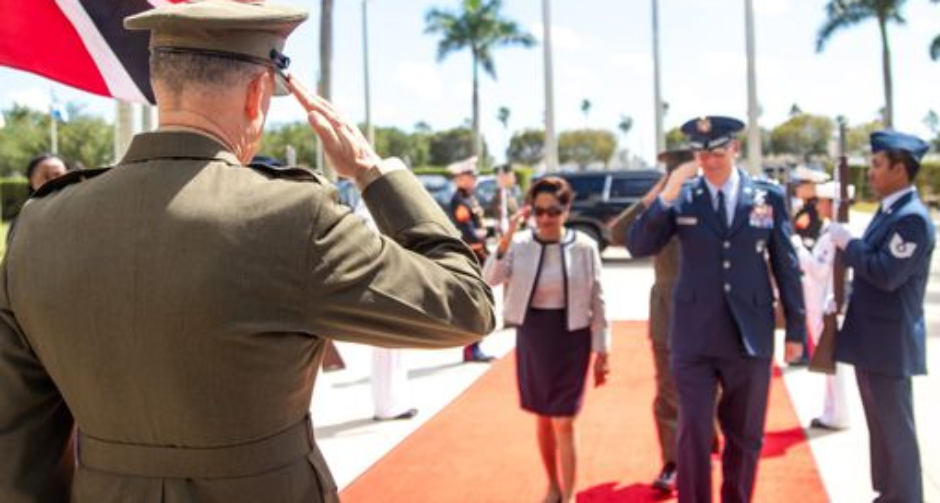
Secretary of State Marco Rubio at the 50th Summit of CARICOM
02/25/2026 02:38 PM EST
Marco Rubio, Secretary of State
Basseterre, St. Kitts and Nevis
St. Kitts Marriott Beach Resort
Remarks February 25, 2026
SECRETARY RUBIO: Well, thank you for allowing me to come. As you can imagine, last night we had the State of the Union; it was two hours, the speech, and then we got on a plane and came here. And when I told my colleagues I needed to come here to Saint Kitts and Nevis on a work trip, they were like, “Oh, sure, you’re going on a work trip.” But in fact it is, with our important partners, allies, and friends from the region, and I want to thank you for giving me this small opportunity to share some time with you and to be a part of this gathering. I don’t know when the last time – you said 10 years ago was the last time all the members were together, or the last time a secretary of state joined you?
MODERATOR: They told me 10 years ago. That is what I am told.
SECRETARY RUBIO: I was hoping it had been some 30 years since a secretary of state came. Anyway, I’m happy to be here. This is – in many ways, the Caribbean Basin is home for me, having grown up and lived almost the entirety of my life in Miami, and during my career in the United States Senate followed very carefully the issues that impact this region. And I am very happy to be in an administration that’s giving priority to the Western Hemisphere after largely being ignored for a very long time. There’s extraordinary opportunities. We share two things: We share common opportunities, and we share some common challenges. And that’s what we hope to confront.
I want to start out by saying that I’m also happy to be part of an administration that is not constrained by outdated orthodoxy, outdated boilerplate platitudes about partnerships and the like. We are interested in rebuilding and constructing a new dynamic in this Western Hemisphere in which we partner with all of you on the issues we share in common. I won’t go long. I don’t want to go long, but I want to touch upon a few of those because I think they’re important and they impact the broader Americas.
The first is the one I’ve shared with many of you individually and will share with you again now: We believe that perhaps the most urgent security threat in the region – that includes us, but obviously all of you – is the threat of these transnational criminal organizations, many of you – many of whom have funding and power that rival if not exceed that of many of the nation-states that they threaten. We recognize that it is an interlocked challenge that comes from a broader perspective. Number one, they’re obviously fueled by narcotrafficking and other illicit means. Oftentimes, those drugs and the proceeds from those drugs – those drugs are destined for the United States, but the proceeds from those drugs, the money they’re ultimately making, is being made in the streets of our country. This is a danger in the countries that they transit, and it’s ultimately a danger to the national security of the United States.
We’ve also watched with alarm at the level of armament that these groups have. We recognize that many of these groups are buying weaponry from the United States, and that we are committed and continue to work very hard with our law enforcement agencies to shut that down. I hope you have seen, both in the case of Haiti but in other dynamics, that we have not shied away, not just from designating groups for what they are – these are terroristic organizations – but even individuals who are responsible for being supportive of them. We’ve also gone after them, and this is something that we have as a shared dynamic.
We have a long history of working together on responding to these challenges, but I think our cooperation will have to grow even deeper and our commitment to it will have to grow even stronger because these groups grow stronger. I point you only to something not in the Caribbean Basin, but nonetheless indicative of what we’re – the challenges that we’re facing here, and that is the role that these drug cartels have established for themselves in Mexico. I’m not sure if you’ve seen some of the imagery of these groups after their leader was killed, but they’re out there with full military gear, military weaponry, armed transports – very dangerous. And it is something that we need to address collectively and together.
The second thing is there are extraordinary opportunities for economic advancement, to work together on issues like energy. Energy is critical for the future; it’s critical for every economy in order to prosper. Many of the countries represented here today have energy resources that I know you seek to explore responsibly, safely, but in a way that generates wealth and prosperity for your people and your countries, and we want to be your partner in that regard. So that’s another area of – that hopefully we can cooperate on very closely together. And I would add to that that part of the dynamics there is some of the regional – some of the regional opportunities that are occurring.
Irrespective of how some of you may have individually felt about our operations and our policy towards Venezuela, I will tell you this, and I will tell you this without any apology or without any apprehension: Venezuela is better off today than it was eight weeks ago. The progress being made there is substantial, and there’s a long ways to go. But the new interim authorities, led by Delcy Rodríguez, have done things that eight or nine weeks ago would have been unimaginable. They have released political prisoners; they have closed Helicoide, which is their most infamous prison of all. They are, for the first time in a long time, generating oil revenue that’s going to the benefit of their people, using those funds not just to make payroll for government services but to purchase medical equipment that’s necessary for their system.
There’s a long ways to go, and we’re committed to making it work. We have opened – reopened our embassy in Caracas, where we have an excellent chargé who’s on the ground, along with other government officials, and we intend to continue to build on that. Now, we believe strongly – and I think all of you would share this view – that ultimately, in order for them to take the next step to truly develop that country and to truly benefit from that country’s riches for the benefit of their people, they will need the legitimacy of democratic – fair, democratic elections. But our initial priority in the aftermath of Maduro’s capture was to ensure that there wasn’t instability, that there wasn’t mass migration, that there wasn’t spillover violence, and we believe we have achieved that.
Now we are in the process from going from that phase of stability to a phase of recovery. That country needs to recover from a lot of things, including deep, internal fractures, but also some dysfunction that existed in their economic systems. I say all this to you because ultimately we do believe that a prosperous, free Venezuela who’s governed by a legitimate government who has the interests of their people in mind could also be an extraordinary partner and asset to many of the countries represented here today in terms of energy needs and the like, and also one less source of instability in the region. So we expect to work very closely with all of you on that topic as well to the extent possible, and I think it’s related to the topic of security that I highlighted.
The third point is just the broader stability of the region. We want the region to be seen. And I include the region of the southern United States, which we know is part of the Caribbean Basin. We want it to be a place that is attractive for inbound investment. Many of you have taken on the – and done a tremendous job of seeking to diversify your economies and continue to seek ways to diversify your economies. To the extent that there are opportunities for American businesses or American investors to be a part of that, we want to facilitate that. We want to be a part of making that happen.
Here’s the bottom line: the stronger, the safer, the more prosperous, and the more secure that all of your counties are, the stronger, safer, more secure, and prosperous the United States is going to be. We view our security, our prosperity, our stability to be intricately tied to yours and we are going to evidence in the actions we’re prepared to take and in the priority that we want to give this our intent to follow through on it, which is why I’m here today, which is why I wanted to come here today and interact with all of you collectively and a few of you individually in the time that’s permitted to me.
So I want to thank you for this opportunity to address you. I hope that my presence here today serves as a real-world demonstration of our commitment to being your partner, to – I don’t even want to call it resetting relations because it’s really not about a reset. I mean, we have longstanding ties to each of you bilaterally and all of you collectively, but reinvigorating our relationships because we have a lot in common to work on, both opportunities and challenges, and the United States is committed to doing that. And certainly over the next three years and I remain in this post, it will be personal priority to me. It will be one that I will be personally engaged in and it’s one that I hope to leave for my successor, whoever that may be, a very strong and stable relationship that they can continue to build upon as well.
So I want to thank you for this opportunity to address you and to join you here today in this gathering.
Axis of energy: a Caribbean power play
Rushton Paray, Trinidad February 22, 2026
At the edge of a strategic opportunity that does not come twice, Trinidad and Tobago, Guyana and Suriname now have the combined energy assets to influence regional supply, strengthen their economies and negotiate with the global market from a position of leverage. This is not a slogan. It is a workable framework, if the three states choose coordination over competition.
In remarks at the Guyana Energy Conference and Supply Chain Expo, Trinidad Energy Minister Dr Roodal Moonilal acknowledged what many in the region have said quietly for years. We missed chances to align with Guyana and Suriname early. Dr Moonilal expressed regret for those gaps and signalled a new approach. He wants to position Trinidad and Tobago as an industrial partner, not a bystander watching neighbours rise. That admission matters because it resets the tone. It also opens a path for a real Southern energy bloc.
Trinidad and Tobago still holds the strongest industrial base in the American subcontinent. It has LNG infrastructure, mature upstream and midstream systems and decades of technical expertise in oil and gas technology gained from Shell, Texaco, BP, Amoco, EOG and other world-class operators. A major petrochemical platform has ammonia and methanol capacity that few small states can replicate.
Guyana, in less than a decade, has become a global petroleum story. Suriname is close behind, with major offshore prospects moving toward investment decisions. Together, these three states can create an Axis of Energy with the scale to shape contracts, attract capital and keep more value in the region.
Geography strengthens this advantage. LNG from Point Fortin reaches the US Gulf Coast in days. That time gap translates into lower shipping costs and better supply flexibility. In a market shaped by geopolitics and shipping bottlenecks, proximity is power.
Global conditions widen the window. Europe still wants steady gas after ending dependence on Russian pipelines. Asian buyers continue to lock in long-term LNG contracts to protect against future shocks. In North America, election cycles and infrastructure constraints make long-range energy politics unpredictable. Across these markets, buyers are searching for stable jurisdictions, reliable contracts and manageable shipping routes. The southern Caribbean matrix fits that need if it acts in unity.
This is where Dr Moonilal’s position becomes more than diplomacy. His call for structured coordination and technical engagement signals a shift from ad hoc regional relations to deliberate energy strategy. We cannot compete with Guyana on upstream scale. We can compete on industrial processing, project execution, downstream conversion and decades of operational knowledge. If Guyana and Suriname supply feedstock, we can supply the infrastructure and expertise. That integration creates regional resilience and keeps more value creation in the Caribbean Basin..
But the Bloc will not build itself. Caricom has not historically treated energy as a shared economic platform. It has treated it as a national asset, guarded tightly and negotiated separately. That approach weakens every member state. Divided markets become weak negotiators. Investors exploit gaps. Larger energy powers set the terms. The lesson is clear across Africa and parts of Latin America. Small producers who compete against each other lose bargaining power and sacrifice long-term value.
The solution is practical. The region needs a Southern Caribbean Energy Council. Not a symbolic committee. A real technical and policy body with authority, staffing and deliverables. Dr Moonilal’s call for coordination provides the political opening. The Council should include Trinidad and Tobago, Guyana, and Suriname as core members, with structured links to Caricom and associate participation for other Antillean states as beneficiaries of energy security.
This Council should focus on five deliverables.
- First, align fiscal and licensing terms to reduce destructive competition.
- Second, coordinate licensing rounds and data-sharing to improve investor confidence and reduce duplication.
- Third, plan shared infrastructure, including storage, shipping hubs and processing arrangements that maximise existing capacity.
- Fourth, standardise environmental and safety requirements so the region becomes known for predictable, high-quality regulation.
- Fifth, establish a standing ministerial and technical mechanism, as Dr Moonilal suggested, so cooperation becomes permanent rather than event-driven.
This Axis of Energy must also drive internal transformation.
- Guyana has land and water resources that can scale agriculture and reduce the regional food import bill.
- Trinidad and Tobago has industrial capacity, education and logistics networks that can anchor manufacturing.
- Suriname can use energy revenues to modernise ports, transport, and digital infrastructure.
If these strategies align, the region gains more than export earnings. It gains a supply chain that supports jobs, trade, and industrial growth.
However, discipline matters. Energy booms can destroy economies when institutions fail. The region has enough examples of what not to do. Revenue must fund diversification, not consumption. Savings mechanisms and stabilisation funds must be treated as non-negotiable. Public procurement must be transparent. Local talent must be developed deliberately so engineers, geologists and project managers lead the work, alongside foreign contractors.
At the same time, the region must plan beyond hydrocarbons. Oil and gas will remain essential for decades, especially as industrial feedstock for fertilisers, chemicals and manufacturing. Financing and trade are shifting toward lower-carbon pathways and hydrogen, carbon capture and renewables will shape investment flows. The Axis of Energy must treat today’s hydrocarbons as the funding base for tomorrow’s energy systems.
The window will not stay open. Guyana and Suriname will build their own plants, ports and supply chains if we move slowly. Once that investment locks in, it will not return to Trinidad and Tobago for decades. This is why the Southern Caribbean Energy Council must be agreed now, not discussed for another year. The region has the resources, the geography and the market timing. What it lacks is speed and discipline. If we fail to act together in 2026, we will spend the next decade watching others take the role that should have been ours.